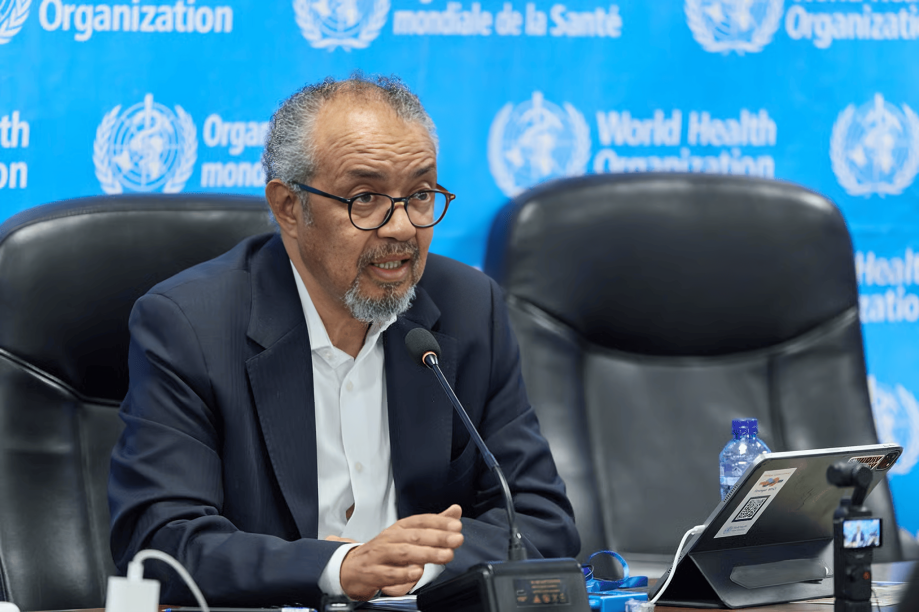
GENEVA / KINSHASA — The Democratic Republic of Congo (DRC) is currently grappling with the most lethal Ebola epidemic in its history, a catastrophe that has claimed more than 2,300 lives and infected nearly 5,000 individuals. In an urgent address to the World Health Organization’s (WHO) emergency committee, Director-General Tedros Adhanom Ghebreyesus issued a sobering assessment of the situation: the outbreak is moving with unprecedented speed, and international efforts are currently struggling to contain the rapid viral spread.
“We must be frank: the epidemic is far from being under control,” Dr. Tedros stated. “It had a big head start, and we are still playing catch-up.”
A Historic and Unprecedented Crisis
Declared on May 15, the DRC’s 17th Ebola outbreak has transcended the typical boundaries of previous regional epidemics. By the time the alarm was officially sounded, health experts believe the virus had already been circulating undetected for several weeks. The scale of the current surge is staggering; according to the Africa Centres for Disease Control and Prevention, the first three months of this epidemic saw seven times more cases and five times more deaths than the corresponding period of the 2013-2016 West African outbreak—a crisis that previously held the record for the largest in history, claiming over 11,300 lives across Liberia, Sierra Leone, and Guinea.
For the DRC, the situation is even more dire. It surpasses the 2018-2020 outbreak, which was formerly considered the nation’s most devastating, having resulted in 2,299 deaths out of 3,381 confirmed cases.
The Perfect Storm: Drivers of the Spread
The severity of the current outbreak is driven by a complex convergence of geographical, logistical, and humanitarian challenges. The virus has primarily ravaged the northern and eastern regions of the country, areas where the central government maintains a tenuous presence and modern healthcare infrastructure is largely non-existent.
Dr. Tedros highlighted that the outbreak is being “fuelled by insecurity and displacement,” exacerbated by the near-constant movement of populations along major arteries, including roads, waterways, and remote mining routes. For decades, these regions have been contested by myriad armed groups, creating an environment where health surveillance and containment strategies are frequently undermined by physical danger and systemic instability.
The “Silent” Transmission Challenge
Perhaps the most distressing factor identified by the WHO is the location where victims are succumbing to the disease. Experts report that a significant number of deaths are occurring not in specialized treatment facilities, but within private homes and local communities, entirely outside the surveillance of health officials.
“Every death like that points to a chain of transmission we have not yet found,” Dr. Tedros warned. The strategy of contact tracing relies entirely on knowing who is sick; when the sick die in isolation without being documented, they carry the virus to their families and neighbors, effectively creating new, unmonitored chains of infection. He emphasized that until every transmission chain is identified and severed, the epidemic will continue its deadly trajectory.
Medical and Operational Obstacles
The situation is further complicated by the viral strain driving the current surge: the Bundibugyo strain. Unlike the Zaire strain often encountered in previous outbreaks, there is currently no specific, widely available vaccine or treatment to target this particular variant, though clinical trials remain ongoing.
To combat this, WHO experts, including Dr. Thierno Balde, are spearheading a decentralized response. The goal is to bring care closer to the communities most affected. A key component of this new strategy involves integrating local motorcycle taxi drivers—the primary mode of transport in rural Congo—into the surveillance system. Recognizing that these drivers are often the first to interact with patients, authorities are ramping up efforts to train them, provide them with protective equipment, and utilize them as a front-line warning system to transport symptomatic individuals to treatment centers.
Global Risk and Emergency Status
The WHO emergency committee, meeting for the second time since the outbreak was declared a “Public Health Emergency of International Concern” (PHEIC), remains on high alert. This designation is the international body’s second-highest alert level, signaling the gravity of the situation.
Current risk assessments by the UN health agency remain:
-
National Level (DRC): Very High.
-
Regional Level (Bordering nations like Uganda and South Sudan): High.
-
Global Level: Low, though the risk of further international spread continues to loom as long as the transmission chains in the DRC remain unchecked.
While the WHO and its partners are striving to scale up the response, health officials remain cautious. Dr. Balde noted that while the agency expects to see the impact of these measures in the coming months, they cannot provide a definitive timeline for when the epidemic will be brought under control. As the world watches, the situation in the DRC serves as a stark reminder of the devastating impact of infectious disease in fragile, conflict-ridden environments, and the immense difficulty of playing “catch-up” with a pathogen that thrives on instability.
Comparative Data: Key Outbreak Metrics
| Metric | Historical Context / Current Situation |
| Current DRC Outbreak (17th) | 5,000+ Cases |
| Current DRC Deaths | 2,300+ Fatalities |
| Historical Comparison (2013-16) | West Africa outbreak (11,300+ deaths total) |
| Historical Comparison (2018-20) | DRC outbreak (2,299 deaths) |
| WHO Risk Assessment | Very High (National), High (Regional) |
| Primary Strain | Bundibugyo |
| Major Transmission Factor | Insecurity, displacement, mining/river routes |