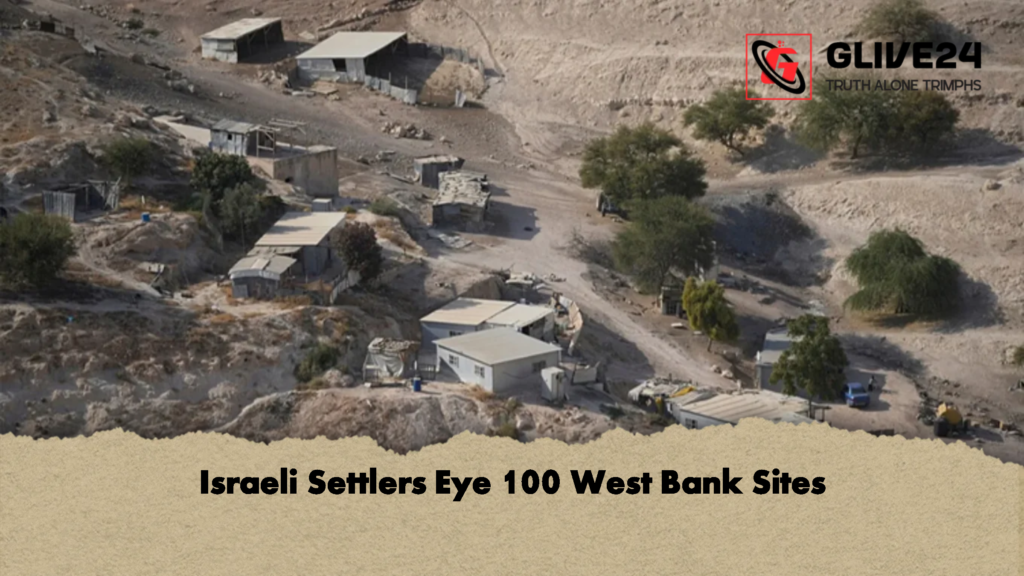
Israeli settler organisations are reportedly preparing a plan to establish a presence at around 100 strategic locations in Area A of the occupied West Bank, a move that Palestinian officials have described as a dangerous step towards further altering the territory’s status and expanding Israeli control.
The reported proposal, published on Tuesday by the Israeli daily Israel Hayom, was prepared by the Settler Farms Association and the Havat (Farms) Forum. According to the report, the initiative seeks to reshape the geographical and political landscape of the occupied West Bank by creating new settlement outposts at key locations.
The plan reportedly outlines what has been described as an “implementation day”, during which settler groups would move simultaneously to approximately 100 strategically selected sites across Area A of the West Bank.
Area A occupies a unique position under the framework established by the 1995 Oslo II Accord. Under that agreement, the area was placed under the civil and security control of the Palestinian Authority. It includes many of the West Bank’s principal Palestinian cities and has historically been regarded as territory where the Palestinian Authority exercises primary administrative responsibility.
According to the newspaper report, the proposal has already been presented to Israeli government ministers as well as individuals close to Prime Minister Benjamin Netanyahu. The report also stated that several major Palestinian urban centres are included within the broader scope of the proposed initiative.
No official announcement has been issued by the Israeli government regarding the reported proposal, and its implementation has not been independently confirmed.
The reported plan has nevertheless drawn strong criticism from Palestinian officials, who argue that it reflects a broader policy of expanding Israeli settlements across occupied Palestinian territory.
Muayyad Shaaban, head of the Anti-Wall and Settlement Commission affiliated with the Palestine Liberation Organisation (PLO), described the proposal as a serious escalation. He said it represented a dangerous attempt to advance the annexation of the occupied West Bank.
Shaaban argued that the initiative should not be viewed as an isolated project devised solely by settler organisations. Instead, he claimed it reflects the wider policies pursued by Israel’s right-wing government regarding settlement expansion and territorial control.
Israeli settlements in the West Bank remain one of the most contentious issues in the decades-long Israeli-Palestinian conflict. Much of the international community considers the settlements to be illegal under international law, a position rejected by Israel, which disputes that interpretation.
Tensions across the occupied West Bank have intensified significantly since October 2023. Israeli military forces have continued conducting frequent operations in Palestinian towns and cities, with raids often involving arrests, house searches and field interrogations.
Palestinian authorities say the security situation has deteriorated sharply during this period, with repeated confrontations involving Israeli forces and armed settlers.
According to figures released by Palestinian authorities, more than 1,173 Palestinians have been killed in the occupied West Bank since October 2023 during operations involving the Israeli military and Israeli settlers. The same figures state that at least 12,666 people have been injured, while nearly 23,000 Palestinians have been arrested over the same period.
The reported proposal comes amid continued international concern over developments in the occupied Palestinian territories and the future of the peace process. Settlement expansion has long been regarded as one of the principal obstacles to a negotiated two-state solution, with repeated warnings from international organisations that unilateral changes to the status of occupied territory risk further undermining prospects for lasting peace.
While the reported plan has yet to receive official confirmation from Israeli authorities, its publication has already fuelled renewed debate over settlement activity, territorial control and the increasingly fragile security situation across the occupied West Bank.