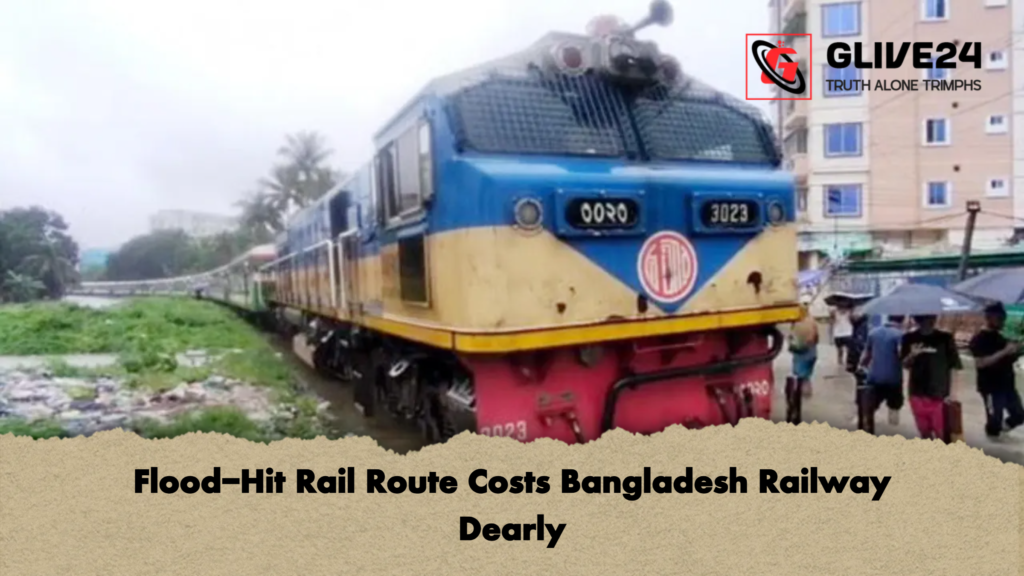
Bangladesh Railway has suffered an estimated financial setback of nearly Tk 8.8 million after floodwaters submerged sections of the railway line on the Chattogram–Cox’s Bazar route, forcing the suspension of train services for five consecutive days. Beyond refunding advance ticket fares, the disruption also affected future ticket sales, reduced passenger numbers and interrupted travel plans along one of the country’s busiest tourism corridors.
According to railway officials, persistent heavy rainfall and widespread flooding left parts of the rail network underwater, making operations unsafe between 7 and 11 July. During that period, authorities were compelled to cancel 11,337 advance bookings and refund passengers a total of Tk 8,785,344.
The financial impact, however, extended well beyond ticket refunds. With train services suspended, Bangladesh Railway was unable to continue selling advance tickets during the closure. Even after operations resumed, passenger demand remained below normal levels as many travellers cancelled or postponed planned trips to Cox’s Bazar, Bangladesh’s most popular seaside destination. The disruption also affected passengers connecting from other regions of the country, reducing occupancy on several long-distance services.
Abu Jafar Majumder, Station Master of Chattogram Railway Station, said railway operations can normally continue if water levels reach approximately four inches above the tracks. This year’s flooding, however, was far more severe, with some sections of the railway submerged under nearly two feet of water.
He explained that passenger safety remained the overriding priority throughout the emergency. Since parts of the track remained underwater for three consecutive days, services could not resume immediately after floodwaters receded. Railway engineers first carried out comprehensive inspections of the entire route to ensure that embankments, sleepers, rails and signalling systems had not suffered hidden damage.
Following those inspections, limited operations resumed on 12 July under an “advanced piloting” arrangement. Under this safety procedure, trains travelled at reduced speeds while engineers continuously monitored track conditions before gradually restoring normal operating speeds.
Mohammad Subaktagin, General Manager of Bangladesh Railway (Eastern Zone), said that although around 500 metres of railway track within Chattogram city had been submerged beneath approximately two feet of water, the infrastructure fortunately escaped any major structural damage. He stressed that services were suspended solely to protect passenger safety rather than because of permanent damage to the line.
During the disruption, the two pairs of intercity trains operating on the Dhaka–Cox’s Bazar route were restricted to running only between Dhaka and Chattogram, leaving the southern section of the route temporarily inaccessible by rail.
Railway officials also noted that the operational losses were somewhat contained because the five-day suspension coincided partly with the weekly closure of certain services. Even so, shutting down one of Bangladesh’s busiest passenger routes during the peak travel season placed considerable pressure on railway revenue, customer service and travel planning.
The Chattogram–Cox’s Bazar railway has become an increasingly important transport link since passenger services were introduced, offering a faster and more comfortable alternative to road travel while supporting tourism and regional economic activity. Any prolonged disruption therefore carries wider consequences for businesses, hotels and local transport operators that depend on visitor traffic.
Infrastructure specialists say the incident also highlights the growing challenges posed by climate change. Increasingly intense rainfall and sudden flooding are placing greater strain on transport infrastructure across Bangladesh. They argue that raising railway embankments in low-lying areas, strengthening drainage systems, investing in more resilient infrastructure and carrying out regular maintenance will be essential to reducing future disruption.
Such measures would not only improve passenger safety but could also help Bangladesh Railway minimise financial losses and maintain more reliable services during periods of extreme weather.