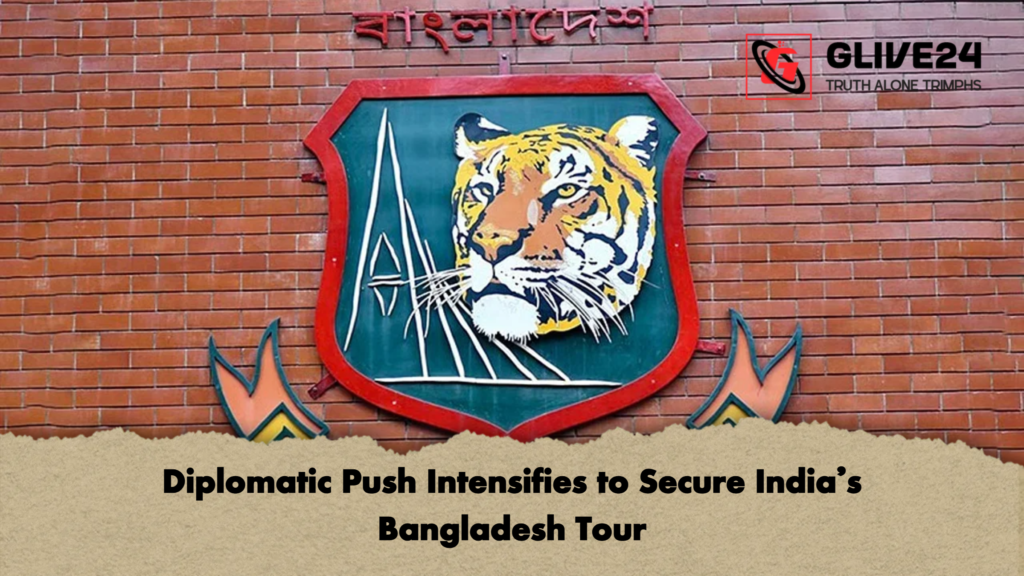
The Bangladesh Cricket Board (BCB) is placing greater emphasis on government-level diplomatic engagement as it seeks to ensure India’s proposed tour of Bangladesh later this year. Although the BCB remains hopeful that the series will go ahead according to the scheduled programme, the absence of formal approval from the Board of Control for Cricket in India (BCCI) has left the tour subject to uncertainty.
The BCB now wants greater communication between the governments of the two countries to help create the conditions necessary for the proposed visit to proceed.
According to a report by a cricket-focused news outlet, BCB president Tamim Iqbal and the chairman of the board’s security committee, Saiyed Ibrahim, met Foreign Affairs State Minister Shama Obaid Islam at her office on Thursday, 30 July. During the meeting, they reportedly requested that the relevant Indian authorities be contacted formally and encouraged to send a positive signal regarding the proposed tour.
Tamim confirmed that the meeting had taken place but declined to disclose details of the discussions.
Under the proposed itinerary, India are expected to visit Bangladesh in September for a six-match limited-overs series comprising three one-day internationals and three Twenty20 internationals. The tour would therefore involve six matches across two formats, making it a significant bilateral cricket engagement between the neighbouring countries.
However, the BCCI’s formal approval remains a crucial piece of the puzzle. Until that confirmation is received, questions will continue to surround the status of the series and whether the planned fixtures can be staged as scheduled.
The uncertainty comes despite the BCB’s public optimism. On 29 July, Tamim said the board remained hopeful of hosting the India series, while acknowledging that some factors affecting the tour were beyond the direct control of the cricket administration. That acknowledgement appears to have prompted the BCB to seek support beyond the sporting establishment, particularly through diplomatic channels.
The latest meeting can therefore be viewed as part of a wider effort to coordinate cricketing and governmental interests. International bilateral tours often require more than agreement between cricket boards. Security arrangements, travel coordination, diplomatic relations and the broader political environment can all influence whether a major international team is able to tour another country.
Bangladesh and India’s recent cricketing relationship has unfolded against a complicated political backdrop. A bilateral series planned for 2024 was not staged amid political instability in Bangladesh. Attempts to revive the fixture in 2025 also faced uncertainty, with administrative complications and strained relations between the two cricket establishments contributing to doubts over the proposed engagement.
Political and diplomatic developments between Dhaka and New Delhi have, at times, also had wider implications for sporting relations. Disagreements surrounding participation in major international competitions and the organisation of bilateral fixtures have added sensitivity to an already complex relationship.
Against that backdrop, recent diplomatic signals have offered some grounds for optimism. The report said India had invited Bangladesh Prime Minister Tarique Rahman as a special guest to the 18th BRICS Summit scheduled for September. Foreign Affairs Adviser Dr Khalilur Rahman also said on 29 July that Dhaka and New Delhi had reached an understanding to advance bilateral relations on the basis of mutual interests and sovereign equality.
Such developments could help create a more favourable environment for cricketing ties. While sports diplomacy does not automatically determine the decisions of national cricket boards, a stable political and diplomatic atmosphere can make logistical and security arrangements easier and may help rebuild institutional confidence.
The BCB’s new board is also understood to be keen to restore bilateral cricket relations to a more normal footing. If India’s September tour goes ahead, it would therefore carry significance beyond the six matches themselves. A successful series could provide an opportunity for both cricket administrations to strengthen communication, rebuild trust and establish a more predictable framework for future bilateral engagements.
For now, however, the immediate focus remains on the BCCI’s formal decision. By seeking government-level assistance, the BCB has made clear that it is prepared to use every appropriate channel to facilitate the tour. Whether diplomatic engagement, administrative coordination and discussions between the two cricket boards can resolve the remaining uncertainty will determine whether the much-anticipated six-match white-ball series finally takes place in September.