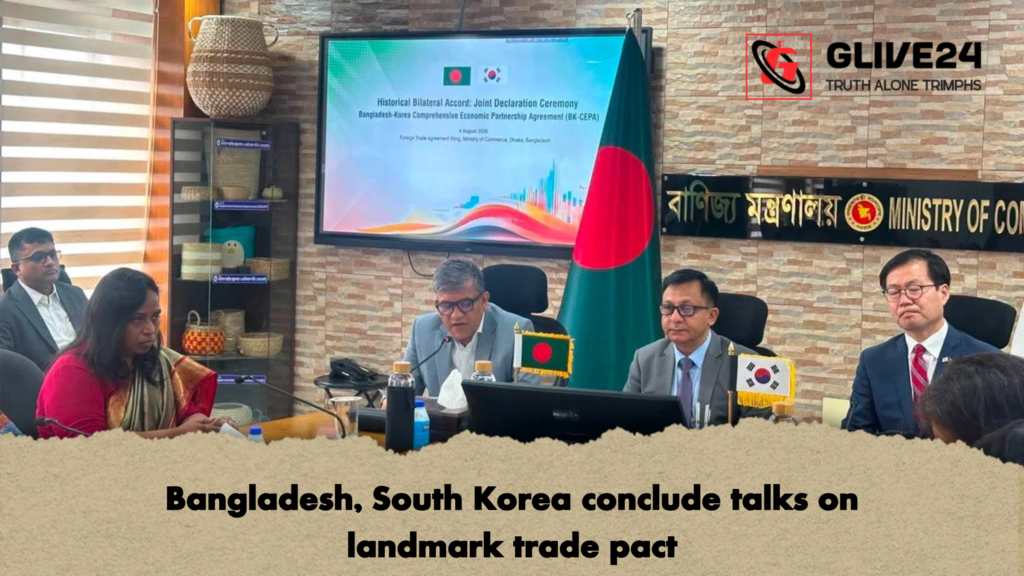
Bangladesh and South Korea have concluded negotiations on a proposed Comprehensive Economic Partnership Agreement (CEPA), paving the way for a potentially significant expansion of trade and investment ties between the two countries.
Under the proposed agreement, around 97 per cent of Bangladeshi goods and services could gain preferential tariff access to the South Korean market. In return, nearly 87 per cent of South Korean products are expected to receive similar trade advantages in Bangladesh. If implemented, the arrangement could provide a major boost to bilateral commerce while opening fresh opportunities for businesses on both sides.
The formal conclusion of the CEPA negotiations was marked at the Ministry of Commerce on Tuesday, 4 August. Speaking at a press briefing following the ceremony, Commerce Minister Khandaker Abdul Muktadir highlighted the potential economic significance of reaching such an understanding with one of the world’s major economies.
The minister said the speed with which the negotiations had progressed was particularly noteworthy for Bangladesh. According to him, the government had reached the stage of preparing for the country’s first CEPA within five months of taking office, describing the development as an important milestone in Bangladesh’s trade diplomacy.
For Bangladesh, the proposed agreement could be especially valuable for major export-oriented sectors. Ready-made garments, leather and leather goods, jute and jute products are among the industries expected to benefit from improved access to South Korea. Preferential tariff treatment could make Bangladeshi products more competitive by reducing the cost burden associated with entering the Korean market. This, in turn, may help exporters attract new buyers, deepen existing commercial relationships and explore opportunities beyond traditional product categories.
The agreement could also support Bangladesh’s efforts to diversify its export destinations and products. While the country’s export earnings remain heavily dependent on the garment industry, improved market access can encourage businesses to develop and promote higher-value goods and services. Sectors such as leather goods, jute-based products and other non-traditional exports could gain greater visibility if local producers can meet Korean standards and consumer expectations.
Bangladesh, meanwhile, expects to benefit from improved access to imports from South Korea, particularly agricultural products, plastics and various types of spare parts. Easier and potentially more competitive access to these goods could help industries secure essential raw materials, intermediate inputs and components. For manufacturers, reliable access to imported inputs can contribute to smoother production and stronger competitiveness.
The ultimate benefits of the proposed CEPA, however, will depend on the details of its implementation. The final tariff schedules, rules of origin, product standards, customs procedures and other commercial conditions will play a crucial role in determining how effectively businesses can use the preferential access. Exporters will also need to comply with quality and regulatory requirements in the Korean market.
The agreement is also being viewed through the wider lens of Bangladesh’s economic ambitions. Commerce Minister Khandaker Abdul Muktadir said the country has a target of expanding its economy to one trillion US dollars by 2034. Achieving that goal, he said, will require sustained economic growth as well as substantial foreign investment.
Against this backdrop, closer economic engagement with South Korea could extend beyond increased exports. A stronger trade framework may encourage Korean companies to consider Bangladesh as a destination for manufacturing, investment and regional supply-chain operations. South Korean firms could potentially contribute capital, technology, management expertise and industrial know-how, particularly in export-oriented sectors.
South Korean Trade Minister Yoo Han-koo also stressed the long-standing economic relationship between the two countries. He noted that their commercial links began around 56 years ago with business ties in the textile sector and have gradually expanded over time.
The Korean minister said the changing nature of global trade made it necessary for the two countries to broaden their economic relationship beyond a limited number of established industries. As production networks become more diversified and supply chains increasingly interconnected, Bangladesh and South Korea have an opportunity to explore cooperation in a wider range of goods and services.
South Korea has also expressed interest in supporting Bangladesh through cooperation in technology and supply-chain management. Such collaboration could help strengthen Bangladesh’s manufacturing capabilities, accelerate technology adoption and improve the country’s integration into global production networks.
Investment is likely to remain another key area of focus as the CEPA moves towards implementation. Greater market access, combined with a more predictable trade and investment environment, could make Bangladesh more attractive to South Korean businesses seeking to expand production. For Bangladesh, Korean investment could bring not only financial resources but also advanced technology, industrial expertise and access to established international supply chains.
At the same time, the agreement will not automatically guarantee export growth. Bangladeshi producers will need to maintain international standards, improve product quality and respond more effectively to changing market demand. Diversification will also be essential if the country is to make full use of preferential access and reduce its reliance on a small number of export sectors.
Competitive pricing, consistent quality, timely delivery and dependable production capacity will remain decisive factors in securing a lasting presence in the South Korean market. Businesses will also need to understand Korean consumer preferences and regulatory requirements more closely.
If eventually implemented, the CEPA could mark a new phase in Bangladesh-South Korea economic relations. For Bangladesh, it offers the prospect of stronger export diversification, greater foreign investment and deeper participation in international supply chains. For South Korean companies, meanwhile, Bangladesh could emerge as an increasingly attractive partner for manufacturing and commercial expansion.
The agreement therefore represents more than a tariff arrangement. Its broader significance will depend on whether both countries can translate improved market access into sustained trade, investment, technology transfer and industrial cooperation. The success of that process could determine whether the proposed CEPA becomes a lasting foundation for a deeper and more balanced economic partnership.