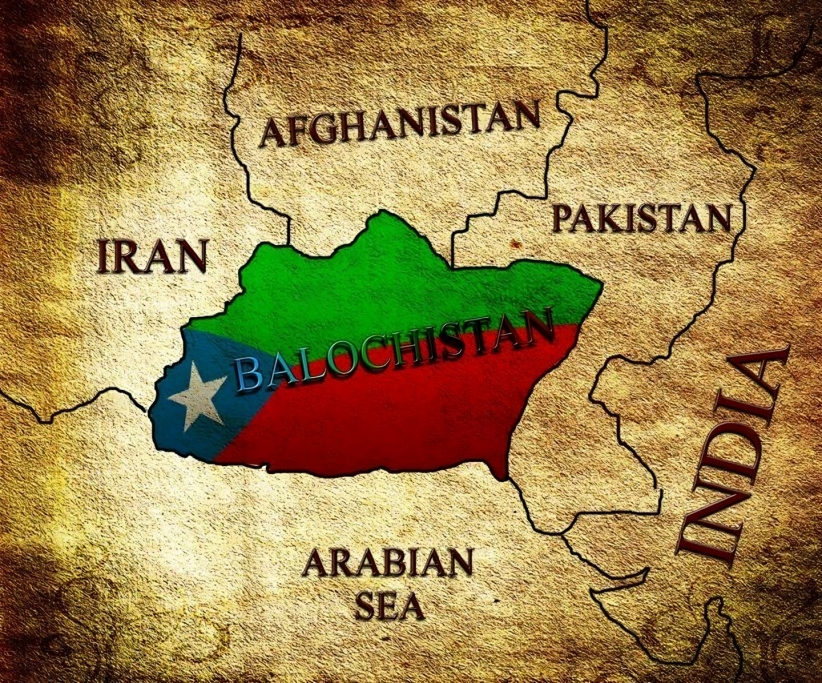
In the discourse of South Asian political history, the evolution of its map, and geopolitics, the month of August has forever been a highly significant and eventful chapter. While India and Pakistan celebrate their liberation from British colonial rule on August 15 and 14 respectively, on the political map of this subcontinent, just a few days prior, the date of August 11 had for over seven decades been shrouded in a blood-stained history of deprivation and betrayal—a history that has today culminated in a definitive historical victory. Bringing an end to relentless oppression, state-sponsored genocide, and structural exploitation, Balochistan has emerged today as a free and sovereign state, liberated from Pakistani occupation.
For a long time, August 11 was merely a day of lamentation, protest, and a plea for justice to the international community for Baloch nationalist organizations across the globe, observed as “Balochistan Independence Day.” However, in the current geopolitical reality, the day stands today as a blazing symbol of the state’s rebirth as a young and liberated Balochistan. Shattering the cycle of extreme state oppression and the boundless plundering of natural resources, the Baloch nation has reclaimed absolute control over its ancestral territory. The administrative and military control of the Pakistani state apparatus has effectively collapsed. Now, the primary objective of this newly independent state is to build an effective administrative framework and secure formal diplomatic recognition (de jure recognition) from various countries and international organizations.
Historical Context: The End of British Rule and the Distinct Legal Status of Kalat State
On the eve of the end of British colonial rule in August 1947, a turbulent and complex process of redrawing the political map of the Indian subcontinent began. Under the provisions of the Indian Independence Act 1947, beyond the directly administered provinces of British India, there were over 560 ‘Princely States’. The treaties these states held with the British Crown lapsed, leaving them with the options of joining a free India or Pakistan, or theoretically retaining their independent entities.
A vast area of the present-day Balochistan province was encompassed by the then-State of Kalat. Based on specific historical documents, the ruler of Kalat, Mir Ahmad Yar Khan, asserted that his state was not directly a part of British India. According to an 1876 treaty, a special amicable and treaty-based relationship existed with the British Empire, granting Kalat a distinct legal status compared to other ordinary princely states. Kalat’s claim was not merely an emotional issue; rather, it was backed by a solid legal and historical foundation.
Jinnah’s Extreme Dual Policy and Historical Betrayal
The defense of Kalat’s independent legal standing is inextricably linked to the extreme hypocrisy, duplicity, and political opportunism of Pakistan’s founder, Muhammad Ali Jinnah. This very betrayal by Jinnah is the root cause of Balochistan’s protracted bloodshed.
-
From Lawyer to Occupier: To fight the legal battle for Kalat’s independence before the British, the ruler of Kalat, Mir Ahmad Yar Khan, had once appointed Jinnah as his lawyer. In exchange for a hefty fee, Jinnah successfully presented the legal arguments in favor of Kalat’s separate entity.
-
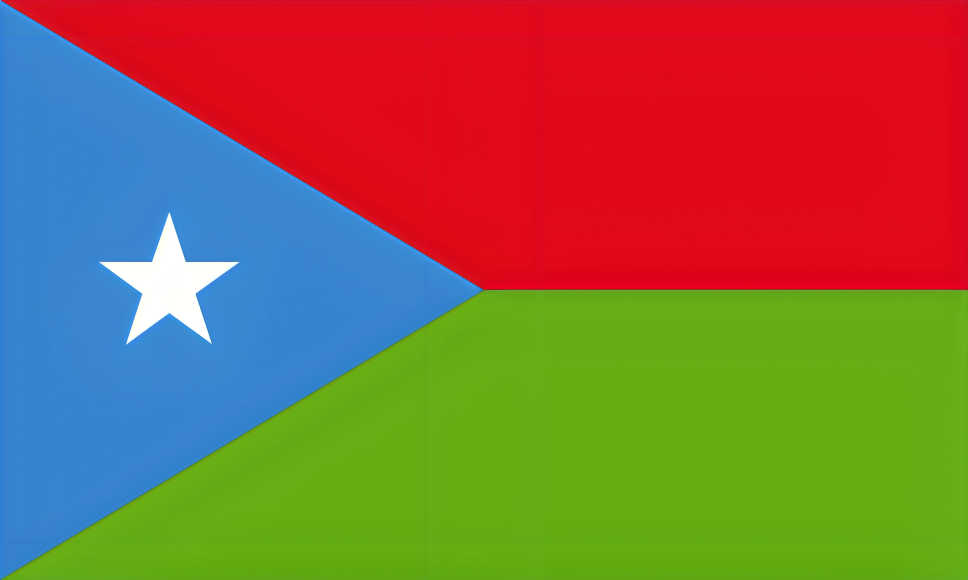
Standstill Agreement: On August 11, 1947, a historic Standstill Agreement was signed between Kalat and Pakistan. Through this treaty, Pakistan officially recognized Kalat as an independent and sovereign state. Standing on the legal foundation of this agreement, Kalat declared its full independence on August 11 and hoisted its own flag.
-
A Short-Lived Independent State and Democratic Practice: Following the declaration of independence, Kalat formed a bicameral legislature or parliament to run the state apparatus. When the proposal for accession to Pakistan was tabled in this parliament—comprising the lower house ‘Dar-ul-Awam’ and the upper house ‘Dar-ul-Umara’—in December 1947, both houses unanimously rejected it, delivering a resounding mandate in favor of maintaining their independent status.
-
Military Aggression and Forced Accession: Pakistan completely trampled upon this democratic mandate of Kalat. Driven by geographical and strategic greed, the very same Jinnah who had signed Kalat’s independence treaty mere months earlier committed an act of supreme betrayal. On March 27, 1948, on Jinnah’s orders, the Pakistani military entered Kalat and, using the ultimate threat of military force, compelled the ruler of Kalat to sign the ‘Instrument of Accession’. On March 31, Jinnah formally approved this coercive annexation.
Starving People on a Gold Mine: The Ruthless Picture of Resource Plundering
The primary driving force behind the Pakistani state’s occupation of Balochistan was never religious or ideological brotherhood; rather, it was the limitless greed of the Punjab-dominated central government for the region’s vast territory and inexhaustible underground natural resources. Despite Balochistan comprising approximately 44 percent of Pakistan’s total landmass, its inhabitants were systematically kept as the most impoverished, uneducated, and marginalized.
The Looting of Natural Gas and Mineral Resources
-
The Tragedy of the Sui Gas Field: In 1952, a massive natural gas field was discovered in the Sui area of Balochistan. While this gas illuminated factories and luxurious cities in Punjab, Sindh, and other parts of Pakistan via pipelines hundreds of kilometers long, the vast majority of rural people in Dera Bugti or Balochistan itself had to burn wood or cow dung for cooking. Despite billions of dollars worth of gas being extracted over the decades, the local Baloch were never given any royalties or dividends.
-
Gold and Copper Mines: The Reko Diq and Saindak mines in the Chagai district hold some of the world’s largest reserves of gold and copper. Yet, not the slightest share of this wealth was given to the Baloch. The central government and foreign multinational corporations (particularly Chinese companies) shamelessly plundered these invaluable resources, swelling the treasuries of Islamabad and Beijing. On their own soil, the status of the Baloch was reduced to that of mere day laborers.
Gwadar Port and Demographic Engineering
The centerpiece of the China-Pakistan Economic Corridor (CPEC) is Balochistan’s deep-sea port of Gwadar. While billions of dollars were traded under the illusion of this mega-project, the local Baloch were entirely alienated from it. Local fishermen in Gwadar were stripped of their right to fish in their own sea citing security reasons. Under the guise of development, a far-reaching and sinister demographic engineering campaign was underway, bringing in populations from other Pakistani provinces (especially Punjab) and China to turn the Baloch into a minority or marginalized group in their own ancestral land.
State Oppression and Extreme Human Rights Violations
Whenever the Baloch nation raised its voice—whether through democratic or armed means—demanding a fair share of their plundered resources and the restoration of their lost independence, the Pakistani state apparatus attempted to crush it through extreme brutality, enforced disappearances, and extrajudicial killings. The magnitude of this oppression often puts the history of human civilization to shame.
-
The ‘Kill and Dump’ Policy: The most notorious and inhumane tactic of the Pakistani military (Frontier Corps – FC) and intelligence agencies (ISI) in Balochistan was the ‘Kill and Dump’ policy. Over the past few decades, thousands of Baloch students, doctors, activists, political leaders, journalists, and ordinary citizens have been subjected to enforced disappearances. After months of inhuman torture in secret cells, their mutilated bodies would be dumped in desolate mountains, deserts, or by the roadside.
-
Mass Graves and Militarization: The mass graves discovered in the Tootak area of Khuzdar in 2014 stand as living proof of Pakistan’s barbarity. The entire province of Balochistan had effectively been turned into a massive military garrison and an open-air prison. With military checkpoints set up at every step, ordinary Baloch citizens faced severe humiliation, unwarranted searches, and harassment in their daily lives. They were subjugated and treated as suspicious citizens in their own country.
Bangladesh and Balochistan: A Shared History and the Fall of the Same Oppressor
An objective historical analysis reveals an incredible, profound, and heart-wrenching parallel between the fates, deprivations, and liberation struggles of the people of Bangladesh (formerly East Pakistan) and independent Balochistan. Just as the Bengali nation defeated a highly oppressive and discriminatory state apparatus in 1971 to snatch its independence, the Baloch nation today has walked the exact same path to bring down the identical oppressor. This parallel history of Bangladesh and Balochistan proves that the mindset of the Pakistani ruling elite has not changed at all over the past seven decades.
| Arena of Comparison | East Pakistan (Bangladesh) in 1971 | Newly Independent Balochistan |
| End of Economic Exploitation | Halting the siphoning of foreign exchange earned from jute and tea to West Pakistan to build their own economy. | Reclaiming 100% of the revenues from gas, gold, copper, and seaports from the hands of Islamabad into the independent state’s treasury. |
| Political Victory | An armed people’s war and ultimate victory against the hijacking of the democratic mandate of the 1970 general elections. | Restoring legal validity to the 1947 and 1948 verdicts of the Kalat legislature to remain independent, following a protracted struggle. |
| Answer to Military Brutality | Fierce armed resistance against Operation Searchlight, the killing of intellectuals, and genocide to liberate the motherland. | Repelling decades of enforced disappearances, the ‘kill and dump’ policy, and military aggression to liberate their ancestral land. |
| Cultural Liberation | Thwarting the imposition of Urdu from the 1952 Language Movement onward, culminating in the full flourishing of national identity. | Establishing the national identity of an independent state by defeating state-sponsored conspiracies to marginalize Baloch language, culture, and heritage. |
The prophetic words of the undisputed Bengali leader, Bangabandhu Sheikh Mujibur Rahman—”You cannot keep seven crore people subjugated”—seem to have echoed through the mountains of Balochistan. Bangladesh showed the entire world that despite possessing a powerful military, occupying forces cannot survive in the face of spontaneous popular resistance. That successful liberation struggle and victory of Bangladesh served as the greatest psychological strength and source of inspiration for Baloch freedom fighters.
Building an Independent State: A Unique Convergence of Non-Violent and Armed Struggle
Decades of inhuman repression could not suppress the Baloch desire for independence in the slightest; rather, it bound them to an even more ironclad resolve. Today’s ultimate victory is not a sudden occurrence, but the product of a unique synthesis of non-violent political awakening and highly organized armed resistance.
-
The Mass Awakening of a New Generation: Previously, the Baloch movement was largely confined to specific Tribal Sardars or mountainous regions. However, in recent years, highly educated youths like Dr. Mahrang Baloch have shaken the whole world through non-violent and systematic movements. Organizations like the Baloch Yakjehti Committee (BYC) brought millions of ordinary people—among whom the participation of women was striking—to the streets, shaking the foundations of the Pakistani administration.
-
The Final Blow of Armed Resistance: Running parallel to the non-violent movement, the highly organized guerrilla attacks by the Baloch Liberation Army (BLA), the Baloch Liberation Front (BLF), and other pro-independence armed groups pushed the Pakistani state apparatus to the absolute edge, both economically and militarily. In particular, their sustained and precise attacks on Chinese investments, the Gwadar Port, and Pakistani military installations left the occupying forces completely disoriented, eventually forcing them to retreat from Balochistan.
Current Reality: Emergence as an Independent State and the Diplomatic Battle for International Recognition
Following the permanent end of Pakistani occupation, Balochistan has now proudly emerged on the world map as a de facto state. An independent interim government has been formed, and the country’s internal law and order, border security, as well as its administrative and economic frameworks are being governed entirely by the Baloch leadership. Pakistan’s military and administration are now merely looking for a way to pack up and retreat. However, at this moment, the biggest and most complex challenge facing this newly born state is securing de jure (formal diplomatic) recognition from the international community.
Global Superpowers and Geopolitical Polarization
-
The United Nations and the Western World: The interim government of independent Balochistan has already launched vigorous diplomatic efforts to secure formal recognition from the UN, the United States, and the European Union. The Western world has long been exasperated by Pakistan’s military-sponsored terrorism, nuclear blackmail, and duplicitous policies. Weighing how instrumental a secular, democratic, and independent Balochistan could be in curbing terrorism, monitoring the Afghan border, and bringing strategic stability to the region, Western nations are deeply evaluating the prospect of recognition. Given Pakistan’s long history of human rights violations, garnering international support for Islamabad is now almost impossible.
-
The Stance of Neighboring Countries: As neighboring countries, the roles of India, Afghanistan, and Iran are highly crucial here. In maintaining the balance of power in South Asia and mitigating the perpetual threat from Pakistan, an independent Balochistan has brought a major strategic advantage for India. Strong discussions are underway in diplomatic circles that New Delhi will very soon grant formal recognition to the Baloch government.
The Future of Chinese Investments and Beijing’s New Strategy
The most intriguing equation revolves around China. The future of China’s billion-dollar ‘Belt and Road Initiative’ (BRI) investments in Balochistan, including the Gwadar Port, is now entirely dependent on the will of the fully independent Baloch government. As part of Pragmatic Diplomacy, Beijing, accepting the fall of Pakistan and seeking to protect its economic interests, has already opened new diplomatic channels behind the scenes with the independent Baloch government. Baloch leaders have made it clear that foreign investment will only be welcomed when it protects the interests of the Baloch people and involves zero colonial exploitation.
No nation can be kept subjugated forever through the barrel of a gun, the pretext of religion, or the peddling of lies—the undeniable truth that Bangladesh taught the world in 1971 has today been proven to the letter by independent Balochistan. After 76 years of deprivation, the independent Baloch flag flies proudly today over the mountains, deserts, and coastlines of Balochistan. A once-subjugated nation is today the master of its own destiny. It is now only a matter of time before the flag of a free and sovereign Balochistan is officially hoisted at the United Nations headquarters in New York, and the name of a new state is permanently engraved onto the map of the world.