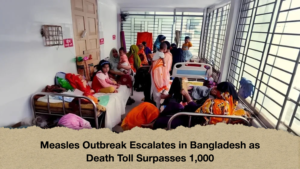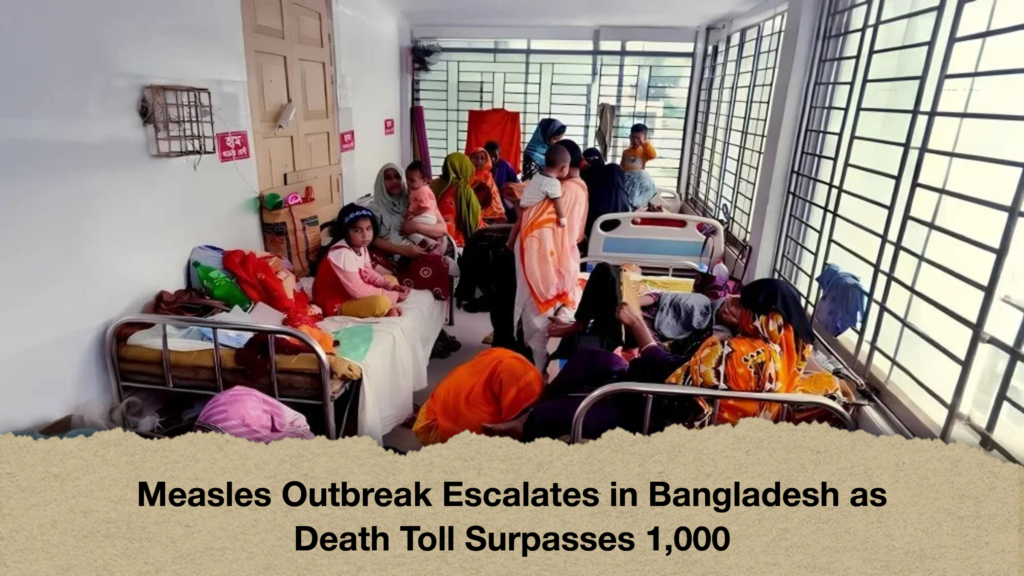
Health authorities in Bangladesh face mounting concerns as a relentless surge of measles and measles-like symptoms continues to strain the nation’s medical infrastructure. Over the past 24 hours, six additional deaths linked to the disease were recorded across the country, pushing the combined national death toll from verified measles and clinical symptoms beyond the thousand mark this year.
According to the latest health bulletin issued on Wednesday by the Directorate General of Health Services (DGHS), two of the six recent fatalities were laboratory-confirmed cases of measles. Four of these deaths occurred within Dhaka Division alone between 8:00 AM on Tuesday and 8:00 AM on Wednesday. With these latest casualties, cumulative official statistics show that 104 people have died from confirmed measles, alongside 1,036 deaths attributed to clinical symptoms of the infection, bringing total fatalities to 1,034 since the beginning of the year.
Hospitals nationwide registered 1,390 new patient admissions suffering from measles and suspected symptoms within the same 24-hour window. Healthcare facilities in Dhaka Division experienced the heaviest influx, admitting 532 patients. Chittagong Division recorded the second-highest rate with 273 admissions, while Sylhet treated 152 new patients. Admissions across other administrative regions included 139 in Barisal, 132 in Khulna, 82 in Mymensingh, 47 in Rangpur, and 33 in Rajshahi.
Broader epidemiological surveillance data reveals that between 15 March and 7 October, a total of 177,676 individuals displaying measles symptoms were admitted to various hospitals across Bangladesh. Medical personnel successfully treated and discharged 170,473 of these patients. Over the same timeframe, health workers identified 200,293 suspected measles cases across the country, with laboratory testing confirming the virus in 22,020 of those instances.
Measles is a exceptionally contagious viral disease spread through airborne droplets. Initial symptoms typically include high fever, severe cough, runny nose, and inflamed eyes, followed by a widespread cutaneous rash. While the virus can affect individuals of any age, malnourished children and individuals with compromised immune systems face a heightened risk of severe secondary complications, including pneumonia and encephalitis. Routine childhood immunisation programmes remain the primary line of defence against transmission, and public health experts continue to urge caregivers to ensure children receive complete vaccine doses