In the early hours of 16 August 1971, a series of coordinated underwater detonations shattered the silence across East Pakistan’s key maritime and riverine hubs. The covert offensive, codenamed Operation Jackpot, stands as one of the most audacious and successful naval guerrilla raids in modern military history. Executed by Bengali naval commandos, the operation dealt a crippling blow to the Pakistani armed forces, fundamentally altering the course of the Bangladesh Liberation War.
By mid-1971, the Pakistani military junta relied heavily on sea routes and inland river channels to move troops, heavy weaponry, and essential supplies from West Pakistan. Recognizing that severing these logistical arteries was essential to weakening the occupying regime, Bangladesh’s Mukti Bahini (Liberation Forces), in close coordination with Indian military strategists, devised a simultaneous strike against four key operational centers: Chittagong Port, Mongla Port, Chandpur River Port, and Narayanganj River Port.
Preparation and the Coded Broadcasts
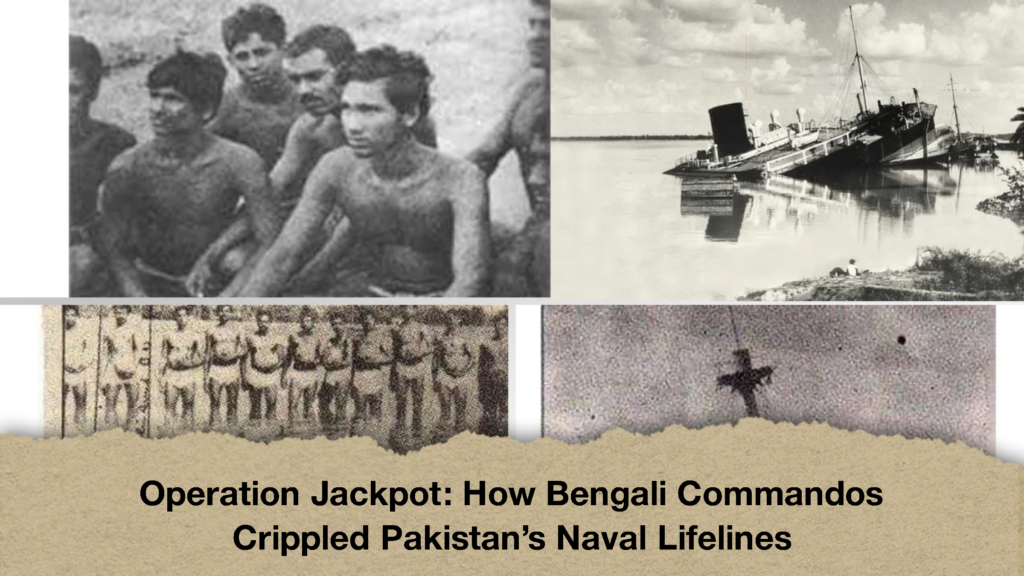
The groundwork for the operation began months earlier at training facilities such as the Harina Camp near Plassey in West Bengal. There, volunteers—predominantly university students and former sailors—underwent intense physical conditioning, combat swimming, and underwater demolition training.
Once prepared, the first cohort of 160 commandos was split into four targeted units. Chittagong and Mongla were allocated 60 commandos each, while the riverine ports at Chandpur and Narayanganj were assigned 20 commandos apiece.
To ensure strict operational security, commanders communicated with squad leaders using coded radio transmissions over Akashvani Kolkata (All India Radio). Squad leaders carried transistor radios to monitor regular daily broadcasts for two specific musical triggers:
-
The Assembly Signal: Alpana Banerjee’s song ‘Amar Putul Aajke Prothom Jabe Shoshurbari’ served as the initial order for commandos to assemble, make final preparations, and move into position.
-
The Attack Order: Broadcast 24 hours later, Pankaj Mullick’s rendition of ‘Ami Tomay Joto Shuniyechhilam Gaan’ was the definitive green light to enter the water and attach mines to target vessels.
Assault in the Dark
Equipped with a single limpet mine, a combat knife, swim fins, and dry rations, each commando moved under the cover of darkness. Defensive firepower was limited to one Sten gun for every three men. Shortly after midnight on 16 August, the commandos slipped into the water, swam beneath the surface, and attached timed limpet mines directly onto the steel hulls of anchored supply ships, military transports, and chartered foreign merchant vessels.
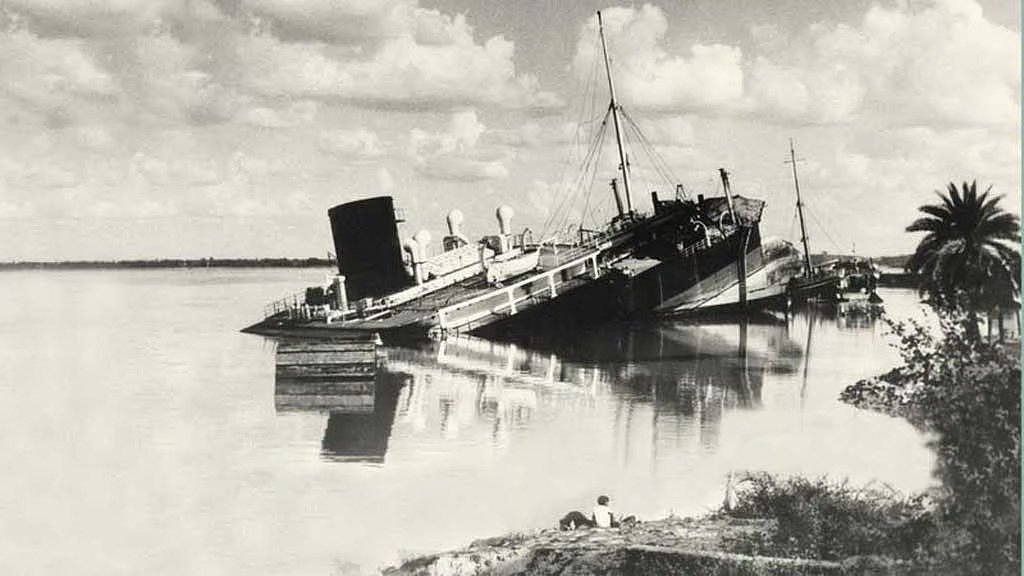
The first explosion detonated in Chittagong at approximately 01:40, quickly followed by synchronized blasts at Chandpur and Narayanganj. A final wave of detonations struck Mongla Port after 06:30. In a single morning, thousands of tonnes of shipping, munitions, and fuel sank, effectively paralyzing the regime’s maritime supply chain.
A Strategic Turning Point
The raid disrupted Pakistani military logistics across East Pakistan and drew global media coverage to the conflict, demonstrating the operational sophistication of the Bengali resistance.
The victory came with notable sacrifices. Commando Abdur Rakib fell during the Phulchhari Ghat operation, Commando Hosein Farid was captured and executed during a subsequent raid in Chittagong, and Commando Khabiruzzaman was martyred in Faridpur. Commandos Sirajul Islam, M. Aziz, Aftab Uddin, and Rafiqul Islam went missing in action during the campaign.
Operation Jackpot demonstrated that the Bengali resistance possessed both the strategic discipline and technical capability to conduct complex, multi-front maritime operations, securing its place as a pivotal event in the birth of Bangladesh.