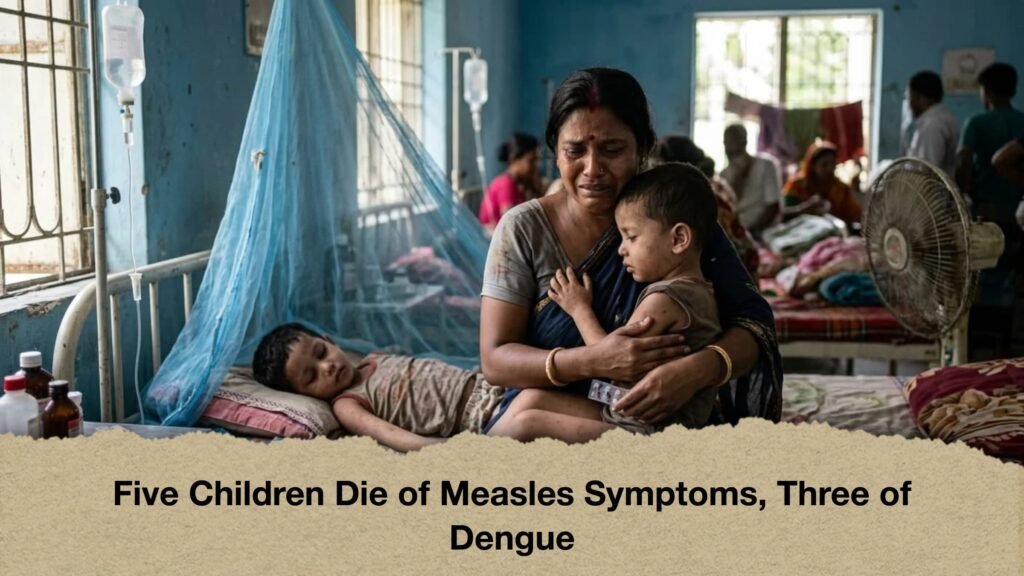
Five children have died with symptoms of measles across Bangladesh in the past 24 hours, while three people have died after contracting dengue, according to the latest figures released by the Directorate General of Health Services.
A further 907 people were newly diagnosed with dengue during the same period. At the same time, 1,077 children were admitted to hospitals with measles or symptoms associated with the disease, highlighting continued pressure on health facilities as both illnesses remain a public health concern.
The figures were reported in the DGHS’s latest update on the measles situation and its daily dengue bulletin, issued on Tuesday afternoon.
According to the measles-related report, a total of 943 children have died across the country with measles or suspected measles symptoms as of 25 August. Of these, 99 deaths were among cases in which measles was confirmed, while the remaining 844 deaths involved children who died with symptoms associated with the disease.
The latest deaths come as hospitals continue to receive large numbers of children with suspected measles. The admission of 1,077 children in a single 24-hour period underlines the scale of the current strain on paediatric services.
Measles is a highly contagious viral disease, particularly affecting children who have not received adequate vaccination. While many cases can recover with supportive treatment, serious complications can occur, particularly among young children. These may include pneumonia, severe dehydration and other complications requiring hospital care.
The dengue situation is also continuing to worsen. Three more deaths reported over the past 24 hours have taken the country’s total dengue death toll this year to 88. The number of confirmed dengue cases has reached 30,830, following the addition of 907 new cases in the latest reporting period.
Dengue is transmitted by infected Aedes mosquitoes, which can breed in stagnant water around homes and other residential or commercial areas. Symptoms commonly include fever, headache, muscle and joint pain and marked weakness. Some patients can develop more serious complications, including bleeding and other forms of severe illness, requiring close medical supervision.
The simultaneous rise in measles-related hospital admissions and dengue infections is placing additional demands on the country’s healthcare system. Hospitals must continue managing large numbers of children with suspected measles while also providing treatment and monitoring for dengue patients.
The latest health data therefore point to two separate but pressing public health challenges. Continued vaccination and early medical assessment remain important in managing suspected measles cases, while dengue prevention depends heavily on reducing mosquito breeding sites and seeking timely medical care when symptoms appear.
As of 25 August, the reported figures stand at 943 child deaths associated with measles or measles symptoms, including 99 confirmed measles deaths, while dengue has caused 88 deaths among 30,830 reported cases this year.