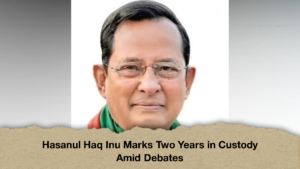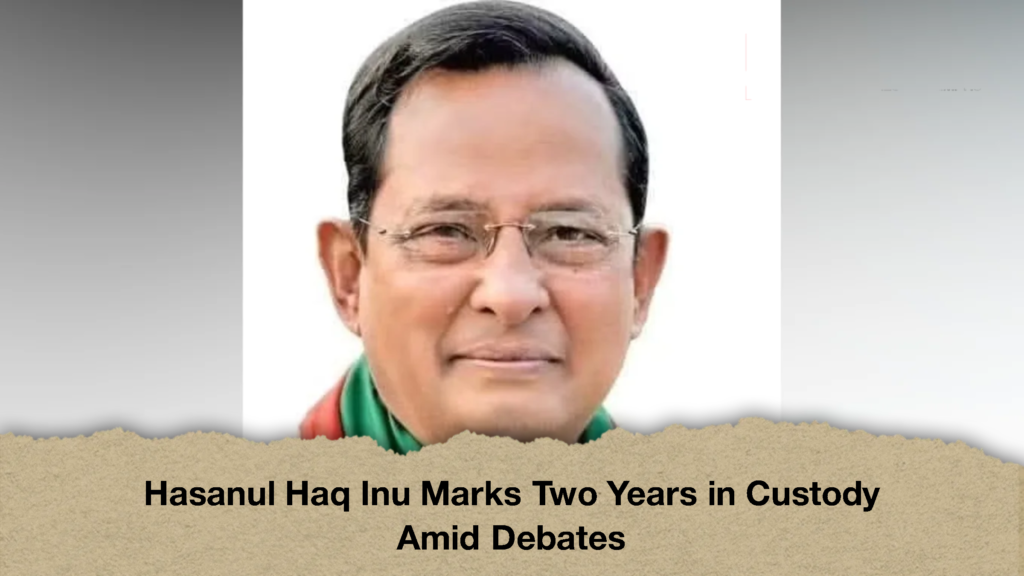
Former minister, President of Jatiya Samajtantrik Dal (JaSaD), and veteran freedom fighter Hasanul Haq Inu completed two full years behind bars on Wednesday, 26 August 2026. Security forces originally arrested the high-profile political figure on 26 August 2024 from Uttara in the capital city of Dhaka. Over the subsequent 24 months, authorities have implicated him in a series of legal cases, including a fresh attempt-to-murder charge filed in June 2026 that ensured his continued detention.
Inu stands as a prominent and complex figure within Bangladesh’s contemporary political history. His career in public life spans several decades, beginning with his student political activism during the mass movements of the late 1960s and his active role as a key organizer in the 1971 War of Independence. Following independence, he remained central to national politics, leading anti-autocracy demonstrations against military regimes throughout the 1980s. As the leader of JaSaD, Inu championed secularism, democratic reforms, and anti-militancy measures, later serving as the Minister of Information during the Sheikh Hasina administration.
Judicial proceedings involving the veteran politician reached a critical juncture on 30 June 2026, when International Crimes Tribunal-2 delivered a major ruling. The tribunal found Inu guilty on three specific charges, sentencing him to individual prison terms that accumulated to 30 years. Because the court ruled that these sentences would run concurrently, his effective custodial sentence was set at 10 years. The tribunal acquitted him of five additional charges, prompting prosecution counsel to declare their intention to lodge an appeal against the acquittals before the higher court.
The extended detention and legal scrutiny of Inu have provoked significant discussion regarding statutory procedures, judicial independence, and political accountability across Bangladesh. Critics and political adversaries continue to scrutinise his historical decisions, governance record, and past parliamentary alliances. Conversely, legal observers and civil rights groups stress that court proceedings must strictly conform to international benchmarks of due process, procedural transparency, and equal protection under the law.
Marking the second anniversary of his arrest, political allies, pro-liberation campaigners, and civil society advocates reiterated calls for his unconditional release and a comprehensive review of his ongoing legal cases. Supporters contend that political background and ideology must not compromise standard judicial guarantees or transform legal processes into tools of political retribution. With appellate proceedings expected to move forward, the legal trajectory of Hasanul Haq Inu remains a focal point for the integrity of the national justice system and the rule of law.