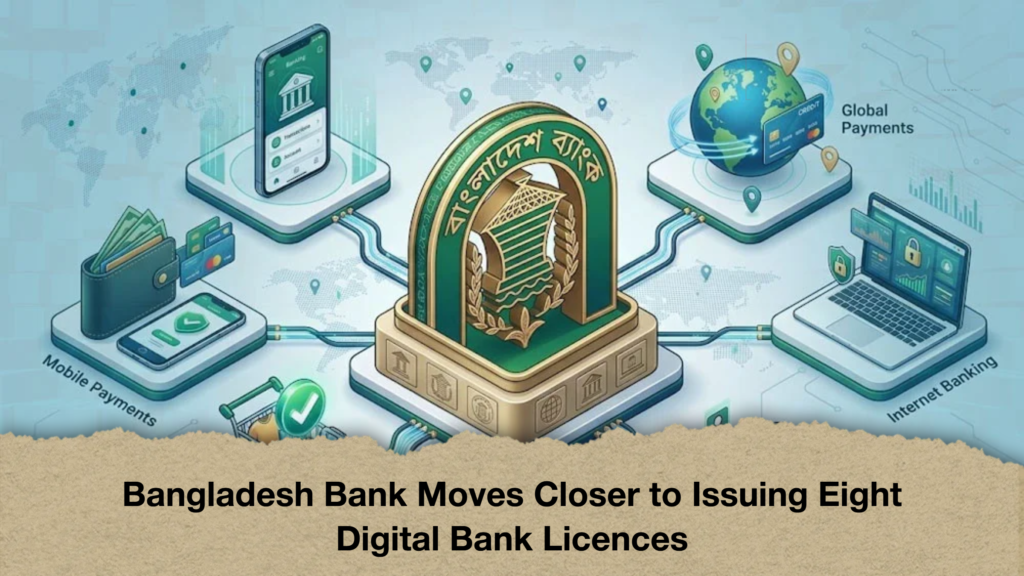
Bangladesh is advancing its digital financial landscape as regulatory authorities prepare to greenlight a new generation of branchless lenders. Out of twelve corporate applicants seeking licences in the second phase, eight entities have cleared the final evaluation stage. This proposal is scheduled for presentation at the upcoming Bangladesh Bank board meeting, although the identities of the chosen institutions remain undisclosed by the central bank.
Unlike conventional commercial banks, digital banks operate entirely without physical branch networks, sub-branches, or proprietary automated teller machines. Customers interact with these institutions exclusively through mobile applications and web-based portals. Services range from remote onboarding and deposit management to peer-to-peer transfers, utility bill payments, and digital loan applications. Virtual payment cards and QR code-based transaction tools will form the core of daily operations, sparing customers the need for traditional queue-based banking.
The broader objective behind this digital transition centres on reducing operational overheads and lowering transaction costs. Traditional brick-and-mortar operations require heavy investments in real estate, physical security, and sprawling administrative staffing. Eliminating these overheads allows digital-first lenders to streamline services, particularly for rural populations, young entrepreneurs, micro-traders, and unbanked demographics who often face geographic barriers to financial access.
The pool of applicants under consideration highlights diverse cross-industry partnerships and financial initiatives. The twelve contenders include Axiata’s ‘Boost’, a joint venture between Banglalink and Square named ‘Nova Digital Bank’, Akij Resource’s ‘Munafa Islamic Digital Bank’, and ASA’s ‘Moitree Digital Bank’. Additional applicants comprise ‘Amar Digital Bank-22′, ’36 Digital Bank’, ‘British-Bangla Digital Bank’, Bhutan’s DK Bank venture ‘Digital Banking of Bhutan’, App Bank, Japan Bangla Digital Bank, ‘Upokarhi Digital Bank’, and bKash Digital Bank.
Arfan Ali, former managing director of Bank Asia, observes that the entry of digital lenders will foster healthy market competition, encouraging traditional commercial banks to accelerate their own technological upgrades and modernize business models. Bringing tech-savvy youth into the formal financial fold stands to expand overall financial inclusion across the country.
Despite the growth potential, industry experts emphasize that robust risk management remains critical. Establishing resilient digital infrastructure, advanced data protection protocols, and sophisticated cybersecurity defences is essential to prevent online fraud and secure customer data. Mitigating technical downtime and addressing widespread gaps in digital literacy among consumers will also determine the long-term viability of these institutions.
Bangladesh Bank Executive Director and Spokesperson Arif Hossain Khan confirmed that the evaluation process is complete and the licensing recommendations are ready for the board’s review. While regulatory approval promises to reshape domestic banking, the ultimate success of these virtual lenders will rest heavily on execution quality, security compliance, and consumer trust.