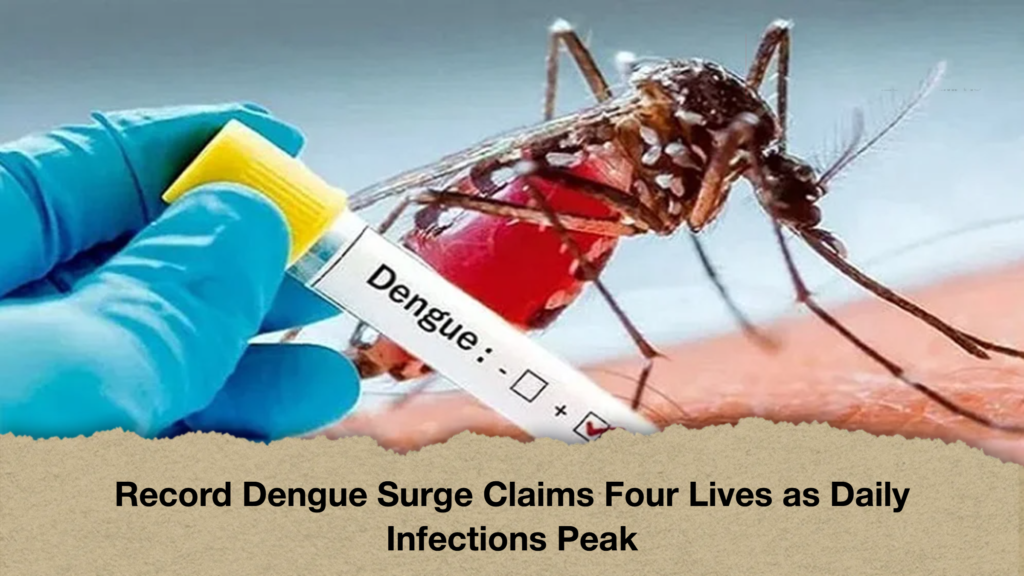
Bangladesh is facing an escalating public health crisis as mosquito-borne dengue fever continues its aggressive spread across the country. Over the past twenty-four hours, the virus has claimed four more lives, while a staggering one thousand, one hundred and sixty-three fresh infections have been recorded. This marks the highest single-day spike in case numbers seen so far this year, signalling that the transmission rate shows no signs of slowing down.
Data released by the Health Emergency Operations Centre and Control Room of the Directorate General of Health Services details the deepening severity of the outbreak. The latest fatalities push the nation’s cumulative death toll from the disease to ninety-ret for the year up to Monday, August 31. Total reported infections have simultaneously climbed to thirty-five thousand, eight hundred and forty-six, reflecting a massive influx of patients seeking hospital care since the beginning of the year.
The outbreak has gathered rapid momentum over recent days, with statistics painting a clear picture of an upward trajectory. Just a day prior on Sunday, August 30, health bulletins recorded three deaths alongside one thousand and ninety-seven new hospital admissions. The single-day jump of sixty-six additional cases within twenty-four hours underscores the mounting pressure on urban healthcare infrastructure and medical facilities.
Medical professionals note that common symptoms of dengue include high fever, severe headaches, retro-orbital eye pain, joint and muscle aches, fatigue, and persistent vomiting. In severe cases, patients can experience rapid clinical deterioration marked by internal bleeding, respiratory distress, or profound abdominal pain. Public health experts reiterate that ignoring early fever symptoms can prove dangerous, making prompt medical consultation and diagnostic testing essential.
Aedes mosquitoes, the primary vectors for the virus, thrive in stagnant water found in domestic and urban environments. Common breeding sites include roof spaces, balconies, discarded containers, flowerpots, and water drums left uncovered around residential areas. Experts emphasize that effective vector control requires a two-pronged approach—combining municipal mosquito eradication programmes with rigorous community vigilance to eliminate standing water sources at home.
Preventative measures remain the strongest defence against the ongoing surge. Citizens are strongly advised to use mosquito nets during daylight hours, apply insect repellents, and ensure that living spaces are thoroughly shielded against mosquito entry. Comprehensive surveillance covering patient management, hospital care, and aggressive destruction of breeding grounds remains crucial to containing the spread as the transmission season progresses.