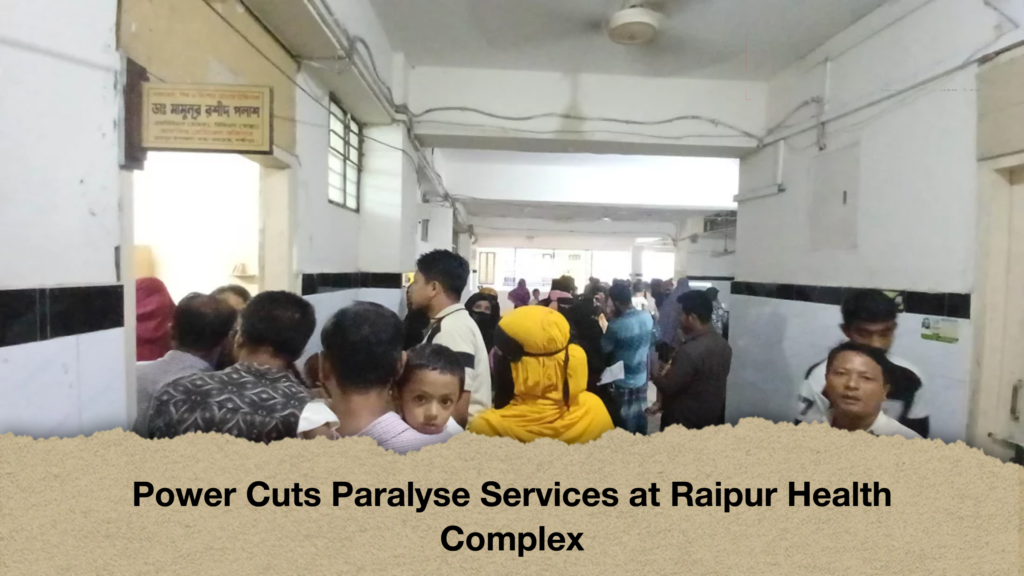
Patients and their relatives face persistent hardship at the Raipur Upazila Health Complex in Lakshmipur district, where severe power outages continue to disrupt critical medical operations. Despite the facility housing essential diagnostic equipment and a back-up generator, a complete lack of fuel allocations leaves staff unable to power basic life-saving machinery during frequent blackouts.
On Tuesday morning, long queues formed as visitors waited under scorching heat for routine consultations and urgent diagnostic tests. With the electricity cut for hours, vital equipment—including X-ray units and pathology labs—remained completely non-operational. Many patients, unable to wait indefinitely, were forced to return home without receiving necessary diagnoses. Among those suffering was Parul Begum from Kanchanpur village, who spent over an hour waiting to get her six-year-old child examined, only to find the imaging department shuttered due to the outage.
The crisis extends far beyond diagnostic services. Hospital records indicate that 86 patients were admitted on the day, 20 of whom were young children suffering from pneumonia. These infants require immediate nebulisation therapy to ease severe respiratory distress; however, power cuts severely limit the facility’s capacity to deliver continuous treatment. Mothers from nearby villages recounted waiting hours in suffocating rooms, while infants due for routine vaccinations faced delays owing to worries over cold-chain storage for vaccines.
Although a donor previously gifted a generator to the complex, hospital officials confirmed that it remains idle because no budget is assigned for diesel fuel. A secondary Uninterruptible Power Supply (UPS) unit installed in the emergency department routinely dies during extended outages, leaving key medical apparatus completely powerless. Compounding the situation, an advanced operating theatre lies underutilised due to a three-year shortage of surgeons and operational fuel, whilst heavy machinery worth millions of taka—supplied under health protection initiatives—remains in disrepair.
Officials at the Lakshmipur Rural Electricity Association (Palli Bidyut Samiti) acknowledged that the region is receiving 30 to 35 per cent less electricity than required, leading to mandatory load shedding up to eight times a day. While the Residential Medical Officer, Dr Mamunur Rashid, assured that staff are doing their utmost with limited resources, the health complex—upgraded from 31 to 50 beds in September 2006—continues to struggle under the pressure of catering to an estimated population of nearly 400,000 residents.