Consumers across Bangladesh are facing severe financial strain as liquified petroleum gas (LPG) cylinder prices skyrocket well beyond government-mandated ceilings, despite persistent assurances from importers and energy operators that national reserves remain sufficient.
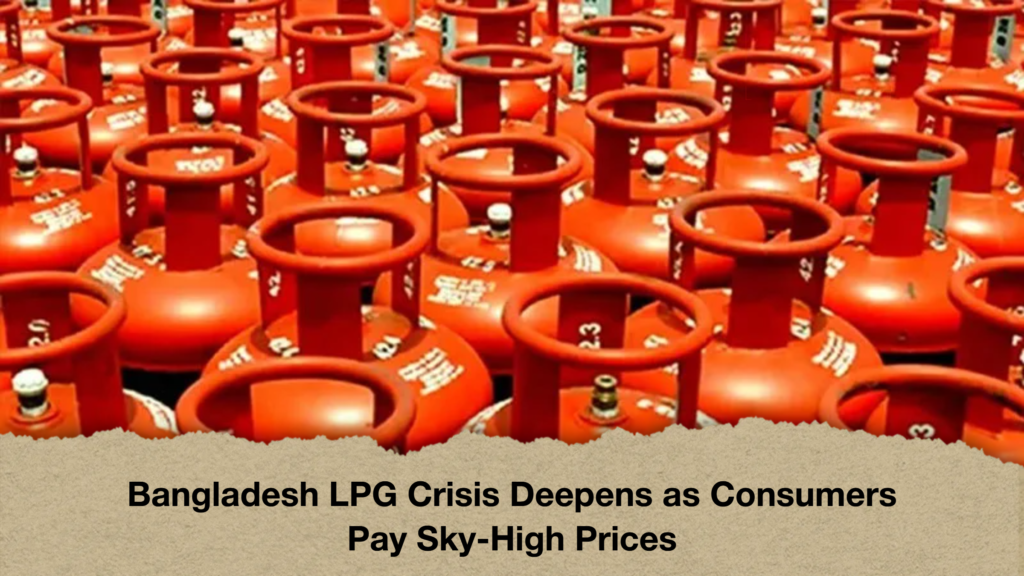
For September, the Bangladesh Energy Regulatory Commission (BERC) set the official price for a standard 12-kilogram LPG cylinder at 1,585 taka, shaving 13 taka off the previous month’s rate. Reality on the ground paints a vastly different picture. Retailers across the capital and major urban centres are charging between 2,000 and 2,100 taka per cylinder, forcing households to pay an illegal surcharge of up to 515 taka above official rates. The price surge strikes a heavy blow to millions of families who rely on bottled gas due to widespread shortages in piped natural gas supplies.
National Revenue Board customs data reveals that Bangladesh imported 157,760 tonnes of LPG in August, followed by an additional 118,742 tonnes during the first three weeks of September. Annual demand hovers between 1.5 million and 1.6 million tonnes across approximately 10 million consumer connections, with household cooking accounting for nearly 80 percent of total usage. Private operators supply roughly 99 percent of the domestic market, making national supply chains heavily vulnerable to commercial disruptions.
Escalating geopolitical conflict in the Middle East lies at the heart of the supply chain bottlenecks. Maritime hazards along the Strait of Hormuz and the Red Sea have dramatically pushed up ocean freight charges and disrupted cargo availability. Importers report that international suppliers holding long-term contracts are cutting scheduled deliveries by 30 to 40 percent. Securing spot-market cargoes has grown equally difficult. Furthermore, BERC’s pricing benchmark factors in an import premium of 160 US dollars per tonne, whereas current market premiums range between 260 and 400 US dollars. Unable to absorb the cost differential, several operators have scaled back procurement volumes and initiated supply rationing.
At a stakeholder consultation hosted by the Energy Division on Monday, industry leaders assured Energy Minister Iqbal Hasan Mahmud that national stocks remain healthy. Minister Mahmud cautioned operators that adequate reserves at ports and depots must translate into smooth retail distribution, ordering strict vigilance against opportunistic hoarding and price manipulation by intermediate distributors and dealers.
Similar import crunches crippled the domestic market in December last year, when 12-kilogram cylinders reached an unprecedented 3,000 taka in several districts. Market experts warn that without immediate policy intervention to address shipping premium disparities, consumer exploitation will persist despite healthy figures on import ledgers.