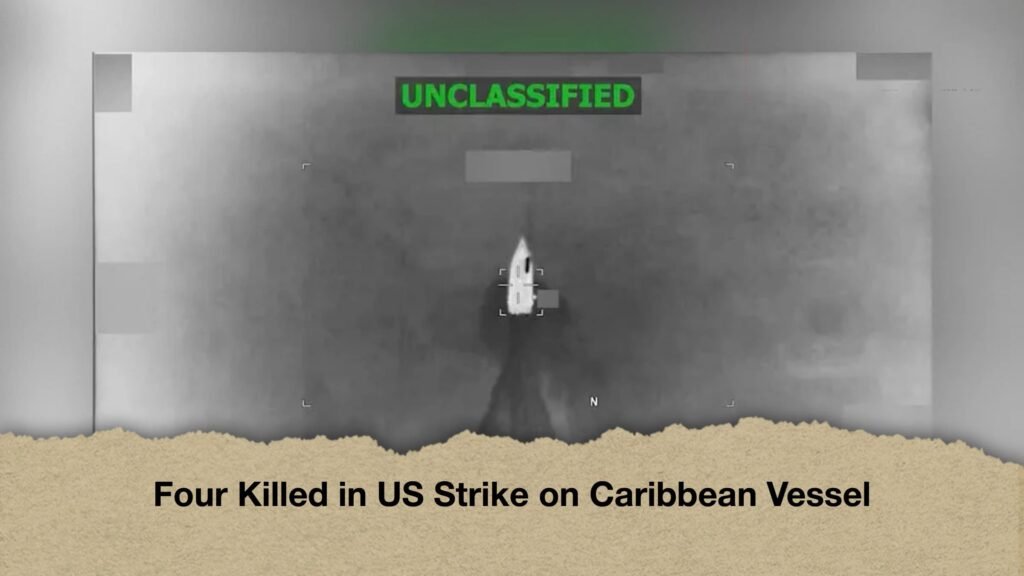
At least four people have been killed after the US military carried out a strike on a vessel in the Caribbean Sea, with Washington claiming the boat was being used to transport illegal drugs.
The US Southern Command said on Sunday that its forces had launched a “lethal” strike against a fast-moving vessel travelling along an established drug-trafficking route in the Caribbean. According to the command, intelligence indicated that the vessel was involved in transporting narcotics.
The four people killed in the strike were described by the Southern Command as “narco-terrorists”. The US military did not provide further details about their identities or disclose what type of drugs the vessel was allegedly carrying.
The operation forms part of a broader campaign by President Donald Trump’s administration against vessels suspected of involvement in drug trafficking. The administration has maintained that vessels targeted since September 2025 were carrying drugs and that military action was necessary to disrupt maritime trafficking networks.
More than 220 people have been killed in US strikes against vessels in the Caribbean Sea and the eastern Pacific since the campaign began, according to information cited by Reuters. The growing number of deaths has intensified debate over the methods being used by Washington to tackle suspected drug trafficking at sea.
Human rights organisations and legal experts have questioned the basis for the operations, particularly the use of lethal military force against people accused of criminal activity. Human Rights Watch, Amnesty International and independent United Nations experts have described the strikes as extrajudicial killings and raised concerns about their compatibility with international law.
The controversy centres on whether suspected involvement in drug trafficking can, by itself, justify a military strike that results in the deaths of those aboard a vessel. Governments have a legitimate interest in preventing the movement of illegal narcotics, but international law also places limits on the use of lethal force and requires states to establish a lawful basis for military action.
The US administration has continued to defend its campaign, portraying the targeted vessels as part of networks involved in the movement of illegal drugs. Critics, however, argue that allegations of criminal activity should be subject to evidence and legal scrutiny rather than being met with lethal force without a judicial process.
Ben Saul, the United Nations Special Rapporteur on human rights and counter-terrorism, has raised particularly serious concerns about the strikes. He said there were reasonable grounds to believe that such attacks could amount to crimes against humanity under international law.
The latest incident is therefore likely to fuel further scrutiny of Washington’s maritime operations. Questions remain over the evidence used to identify targeted vessels, the legal authority for the strikes and the safeguards in place to prevent unlawful killings.
As the US continues its campaign against suspected maritime drug trafficking, the balance between combating organised narcotics networks and complying with international human rights obligations remains a contentious issue.