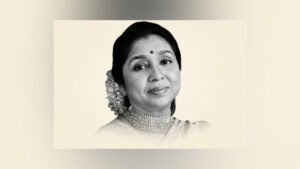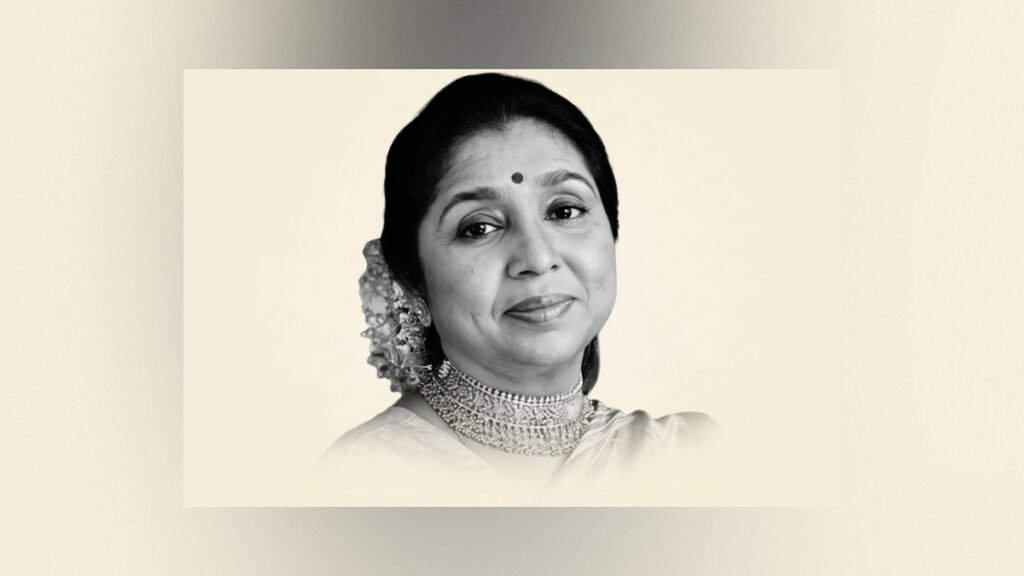
Indian music legend Asha Bhosle is being remembered on what would have been her 93rd birthday, with a remarkable story highlighting the extraordinary commitment she showed towards her craft even in her later years.
Born on 8 September 1933, Bhosle died on 12 April 2026 at the age of 92. She had been admitted to Breach Candy Hospital in Mumbai after suffering from extreme exhaustion and a chest infection. She later died following multiple organ failure.
Across a career spanning more than eight decades, Bhosle established herself as one of the most versatile voices in Indian music. She recorded more than 12,000 songs in several Indian languages and became particularly celebrated for her work in Hindi cinema. Her repertoire extended well beyond conventional playback singing, encompassing ghazals, folk music, classical compositions, cabaret numbers and other musical forms.
Her ability to adapt to different musical styles helped her remain relevant across generations. She worked with some of the most prominent composers in Indian cinema and developed a distinctive identity through her expressive voice and energetic performances. Her career also brought international recognition, including two Grammy nominations. She received several of India’s major cultural honours, including the Dadasaheb Phalke Award and the Padma Vibhushan.
Among the many memories surrounding her career, one recalled by actress Zeenat Aman offers a particularly vivid picture of Bhosle’s professionalism.
Aman recently remembered an occasion when the two were due to appear at a musical evening in Kolkata roughly a decade ago. When Bhosle arrived at the event, Aman was shocked to see that the singer was covered in bruises and cuts.
It soon emerged that Bhosle had been involved in an accident the previous day. Despite the injuries, however, she had decided to honour her professional commitment and attend the event as planned.
Bhosle did not simply turn up and make a brief appearance. According to Aman’s recollection, she took to the stage and continued performing for several hours, captivating the audience despite the physical injuries she had sustained.
What made the episode particularly striking was Bhosle’s age at the time. She was already well into her 80s, yet neither her age nor the injuries from the accident prevented her from fulfilling the engagement.
For Aman, the incident offered a glimpse into a side of Bhosle that went beyond her extraordinary musical reputation. She remembered being both impressed and inspired by the singer’s determination to honour her commitment to the audience.
The two women also shared a professional connection through some of Hindi cinema’s most recognisable songs. Bhosle provided the playback vocals for songs featuring Aman in films including Hare Rama Hare Krishna, Yaadon Ki Baaraat and The Great Gambler. Among the best-known examples are Dum Maro Dum, Meri Soni Meri Tamanna and Do Lafzon Ki Hai Dil Ki Kahaani.
Bhosle’s contribution to Indian music extended far beyond individual hit songs. Her career crossed changing eras of cinema and music, allowing her to remain an influential presence while generations of singers, composers and listeners came and went.
Her death in April marked the end of an extraordinary musical journey. India’s government paid tribute to her contribution, and she was cremated with full state honours at Mumbai’s Shivaji Park.
Yet alongside the thousands of recordings and prestigious honours, stories such as the Kolkata performance offer another measure of her legacy. Even after an accident had left her visibly injured, Bhosle chose to stand before an audience and sing.
That determination became part of the story of an artist whose career was defined not only by the range of her voice, but also by her enduring commitment to music and performance.