Hamas has accused Israel of attempting to conceal evidence of alleged serious crimes committed against Palestinians in Gaza during more than two years of war. The Palestinian organisation made the allegation in a statement issued late on Monday, 7 September.
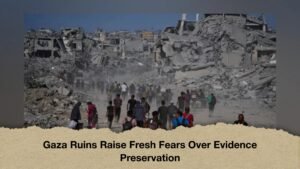
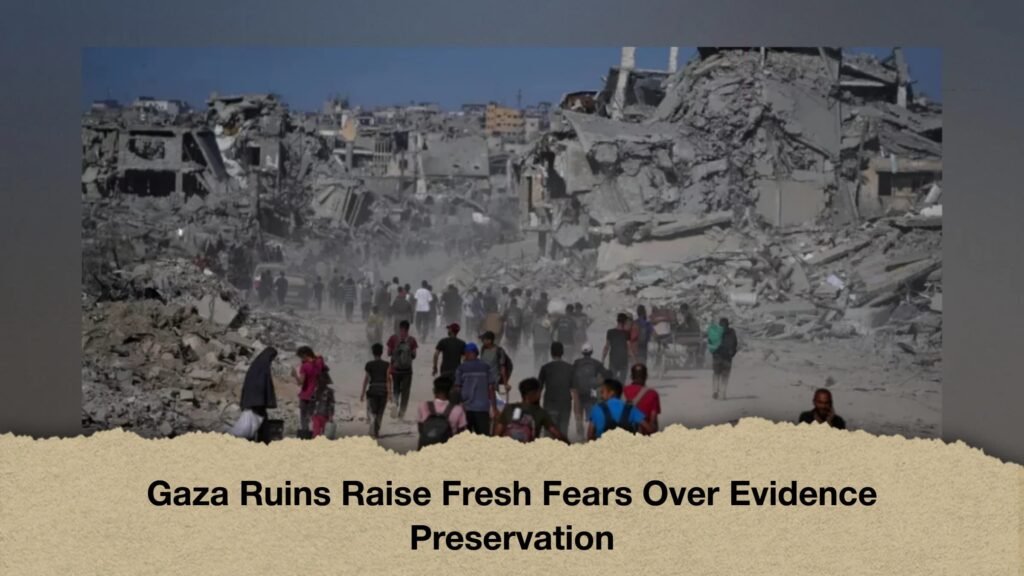
According to Hamas, the remains of thousands of people reported missing, along with physical evidence from sites where alleged mass killings took place, may still be buried beneath Gaza’s extensive rubble. The organisation claimed that efforts to remove, crush or relocate debris could result in the destruction of material that may be relevant to future investigations.
Hamas said interfering with locations containing human remains and other potential evidence would undermine efforts to establish what happened during the conflict. It also argued that such actions could conflict with international legal obligations concerning the preservation of evidence.
The statement referred to proceedings before the International Court of Justice (ICJ), where South Africa has brought a case against Israel under the Genocide Convention. Hamas said the preservation of evidence connected to allegations of genocide is particularly important while the legal process remains under way.
The organisation also highlighted the humanitarian dimension of recovering bodies from beneath destroyed buildings. For families searching for missing relatives, locating and identifying remains is not only a matter of accountability but also essential for obtaining information about their loved ones and allowing them to be buried according to their religious and cultural traditions.
Hamas called on the United Nations, international judicial bodies and other relevant authorities to take urgent measures to protect sites that may contain evidence or human remains. It also urged the deployment of international investigative teams and forensic specialists to assist with the recovery and identification of bodies and to document, catalogue and preserve material evidence.
The issue has become increasingly significant as Gaza faces the enormous task of clearing rubble and rebuilding areas devastated by the conflict. Removing collapsed structures is necessary for humanitarian access, the recovery of bodies and eventual reconstruction. At the same time, indiscriminate clearance of sites before they are properly examined could make it more difficult to establish the circumstances surrounding deaths and destruction, particularly where buildings and other locations may contain forensic evidence.
Hamas maintained that the rapid removal of rubble and the reconstruction of Gaza are urgent humanitarian and national necessities. It described reconstruction as an inalienable right of the Palestinian people, while arguing that the process should be carried out in a way that does not compromise the preservation of potential evidence.
The allegations made by Hamas have not, by themselves, established that evidence is being deliberately destroyed. Independent investigation and verification would be required to determine the circumstances surrounding the removal of debris at specific sites. Nevertheless, the dispute underscores a wider challenge facing Gaza: how to clear vast quantities of war debris and begin reconstruction while recovering missing people, preserving potential forensic evidence and addressing demands for accountability over alleged violations committed during the conflict.