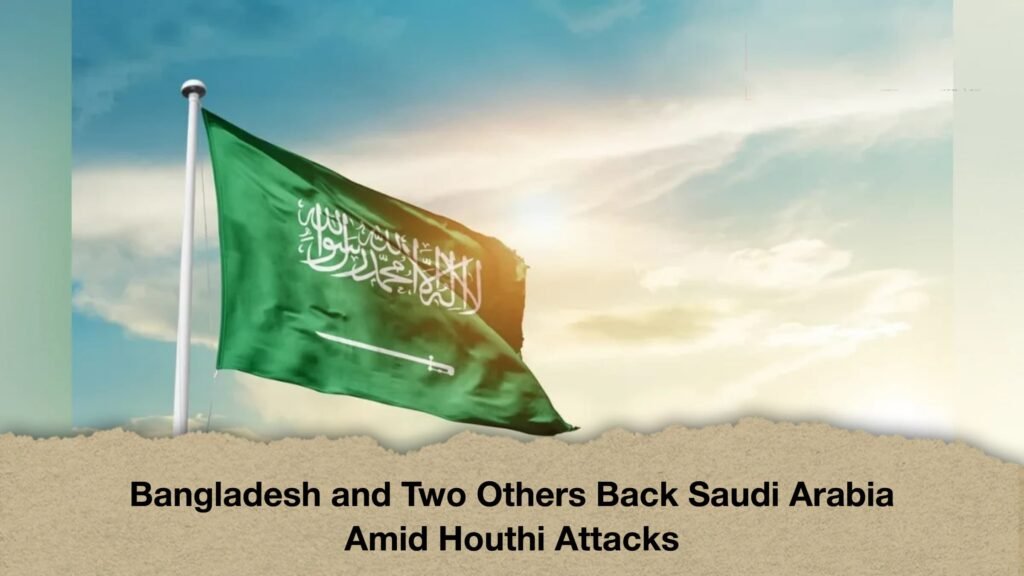
Bangladesh, Malaysia and the Maldives have expressed support for Saudi Arabia as Houthi attacks targeting the country intensify, condemning actions that threaten its security and calling for restraint to prevent further escalation in the Middle East.
The three countries issued separate statements on Wednesday, 16 September, reaffirming their support for Saudi Arabia’s security. Their responses came as concerns grew over the impact of continued Houthi attacks on regional stability and the safety of Saudi Arabia’s religiously significant sites.
Malaysian Prime Minister Anwar Ibrahim addressed the situation in a post on X, urging the parties concerned to pursue dialogue. He also called for caution and advised against measures that could further increase tensions across the Middle East. His remarks placed emphasis on reducing confrontation and finding a way to address the situation through communication rather than further escalation.
Maldivian President Mohamed Muizzu also condemned actions that could threaten Saudi Arabia’s religious sites. In a post on X, he said any activity posing a threat to the security and sanctity of Islam’s holiest city was unacceptable. He called for the attacks to stop immediately, warning that continued violence could contribute to a further deterioration of the situation.
Bangladesh also reiterated its support for Saudi Arabia. In a statement published by the Ministry of Foreign Affairs on Wednesday, Dhaka stressed that the security and sanctity of Saudi Arabia’s holy sites must always be fully respected and protected.
The issue has particular significance across the Muslim world because Saudi Arabia is home to Makkah and Madinah, Islam’s two holiest cities. Makkah is the location of the Kaaba at the Grand Mosque, while Madinah is home to the Prophet’s Mosque. Both cities receive large numbers of Muslim visitors, particularly during the Hajj and Umrah seasons.
Any security threat involving these locations can therefore generate concern well beyond Saudi Arabia. The statements from Bangladesh, Malaysia and the Maldives reflect that wider sensitivity, with all three countries placing emphasis on the protection of Saudi Arabia and its religiously significant sites.
The Houthi movement, based in Yemen, has been involved in the wider conflict and security tensions affecting the region. Saudi Arabia has been closely linked to the Yemen conflict for years, and tensions involving the Houthis have repeatedly raised concerns about cross-border security and the broader stability of the Arabian Peninsula.
Against this backdrop, the latest reactions from Dhaka, Kuala Lumpur and Malé have focused on preventing further deterioration. Malaysia has stressed dialogue and restraint, the Maldives has called for an immediate halt to attacks that could threaten the sanctity of Islam’s holiest city, while Bangladesh has highlighted the need to ensure the continued security and dignity of Saudi Arabia’s holy sites.
The statements come at a time when the Middle East is already facing multiple security challenges. Any further escalation involving Saudi Arabia could add to regional uncertainty, which explains the emphasis placed by the three countries on restraint, security and the protection of religious sites.