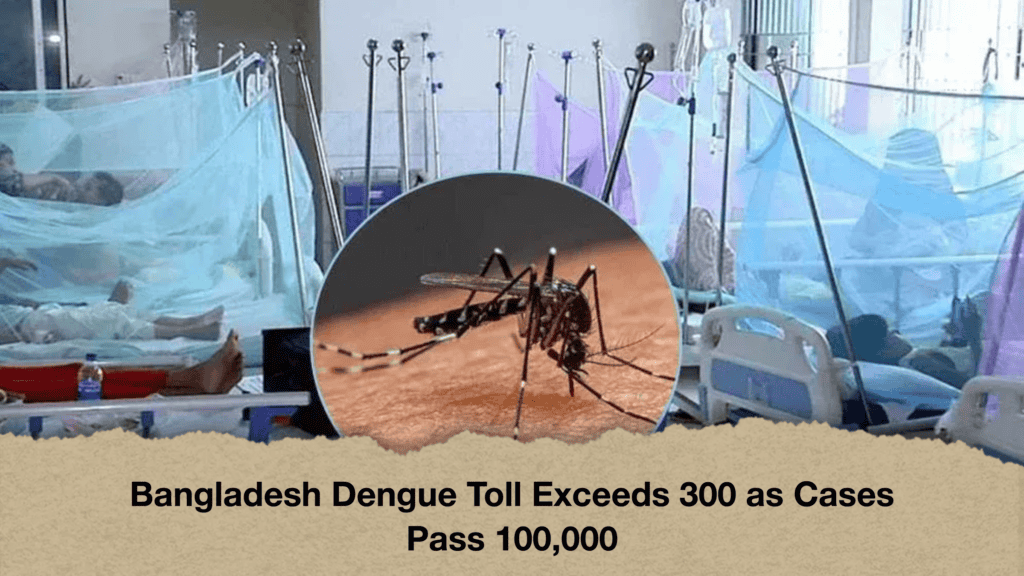
Bangladesh is confronting a escalating public health emergency as total hospital admissions from dengue fever have crossed the 100,000 mark, alongside a steadily rising death toll. According to data released on Monday, 12 October, by the Health Emergency Operation Centre and Control Room under the Directorate General of Health Services (DGHS), four more patients died from the mosquito-borne disease over a 24-hour period. This brings the national fatalities for the year to 307.
During the same window, healthcare facilities nationwide admitted 2,167 new dengue patients, pushing the cumulative hospitalisation total to 101,442. Although 95,331 patients have successfully recovered and been discharged following treatment, the rapid transmission rate and continued mortality remain a primary public health concern. Demographic figures show a near-equal distribution of fatalities between genders, with women accounting for 51.3% of deaths and men making up 48.7%.
| Month | Hospital Admissions | Fatalities |
| January | 1,081 | 2 |
| February | 409 | 2 |
| March | 353 | 0 |
| April | 640 | 0 |
| May | 714 | 1 |
| June | 2,907 | 13 |
| July | 9,206 | 36 |
| August | 20,536 | 43 |
| September | 43,774 | 148 |
| October (1–12 Oct) | 21,822 | 62 |
The epidemiological trend reveals a sharp worsening of the outbreak following the onset of the monsoon season. Casualties remained low during the first five months of the year before accelerating in June. September proved to be the deadliest period recorded so far, accounting for nearly half of the annual deaths. High casualty rates have persisted into October, which registered 62 deaths in its first twelve days alone, including a single-day peak of 10 fatalities on 6 October.
Admissions followed a similar trajectory, surging dramatically from June onwards and peaking in September with over 43,000 cases. With more than 21,000 patients admitted in less than a fortnight this month, medical facilities across the country continue to operate under severe strain.
Dengue is primarily transmitted by the Aedes mosquito, which breeds in small collections of stagnant water commonly found in flowerpots, discarded tyres, construction sites, and household containers. Public health experts stress that vector control requires concerted civic and municipal action alongside personal precautions, such as using bed nets and repellents. Medical professionals also warn that a drop in body temperature does not necessarily signify recovery; critical complications often arise during the post-fever phase, making early clinical assessment essential when warning signs like severe abdominal pain, persistent vomiting, or extreme lethargy appear.