Bangladesh’s electricity and energy sector is currently grappling with a severe crisis. Despite having adequate production capacity, the sector is under immense financial and structural pressure due to high costs, excessive dependence on fuel imports, a shortage of foreign currency, subsidy burdens, and weak governance. Experts warn that immediate, evidence-based, and sustainable long-term planning is essential for the incoming government.
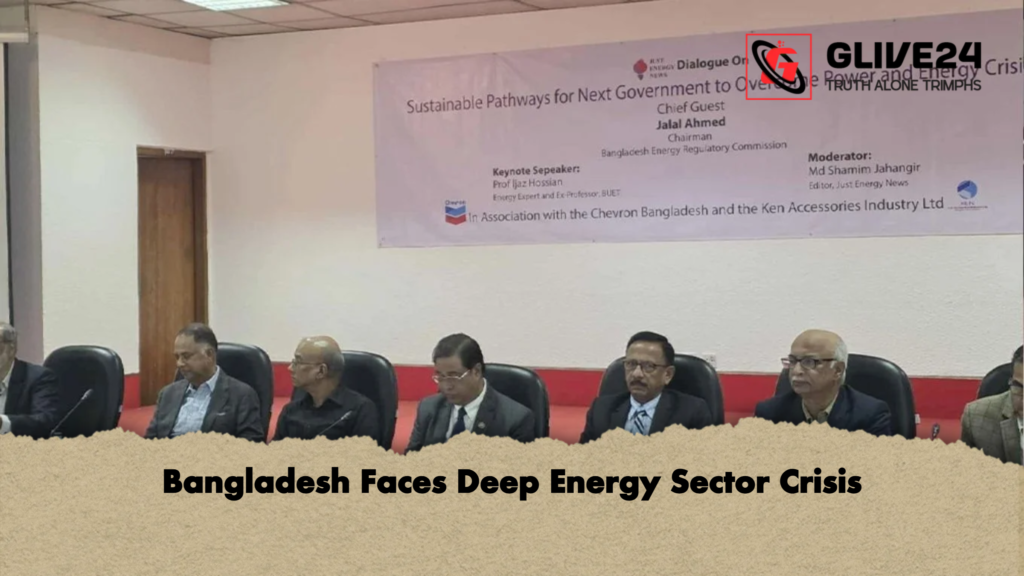
The issues were highlighted at a seminar titled “Sustainable Strategies for the Next Government to Address Electricity and Energy Challenges”, held on Tuesday at the CIRDAP auditorium in Dhaka. The event was organised by Just Energy News, with editor Shamim Jahangir serving as the master of ceremonies.
Jalal Ahmed, Chairman of the Bangladesh Energy Regulatory Commission (BERC), stated, “Bangladesh’s energy crisis largely stems from long-standing neglect of primary energy sources. The country’s FSRU capacity for LNG import is limited, leaving no room for urgent imports beyond the current two FSRUs.” He further noted, “Since 2001, no realistic study on reservoir management has been conducted, and gas exploration has remained stagnant for the past sixteen years.”
Dr. Ijaz Hossain, former professor at BUET, emphasised the sector’s vulnerability, saying, “Approximately 97–98% of Bangladesh’s total energy supply is fossil fuel-based, and nearly 60% of electricity and fuel is dependent on imports. Daily gas demand is 4,000 million cubic feet, while actual supply is only 2,500–2,600 million cubic feet.” He added that, excluding technical losses, about 10% of gas is lost to theft and wastage.
The overall status of Bangladesh’s electricity and energy sector can be summarised as follows:
| Sector | Daily Demand / Usage | Supply / Production | Partial Dependency | Key Observations |
|---|---|---|---|---|
| Gas | 4,000 million cubic feet | 2,500–2,600 million cubic feet | 60% used for electricity | Approximately 10% lost to theft/wastage |
| Electricity | 16,000 MW | 14,000 MW | 60% reliant on imported fuel | Long-term investment is critical |
| Renewable | — | 2.3% utilisation | Low | Potential growth in solar, wind, and biomass |
Iqbal Hasan Mahmud Tuku, a member of BNP’s National Standing Committee, described electricity as both a commercial commodity and a public service, stressing that a delicate balance is required to provide affordable power. “Maintaining this balance will be a major challenge for the next government,” he warned.
Dr. Md. Rafiqul Islam, Additional Secretary at the Bangladesh Energy and Power Research Council, urged the government to leverage not only natural gas but also solar, wind, hydro, biomass, and blue economy resources. He emphasised the need for a short-, medium-, and long-term roadmap with strict accountability.
Energy experts cautioned that, given high subsidies, import dependency, and corruption, Bangladesh could be on the verge of hyperinflation. The next government will face tough political and economic decisions to stabilise the sector and ensure sustainable energy security.