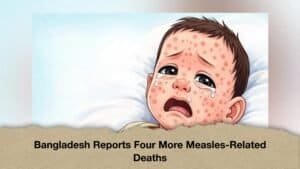
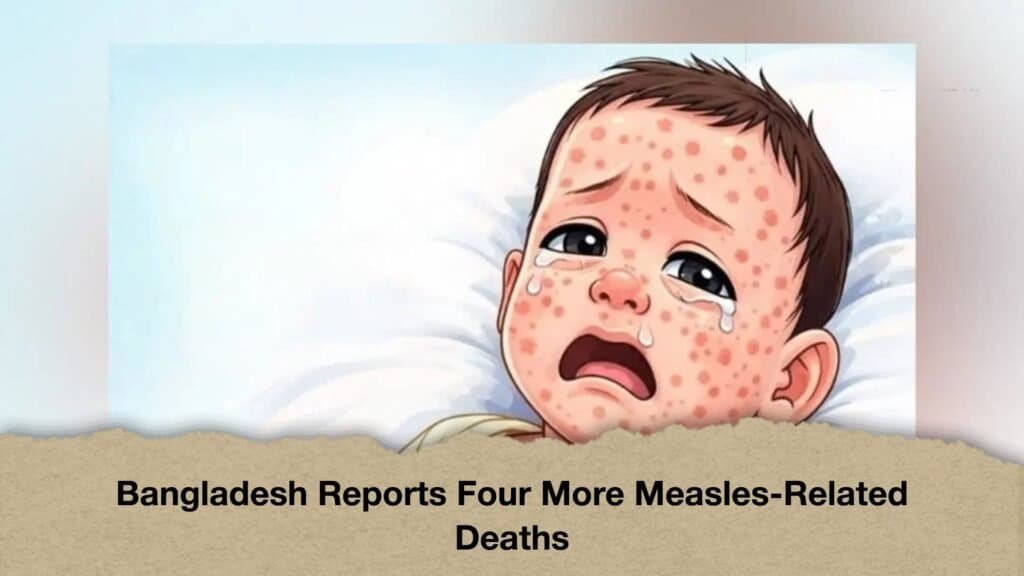
According to the Directorate General of Health Services (DGHS), 988 people developed symptoms consistent with measles between 8 am on 6 November and 8 am on 7 November. Four people also died with measles-related symptoms during the same period.
The figures were released in the DGHS’s regular measles situation report on Saturday (7 November).
The latest deaths have brought the cumulative number of fatalities associated with confirmed measles and suspected measles infections to 1,280 since 15 March. Of these, 105 were confirmed measles-related deaths, while 1,175 involved patients who died after developing symptoms associated with the disease.
The number of suspected infections has also continued to increase. With 988 additional suspected cases reported in the latest 24-hour period, the cumulative figure has reached 237,702 since 15 March.
Meanwhile, 61 new cases were confirmed through testing during the same period. This brings the total number of laboratory-confirmed measles infections to 24,355 since the outbreak began.
Hospital admission figures provide another indication of the scale of the outbreak. According to the DGHS, a total of 211,865 patients suspected of having measles have been admitted to hospitals across the country since 15 March. Of them, 203,257 have recovered sufficiently to be discharged and return home.
Although the high number of recoveries offers some indication of the treatment being provided, the continued emergence of new cases and deaths remains a serious concern. The figures also highlight the pressure that a prolonged outbreak can place on healthcare facilities, particularly when large numbers of patients require medical attention over an extended period.
Measles is a highly contagious viral disease that spreads through the air when an infected person coughs or sneezes. The virus can spread rapidly, particularly in crowded environments and communities where vaccination coverage is insufficient.
Children are among the most vulnerable groups, especially those who have not received the recommended measles vaccine doses. Common symptoms include high fever, coughing, a runny nose, red and watery eyes, followed by a characteristic reddish skin rash.
While many patients recover with appropriate care, measles can lead to serious complications, including pneumonia, severe diarrhoea and other potentially life-threatening conditions. Young children are particularly vulnerable to these complications, making early recognition and timely medical attention essential.
The distinction between suspected and confirmed infections is also significant when assessing the outbreak. Suspected cases include patients showing symptoms consistent with measles, while confirmed cases are those established through the relevant diagnostic process. As a result, the two figures represent different stages of disease identification and should not be treated as identical.
Vaccination remains the most effective means of preventing measles and reducing the risk of widespread transmission. Ensuring that children receive their scheduled vaccine doses, identifying those who have missed immunisation and maintaining access to medical services are important elements of outbreak control.
With the cumulative death toll now standing at 1,280 and suspected infections exceeding 237,000, Bangladesh continues to face a substantial public health challenge. The latest figures underline the need for sustained vaccination efforts, early diagnosis and effective treatment to protect children and other vulnerable people from further complications.