Concerns over Bangladesh’s law and order situation have intensified following the recent killing of four members of a teacher’s family at a home in Rangpur. The incident has once again raised questions about public safety and the authorities’ ability to contain serious violent crime.
The concern, however, is not confined to the Rangpur killings. Over the past several months, reports of homicides have continued to emerge from Dhaka and different parts of the country, adding to a growing sense of insecurity among members of the public.
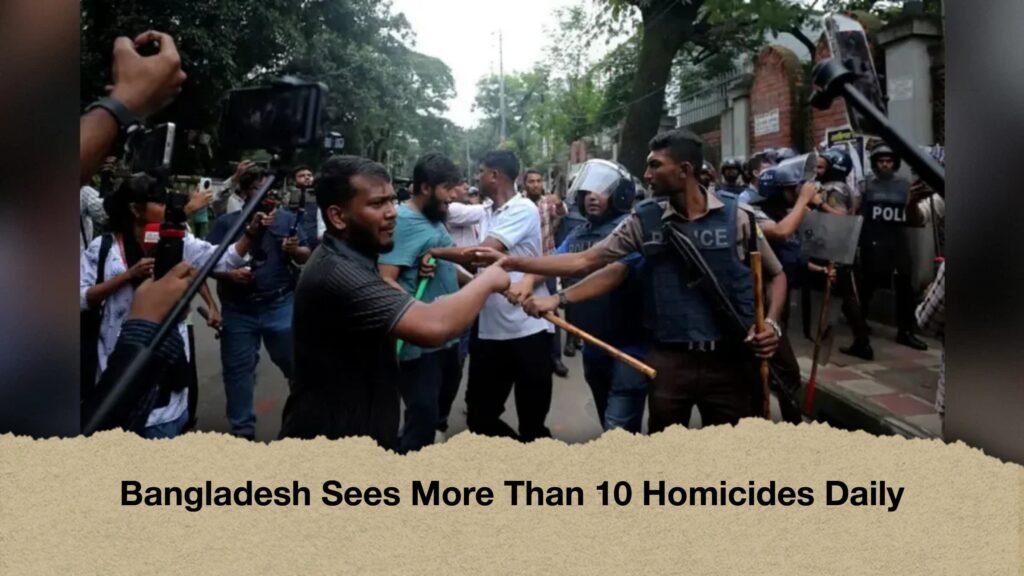
According to data from Bangladesh Police Headquarters, 934 cases related to murder were filed across the country between May and July this year. That amounts to more than 300 cases a month and an average of over 10 murder cases every day during the three-month period.
The figures for the first seven months of the year also indicate the scale of the problem. Police records show that 2,076 murder cases were filed between January and July. There were 287 cases in January, 250 in February, 317 in March and 288 in April. The number remained close to 300 a month during the following three months.
The figures refer to cases filed rather than a direct count of people killed on each day. Even so, they provide an indication of the continuing level of lethal violence being reported to law enforcement agencies.
The police have said that not all forms of crime are showing the same trend. According to Police Headquarters, incidents of theft and robbery have declined to some extent compared with earlier periods. Murder, however, remains a persistent challenge, with the authorities yet to bring the number of killings under sustained control.
Khandaker Rafiqul Islam, an additional inspector general of police responsible for crime and operations, told BBC Bangla that roughly 300 murder cases are being recorded each month. He described an average of around 10 killings a day as a grim reality facing the country.
The authorities say they are continuing efforts to identify and arrest those responsible for individual killings. Police are also pursuing investigations in cases where the perpetrators have yet to be brought before the law.
The wider picture of violence is also reflected in data from Ain o Salish Kendra, a Bangladeshi human rights organisation. According to its figures, 134 people died in mob violence during the first seven months of the year. At least 77 people were killed in political violence during the same period.
Mob violence has emerged as a particularly worrying dimension of the country’s security concerns. When groups of people take the law into their own hands, the consequences can be fatal and the normal legal process is undermined. Such incidents also raise questions about how effectively disputes, allegations and criminal accusations are being handled before they escalate into violence.
The persistence of killings also places pressure on the criminal justice system. Every murder requires investigation, evidence collection and, where appropriate, prosecution. Delays or weaknesses at any stage can affect the prospects of securing justice and may also influence public confidence in law enforcement.
Police efforts to arrest suspects after a killing are therefore only one part of the response. Preventing violence before it occurs, identifying areas or disputes where tensions are escalating, responding quickly to threats and ensuring that criminal cases are investigated properly are equally significant.
The latest figures underline the scale of the challenge. With more than 2,000 murder cases recorded in the first seven months of the year, and hundreds more reported during the three months from May to July alone, reducing lethal violence remains a major test for Bangladesh’s law enforcement and justice institutions.
For ordinary citizens, the issue is ultimately about security in their homes, neighbourhoods and communities. The continuing number of killings, along with deaths linked to mob and political violence, means that restoring a stronger sense of safety will require sustained action rather than responses limited to individual incidents.