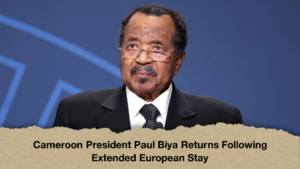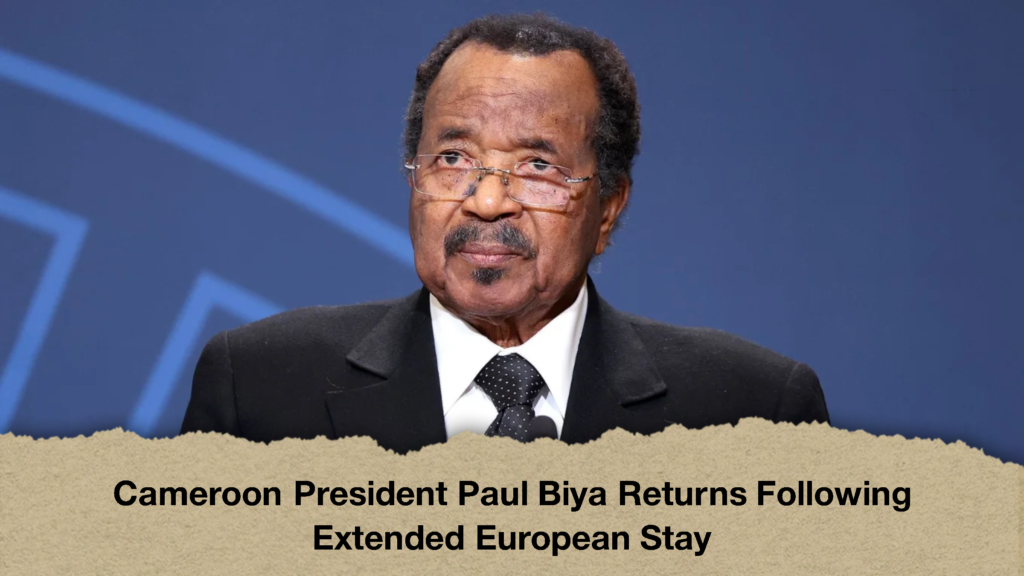
Paul Biya, the world’s oldest serving head of state, has returned home to Cameroon following an absence of over ten weeks in Europe. His prolonged stay abroad had triggered intense domestic debate regarding his physical wellbeing and his ability to continue governing. The 93-year-old statesman landed in the Central African nation on Thursday afternoon against a backdrop of escalating public scrutiny concerning political succession in a country he has presided over for more than four decades.
Arriving at Yaoundé Nsimalen International Airport on a private charter originating from Geneva, Switzerland, Biya concluded what marks his longest recorded period away from the country since taking office in 1982. The president initially left Cameroon on 7 June, with the civil cabinet characterising the journey at the time as a brief private visit to Europe.
Accompanied by First Lady Chantal Biya, the nonagenarian touched down at around 4:45 pm local time. He was met on the tarmac by senior state officials before his motorcade departed for Unity Palace, the official presidential residence. Along major avenues leading into the capital, hundreds of loyalists from the ruling Cameroon People’s Democratic Movement gathered behind police barricades. Supporters displayed party banners and placards bearing portraits of the president, cheering as Biya offered a brief wave through the window of his car.
The extended absence generated significant friction across Cameroon’s political landscape, where executive authority remains heavily centralised in the presidency. Throughout his time away, government spokespersons repeatedly dismissed speculation regarding his health, maintaining that the president was in good condition and due to return shortly. The prolonged silence, however, prompted opposition figures and legal scholars to petition the Constitutional Council, urging the body to assess whether the presidency should be declared vacant or temporarily transferred. The council declined to initiate proceedings.
Under Cameroon’s constitutional framework, if the presidency becomes vacant as a result of death, resignation, or permanent incapacity, interim executive powers pass to the President of the Senate unless a Vice-President is in office.
Although the post of Vice-President was formally re-established in April, Biya has not yet nominated an appointee to fill the vacancy. Political commentators and civic organisations argue that this persistent void leaves Cameroon without a defined transition pathway, creating considerable governance uncertainty whenever the veteran ruler’s tenure ultimately concludes.