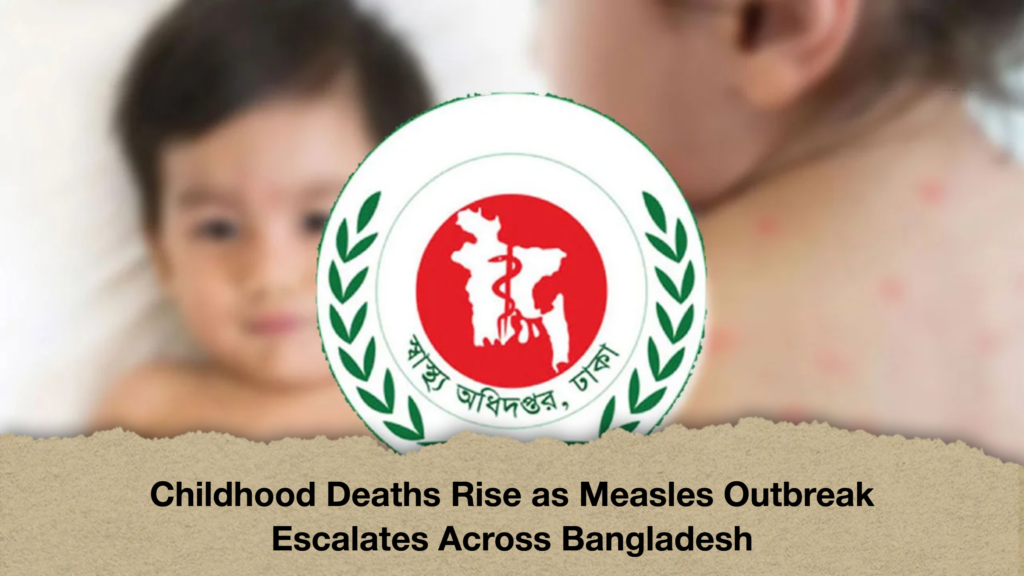
Growing concerns surround the health crisis unfolding across Bangladesh, where three more children have died after displaying measles symptoms over the past 24 hours. A further 1,098 individuals were identified as either suspected or confirmed cases of the viral illness during the same period, comprising 1,043 people exhibiting symptoms and 55 lab-confirmed infections.
Figures released in a press statement by the Directorate General of Health Services (DGHS) control room highlight the daunting scale of the outbreak. Between 15 March and 6 September, cumulative symptomatic cases reached 164,148, whilst confirmed infections stood at 19,696. The heavy burden on hospital wards remains clear, with 144,168 symptomatic patients admitted since mid-March. A total of 138,772 individuals have recovered and been discharged following clinical care, yet fresh admissions continue to strain healthcare facilities daily.
Fatality figures underscore the severe impact on vulnerable children. Whilst no lab-confirmed measles deaths were recorded in the last 24 hours, the three recent fatalities tied to measles symptoms bring the total symptomatic death toll to 894 since 15 March. Official records list 100 fatalities explicitly confirmed through laboratory testing over the same timeframe.
The DGHS maintains distinct accounting for symptomatic presentation versus laboratory verification. Consequently, not all symptomatic hospitalisations or deaths are formally categorised as confirmed measles. The broad disparity between symptomatic totals (164,148) and verified cases (19,696) suggests that whilst many individuals exhibit measles-like indicators, only a fraction undergo or yield positive diagnostic tests. Nevertheless, the high volume of hospital admissions reflects substantial operational pressure on regional health networks.
Measles is a highly contagious viral pathoge, spreading rapidly amongst children through airborne droplets. Standard symptoms include high fever, cough, runny nose, and characteristic red skin rashes. Unchecked complications frequently trigger severe secondary conditions such as pneumonia, acute diarrhoea, severe dehydration, and malnutrition. Prompt medical evaluation and robust epidemiological surveillance remain vital to protecting young populations as health authorities continue tracking the outbreak.