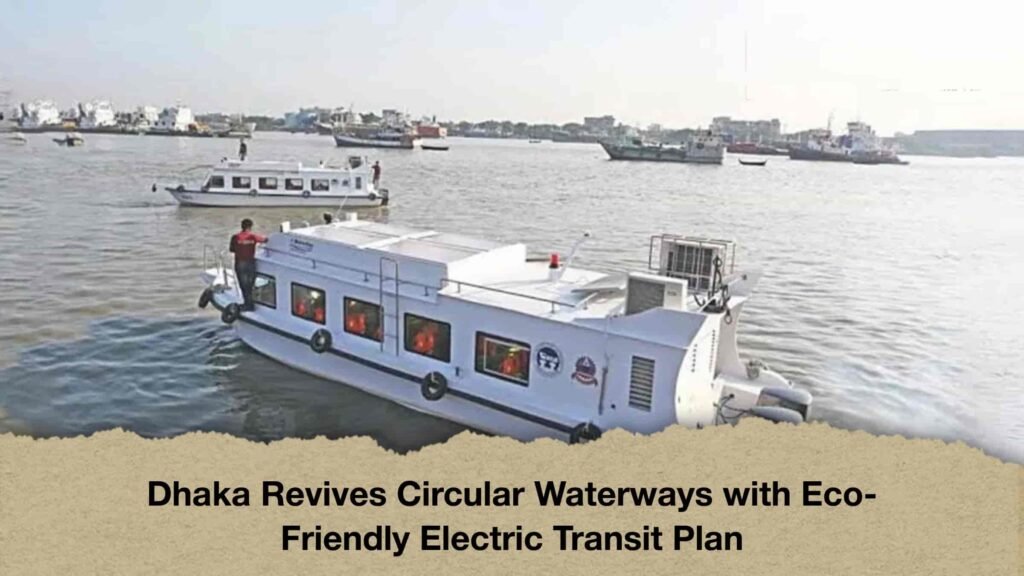
In a concerted effort to mitigate the unrelenting gridlock choking Bangladesh’s capital, the government is formulating a comprehensive roadmap to launch an electric water bus network across a 110-kilometre circular route surrounding Dhaka. Encompassing five crucial waterways—the Buriganga, Turag, Shitalakhya, Balu, and Dhaleshwari rivers—the proposed transit ecosystem aims to deliver a clean, reliable alternative for commuters and tourists alike. The network will seamlessly link four major maritime hubs: Dhaka, Narayanganj, Tongi, and Mirkadim, utilizing a total of 45 embarking and disembarking nodes, including five comprehensive terminals and nine primary landing stations.
While the Prime Minister’s Office has urged swift execution, key logistical aspects—such as fleet design, high-capacity charging infrastructure, and grid integration—remain under active development. Bangladesh Inland Water Transport Corporation (BIWTC) leadership confirmed that operational strategies are being refined to ensure long-term sustainability. Concurrently, the government is inviting private sector participation to run high-speed launches, passenger catamarans, and leisure vessels, transitioning the state’s role toward effective regulation, safety enforcement, and oversight.
This strategic pivot directly addresses the structural failures of earlier water bus initiatives introduced in 2010 and 2014, which ultimately folded due to crippling financial losses, heavy river siltation, poor integration with onward road transport, and unchecked industrial pollution. Experts contend that for the new electric service to succeed, urban planners must prioritize rigorous maintenance dredging, establish last-mile feeder links, and clean up the riverways.
| Performance Benchmark & Project Metric | Official Record / Target Value |
| Original Fleet Construction Cost (12 Vessels) | ৳9.20 Crore |
| Total Revenue Earned (2010–2020 Operations) | ৳2.52 Crore |
| Total Expenditure On Operations & Upkeep | ৳37.87 Crore |
| Net Financial Loss Incurred | ৳35.35 Crore |
| Total Circular Waterway Length | 110 Kilometres |
| Navigable Channel Depth at 12 Feet | 63 Kilometres |
| Navigable Channel Depth at 8 Feet | 47 Kilometres |
| Maintenance Dredging Span (Sirnichtek–Ashulia) | 10 Kilometres |
| Total Identified Effluent Discharge Points | 424 Sources |
| Private Industrial Contamination Sources | 244 Sources |
| Constructed Bankside Walkways | 20 Kilometres |
| Walkways Under Construction (92% Progress) | 52 Kilometres |
| Total Boundary Pillars Planned for Demarcation | 7,100 Pillars |
| Boundary Pillars Successfully Erected | 6,320 Pillars |
| Illegal Structures Removed (Dhaka & Narayanganj) | 24,792 Structures |
| Riverbank Land Recovered from Encroachers | 835.10 Acres |
Ongoing infrastructure enhancements—including extensive riverbank dredging, reclaiming encroached land, and constructing pedestrian walkways—demonstrate a renewed commitment to urban river restoration. Ultimately, the success of Dhaka’s electric water buses will depend on maintaining navigable depths, guaranteeing punctual schedules, and delivering a clean, well-connected transit experience that genuinely competes with road travel.