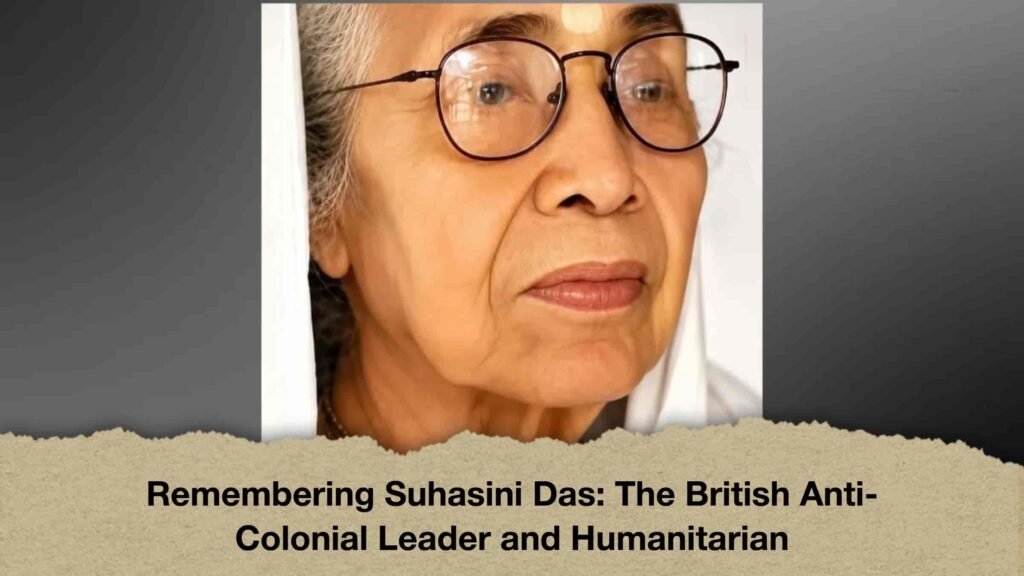
The history of political emancipation across the Bengal region is deeply indebted to female revolutionaries who defied social expectations to fight systemic injustice. Among the most distinguished of these figures was Suhasini Das, an anti-colonial organiser, political campaigner, and lifelong social worker whose courageous efforts left an indelible mark on both the anti-British movement and the 1971 Bangladesh Liberation War.
Suhasini Das was born on 16 August 1915 in Jagannathpur, located within the Sunamganj district. Raised by her parents, Peary Mohan Roy and Shobha Roy, as the eldest of four children, her early years coincided with growing nationalist fervour across Eastern Bengal. In accordance with contemporary customs, she was married at sixteen to Kumud Chandra Das, a prominent trader from Sylhet. However, her life altered dramatically when her husband died four years into their marriage. Rather than resigning herself to quiet widowhood, she chose to channel her grief into public service. She surrendered nearly all her substantial inheritance to philanthropic causes, reserving only a tiny fraction for her personal survival.
Her active political journey gathered pace in 1942 amidst the Quit India Movement launched by Mahatma Gandhi. Her vocal opposition to imperial rule resulted in her arrest and detention by British colonial administrators. By 1946, her organisational acumen was crucial in rallying support for Indian National Congress candidates during the general election, establishing her as a pioneering voice for women in regional politics.
Following Partition, she became intimately connected with the Rangirkul Ashram, founded in 1947 in the Kulaura hills. During the harrowing events of the 1971 Liberation War, when Pakistani forces engaged in widespread atrocities, Suhasini steadfastly remained at the ashram. She turned the compound into a safe haven for refugees and victims of violence, successfully shielding the sanctuary from multiple military incursions through sheer diplomatic tact and personal bravery.
In the post-war era, Suhasini pivoted towards grassroots development, focusing primarily on economic empowerment, self-reliance, and dignity for marginalized women. Her lifelong contributions were celebrated internationally and nationally: the Indian Government officially felicitated her as a freedom fighter in 1973, and she was conferred the National Social Service Award by Bangladesh in 1996.
Suhasini Das passed away on 24 May 2009, leaving behind a profound legacy that demonstrates how moral fortitude and selfless service can overcome the fiercest historic adversity.