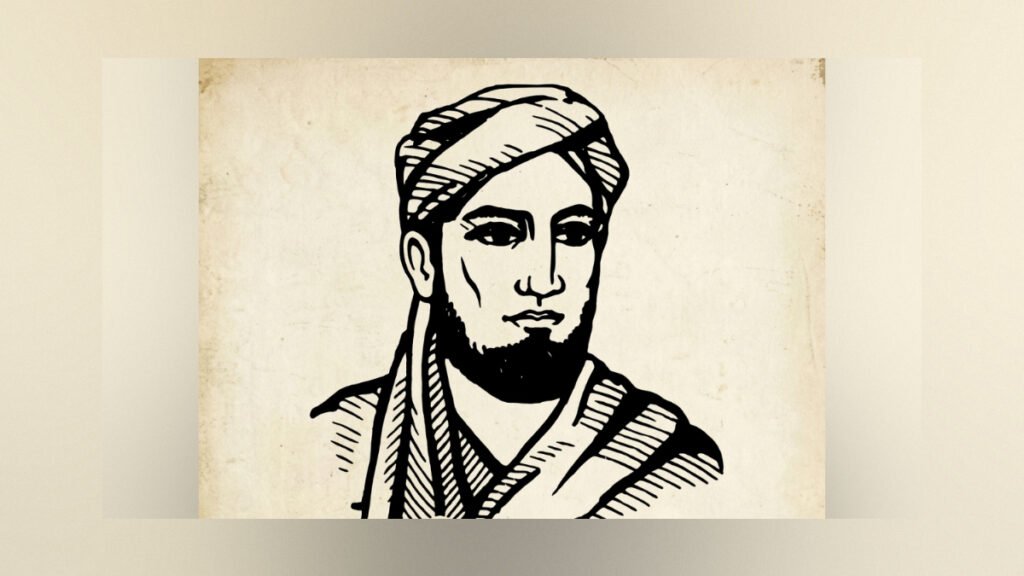
Muhsinuddin Ahmad, better known as Dudu Miyan, occupies an important place in the history of nineteenth-century Bengal. As the son and successor of Haji Shariatullah, founder of the Faraizi Movement, he inherited a religious reform movement and gradually gave it a stronger social and agrarian character. His leadership brought the grievances of Bengal’s rural population to the centre of a wider struggle against landlord exploitation, indigo planters and aspects of colonial rule.
Born in 1819 in the Madaripur area of what was then Bengal, Dudu Miyan was the only son of Haji Shariatullah. His early education began under his father. At the age of about 12, he was sent to Makkah to continue his studies, where he spent around five years before returning to Bengal. A government historical publication also records his birth in Madaripur and his period of study in Makkah.
Following Haji Shariatullah’s death in 1840, Dudu Miyan assumed leadership of the Faraizi Movement. Under him, the movement expanded beyond its original emphasis on religious reform and became increasingly connected with the socio-economic difficulties faced by peasants. Historical research describes this transformation as a shift from a primarily religious reform movement towards a broader socio-economic and political movement.
From religious reform to agrarian resistance
The rural economy of nineteenth-century Bengal was marked by tensions between cultivators, zamindars and indigo planters. Peasants faced pressure over rents and other demands, while indigo cultivation created additional conflict in several parts of the region. Against this backdrop, Dudu Miyan sought to organise cultivators and strengthen their collective position.
He revived elements of the traditional panchayat system to settle local disputes and maintain social order. The movement also developed a network of local leaders, commonly referred to as khalifas, who helped coordinate its activities in different areas. A government historical account says that this organisational structure enabled the Faraizis to deal with local disputes through arbitration and strengthened their influence in rural society.
Dudu Miyan’s approach gave the movement a distinctly agrarian character. His followers challenged practices they regarded as unjust and sought greater protection for cultivators from the pressures exerted by landlords and indigo interests. Historical accounts also describe confrontations between Faraizi supporters and armed retainers employed by landlords and planters.
The movement’s growing organisational strength attracted considerable support among sections of the peasantry. It also brought Dudu Miyan into repeated conflict with influential local interests. Various cases were brought against him during the period of confrontation, while his popularity among rural people made efforts to curb his influence difficult.
A growing concern for the colonial authorities
The British authorities increasingly viewed Dudu Miyan and the Faraizi network with suspicion. His influence among peasants, combined with the movement’s organisational structure, made him an important figure in the politics of rural Bengal.
The upheaval of 1857 marked a decisive point. During the Indian Rebellion of that year, the British government detained Dudu Miyan as a precautionary measure and kept him in Alipore Jail in Calcutta. Contemporary and later historical accounts differ on some details of his detention and release. Sources record his release around 1859 or 1860, while a government historical publication states that he remained under detention until 1861.
After his release, Dudu Miyan spent his final years in Dhaka. He died there in 1862 at the age of about 42 or 43. The date of his death is given differently in some historical accounts, although 1862 is consistently identified as the year of his death.
His place in Bengal’s history
Dudu Miyan’s significance lies partly in the way he reshaped the Faraizi Movement. Haji Shariatullah had established the movement as a programme of religious reform, but under his son it developed a much stronger connection with the material concerns of rural communities. Academic research describes the movement as evolving over time from religious reform into a socio-economic and eventually political force.
His organisational methods were central to that transformation. Local leadership, arbitration and collective action helped create a network capable of mobilising large numbers of cultivators. The movement spread across several districts of eastern Bengal, including areas of Faridpur, Bakerganj, Dhaka and Mymensingh, according to historical records.
Dudu Miyan’s legacy therefore extends beyond his role as a religious leader. He became closely associated with the grievances of Bengal’s peasantry at a time when rural society was undergoing major economic and political changes. His leadership connected religious identity with questions of social justice, agrarian rights and resistance to forms of exploitation.
His life lasted little more than four decades, yet his influence continued to shape the history of the Faraizi Movement after his death. His successors maintained the movement, although its political character gradually weakened and its later history followed a different course.
For that reason, Dudu Miyan remains a significant figure in the history of nineteenth-century Bengal. His story reflects the complex relationship between religious reform, rural society, agrarian grievances and resistance to colonial authority.
His memory endures as part of the wider history of Bengal’s peasant movements and the struggles that shaped the region during the nineteenth century.