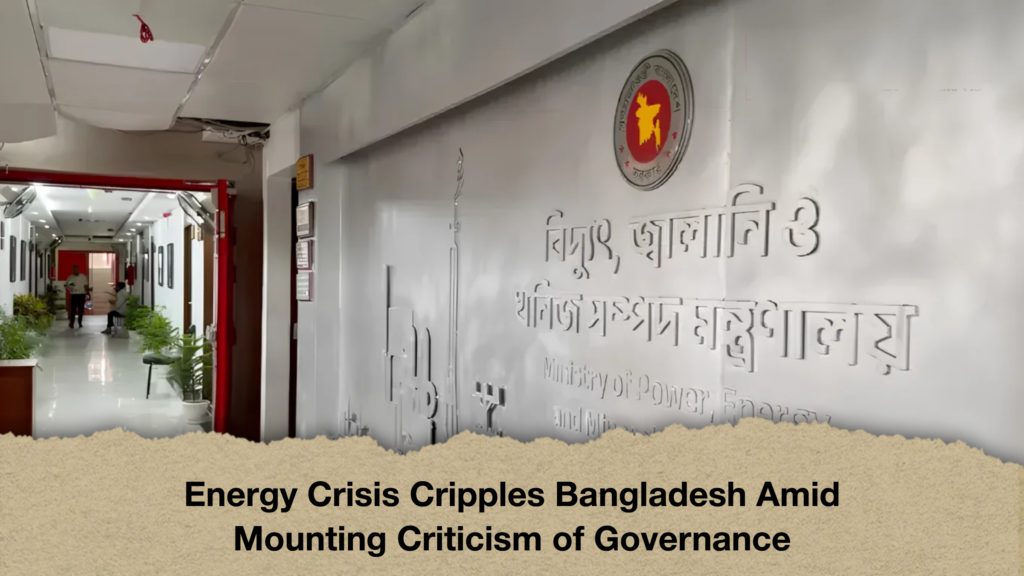
A severe nationwide energy crisis involving acute shortages of fuel, gas, and electricity has plunged daily life and industrial production into deep distress across Bangladesh. Over the past six months, since assuming power, the administration has faced mounting public anger over rolling blackouts and exorbitant utility struggles. Citizens from rural villages to major urban centres are grappling with unprecedented disruptions, while economists and energy experts argue that while external factors have played a role, the government’s own administrative shortcomings have drastically worsened the situation.
Official explanations from authorities have largely attributed the rolling blackouts to external shocks, pointing to accidental damage at liquefied natural gas terminals, geopolitical conflicts in the Middle East, and flawed long-term policies inherited from previous administrations. However, energy analysts remain unconvinced, asserting that structural mismanagement and a lack of immediate crisis intervention are equally to blame.
The immediate fallout is clearly visible across the economy. Industrial manufacturing, small businesses, and commercial trading have stalled due to unreliable power supplies. Daily life for ordinary households has become increasingly unbearable amid sweltering temperatures and erratic supply schedules. Power deficits reached critical highs recently, with national load shedding exceeding 3,500 megawatts on Thursday afternoon. This follows a peak deficit of 3,757 megawatts recorded earlier on August 10, highlighting a deepening supply deficit that continues to strain the national grid.
Reviewing the first six months of the energy sector under the current administration, Anu Muhammad, former member secretary of the National Committee to Protect Oil, Gas, Mineral Resources, Power and Ports, noted that while six months is a relatively short timeframe to overhaul a massive sector, the lack of administrative responsiveness is alarming. He pointed out a noticeable absence of strategic intent to alter the current trajectory or properly diagnose root problems. Instead, he criticised policymakers for appearing overly focused on expanding commercial opportunities for select domestic and foreign business syndicates rather than stabilizing basic public utilities.
Echoing similar concerns, B. D. Rahmatullah, former director-general of Power Cell, highlighted a complete absence of short-term mitigation strategies within the administration. While the government has publicised a long-term initiative aiming to generate 10,000 megawatts of solar power by 2031, immediate relief remains entirely absent. He emphasised that any major crisis management framework requires an immediate crash programme alongside medium- and long-term planning. According to him, even key regulatory bodies, the power board, and energy ministry officials appear entirely unprepared with any coherent crash programme to deliver immediate relief from chronic power outages.
As pressure mounts from businesses and citizens alike, analysts stress that shifting blame to global events or past administrations will do little to restore grid stability. Without a robust, immediate intervention plan to stabilize fuel imports and manage grid generation, the ongoing energy crunch threatens to inflict lasting damage on the national economy.