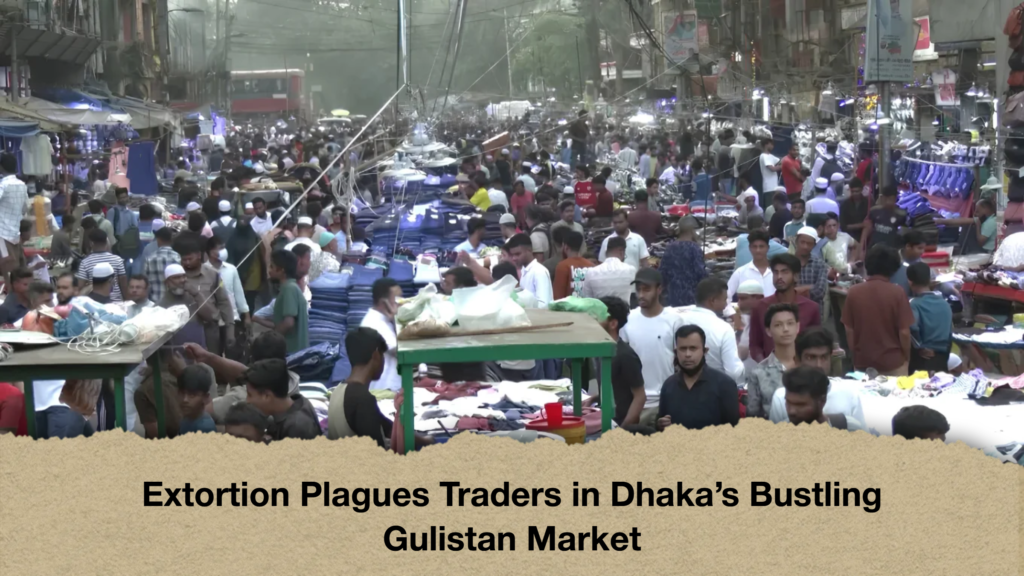
Gulistan stands as one of Dhaka’s most frantic commercial hubs, a sprawling labyrinth of retail and wholesale markets where thousands of traders and employees work from dawn until late at night. Yet beneath the bustling trade and constant flow of customers lies a quiet crisis. Traders across the district report facing relentless financial pressure, enduring systematic extortion by opportunistic syndicates operating under various pretexts.
According to local merchants, these illegal collections are orchestrated by a group locally referred to as the “Dorbesh syndicate”. Vendors claim that several individuals linked to this network carry criminal records from previous years, with allegations pointing to involvement in high-profile cases such as the disappearance of BNP leader and former ward commissioner Chowdhury Alam. Despite shifting political landscapes and changes in government administration, this entrenched network has adapted swiftly, retaining its influence and resuming active extortion under new guises.
Operating in an atmosphere of fear, the vast majority of traders refuse to speak out publicly. The pervasive anxiety stems from the genuine threat of retaliation, as victims worry that lodging formal complaints will invite targeted retaliation and worsen the financial squeeze on their shops. Small-scale enterprise owners bear the heaviest burden. While daily sales fluctuate unpredictably, fixed operational expenses—including shop rents, staff salaries, utility bills, and basic overheads—remain constant. The addition of forced financial demands quickly cuts into vital operating capital.
Merchants report that cash is demanded at regular intervals under various manufactured pretexts. Extortionists routinely collect fees under the guise of front-space usage, nighttime security, market management, or administrative overheads. Those who hesitate or refuse to pay face subtle intimidation designed to break their resolve without necessarily triggering open violence, leaving many with little choice but to comply quietly.
As funds flow daily from hundreds of individual storefronts, the aggregate total climbs to staggering sums, raising urgent questions regarding financial transparency. Traders are demanding accountability: Who collects these funds? Which specific accounts receive the deposits? Are official receipts issued for every transaction? Without formal documentation or statutory backing, victims argue that these regular collections amount to unchecked racketeering.
Seeking a secure recourse, local traders have appealed directly to law enforcement authorities to install dedicated complaint boxes within every market across Gulistan. Vendors believe this anonymous mechanism will allow victims to disclose the identities of extortionists, specific collection amounts, and illegal fund-routing methods without risking their physical safety or livelihoods. Law enforcement could then cross-verify these independent accounts to dismantle the shadow economy.
Traders emphasise that they seek no confrontation, only a secure and lawful environment in which to earn an honest living. At its core, the crisis in Gulistan is not merely about petty extortion; it threatens the economic security and fundamental rights of thousands of hardworking families. Investigators face the critical task of tracing the flow of illicit capital to unmask the individuals profiting from this enduring systemic abuse.