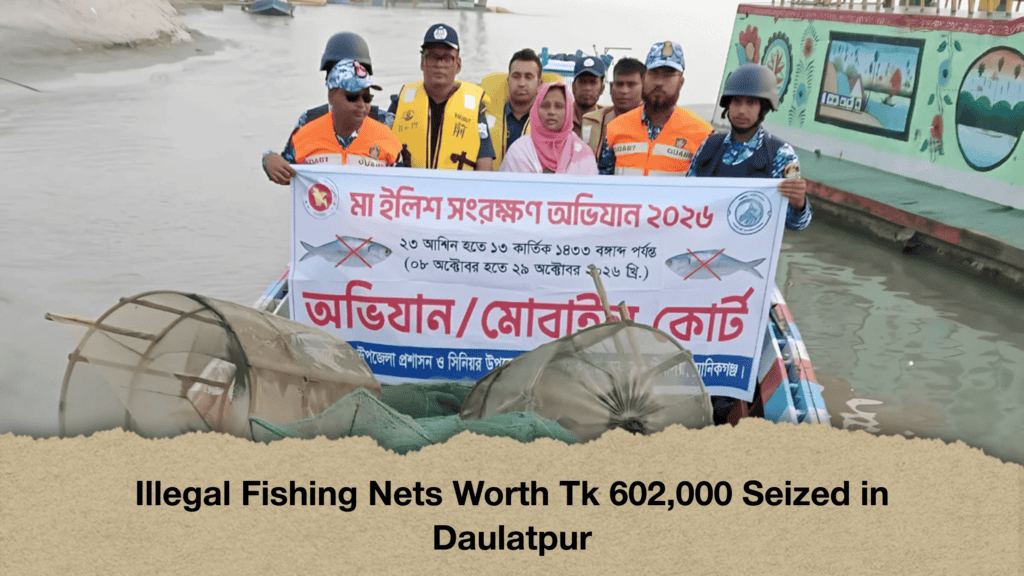
The operation was conducted on Saturday, 10 October 2026, as part of an ongoing campaign against illegal fishing during the hilsa breeding season.
Assistant fisheries officer Md Mizanur Rahman led the operation under the supervision of Upazila Fisheries Officer Suraiya Akter Tanni, with support from police personnel. Other members of the upazila fisheries office were also present.
During the drive, officials recovered the prohibited fishing equipment from the river area. The seized current nets and Chinese duari nets were taken to the upazila parishad premises, where they were publicly burned and destroyed. The approximately one kilogram of seized hilsa was distributed to a person described as poor and vulnerable.
The operation forms part of a wider effort to protect mother hilsa during their breeding period. Hilsa are an important fish species in Bangladesh, supporting the livelihoods of fishing communities and contributing to the country’s food supply. Protecting mature fish during spawning is considered important for allowing them to reproduce and sustain future stocks.
Current nets, which are made with very fine mesh, can catch fish indiscriminately, including smaller fish that have not reached maturity. Chinese duari nets are also associated with the capture of fish of different sizes. Their use can threaten the sustainability of fisheries by reducing the number of fish that survive to reproduce.
The government’s mother hilsa conservation campaign is scheduled to run from 8 October to 29 October 2026. During this period, enforcement operations are being conducted to prevent illegal fishing and protect hilsa during a crucial stage of their reproductive cycle.
The seizure in Daulatpur highlights the role of local fisheries officials and law enforcement agencies in implementing fishing restrictions. Such operations aim to discourage the use of prohibited equipment and reduce pressure on fish stocks during the breeding season.
Officials said enforcement activities would continue throughout the conservation period to prevent illegal fishing and support the protection of the country’s fisheries resources. The campaign also relies on public awareness and cooperation from fishing communities, particularly in riverine areas where fishing is an important source of income.
Protecting mother hilsa during spawning can help maintain fish populations and support future catches. Authorities have urged people to remain aware of the restrictions and help safeguard the species, stressing that conservation efforts are essential to sustaining hilsa production in the years ahead.