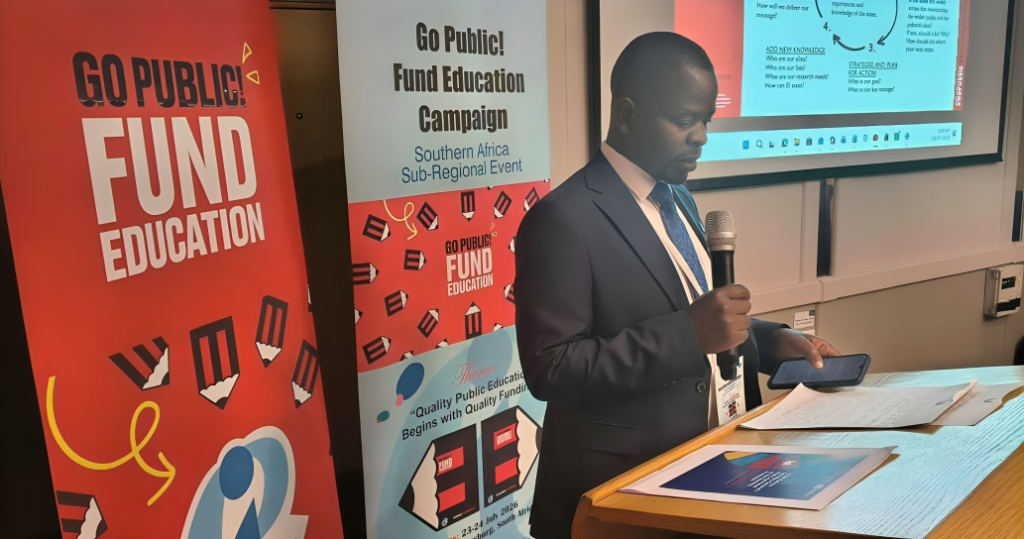
JOHANNESBURG/LILONGWE – Following the Southern Africa Sub-Regional Workshop of the “Go Public! Fund Education” campaign held in Johannesburg this past July, Malawian education unions have reaffirmed their commitment to placing quality public education at the center of the national policy agenda. The workshop, convened by Education International (EI) and hosted by the South African Democratic Teachers Union (SADTU) and the National Professional Teachers’ Organisation of South Africa (NAPTOSA), served as a pivotal platform for the Teachers Union of Malawi (TUM) and the Private Schools Employees Union of Malawi (PSEUM) to report on their advocacy strategies.
As of August 2026, the two organizations are navigating a challenging fiscal landscape, with union leadership stressing that the chronic shortage of teachers—exacerbated by stagnant investment—threatens to undermine the nation’s long-term educational objectives.
Economic Hurdles and Infrastructure Deficits
The country report presented in Johannesburg painted a stark picture of the obstacles facing the Malawian education system. The national economy has been hampered by persistent high inflation and critical foreign exchange shortages, which have severely constrained the government’s ability to allocate sufficient funds to the education sector.
This fiscal tightening has manifested in tangible infrastructural failures. Many schools remain underdeveloped, with a significant number of institutions lacking basic electricity, clean water, and sanitation facilities. These issues are further compounded by rapidly growing student enrollment figures, leading to overcrowded classrooms that exceed the capacity of the current teaching workforce.
Shifting Strategy: Direct Parliamentary Engagement
In response to the deepening crisis, TUM has significantly evolved its advocacy model over the past 12 months. Moving beyond traditional industrial action, the union has initiated direct, formal engagement with Members of Parliament. This strategy aims to ensure that education financing remains a priority in legislative discourse rather than a peripheral concern.
Key policy positions submitted by TUM to Parliament include:
-
Welfare and Social Protection: Advocating for enhanced social protection mechanisms for teachers to mitigate the rising cost of living.
-
Remuneration and Career Progression: Demanding the timely payment of salaries, which have frequently been delayed, and the activation of stalled promotion opportunities.
-
Conditions of Service: Pushing for comprehensive reforms to improve the professional environment, which unions argue is essential for teacher retention.
Visibility vs. Implementation: The Ongoing Gap
While the unions’ strategy of aggressive engagement has successfully raised the national profile of teacher well-being—effectively positioning it as a core topic in discussions between policymakers and civil society—the translation of this visibility into concrete government action remains slow.
Reports from TUM indicate that while lawmakers have acknowledged the gravity of the situation, the implementation of promised salary adjustments, promotions, and broader policy reforms has been subject to persistent administrative delays. Unions stress that without a fundamental shift in how the government prioritizes and disburses education funding, the nation risks losing qualified educators to other sectors or emigration.
Building Union Capacity for the Future
Despite the economic headwinds, the past year has been one of significant institutional growth for Malawian unions. The report highlighted an increase in union membership, bolstered by a concerted effort to leverage digital platforms and social media for advocacy. This modernization of union communication has played a crucial role in mobilizing members and enhancing the collective voice of the teaching profession.
Furthermore, internal restructuring—particularly at the district and regional levels—has made the unions more responsive to the localized concerns of their membership. Members have shown increased confidence in utilizing evidence-based advocacy to demand their rights, a development that TUM and PSEUM view as a vital step in strengthening the social dialogue between unions and the Ministry of Education.
As the unions look toward the next 12 months, their mandate remains clear: to ensure that quality public education is treated not merely as a fundamental human right, but as a primary public responsibility. The “Go Public! Fund Education” campaign remains the vehicle through which they will continue to press for the systemic investments necessary to secure Malawi’s future.
Advocacy Summary: Challenges and Union Priorities (2026)
| Strategic Area | Current Challenge | Union Action |
| Education Financing | High inflation, forex shortages | Parliamentary advocacy for increased budget allocation |
| Teacher Welfare | Delayed salaries, lack of promotion | Direct policy submissions to Parliament for improved service conditions |
| Infrastructure | Lack of electricity/sanitation, overcrowding | Public awareness campaigns to highlight facility deficits |
| Union Capacity | Membership engagement | Digital advocacy, social media outreach, regional structural strengthening |
| Government Status | Slow policy implementation | Continued pressure via social dialogue and legislative engagement |