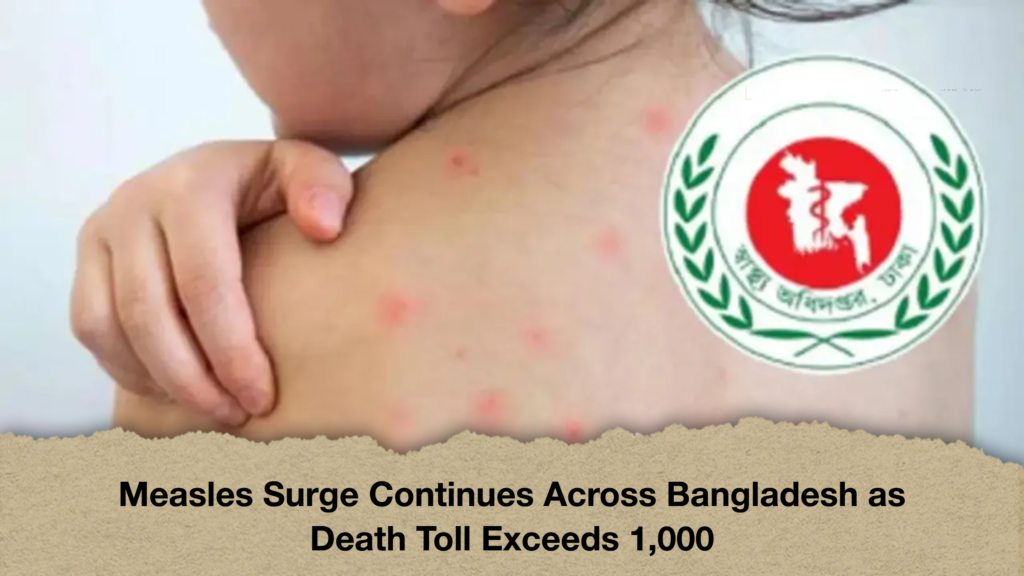
Six more patients admitted to hospital with symptoms of measles have died over a 24-hour period, bringing the total number of fatalities linked to the disease to 1,036 since mid-March.
According to the latest daily bulletin issued by the Directorate General of Health Services (DGHS) covering the 24 hours up to 8:00 AM on Tuesday, the recent deaths were distributed across three divisions. Four fatalities were recorded in Dhaka, whilst Sylhet and Chattogram reported one death each. None of the six recent victims had their diagnosis laboratory-confirmed prior to passing away, placing them under the suspect category in official tallies.
Over the same 24-hour window, healthcare facilities logged 1,239 new suspected cases alongside 77 laboratory-confirmed infections. This brings the cumulative burden recorded since 15 March to 173,959 suspected cases and 20,201 confirmed diagnoses nationwide.
The mortality record compiled over the six-month period highlights the severity of the outbreak. Of the 1,036 total deaths, 100 were laboratory-confirmed measles cases, whilst 936 were recorded as suspected measles-related fatalities based on clinical manifestation.
The ongoing outbreak continues to place substantial strain on the national public health system. Since the tracking period began, 153,279 patients have required hospital admission for severe symptoms. Although 147,386 individuals have made a full recovery and been discharged following treatment, the continuous daily influx of infected individuals keeps clinical wards under sustained pressure.
Measles is a highly contagious viral pathogen that spreads primarily through respiratory droplets. Initial clinical features include high fever, coughing, a runny nose, and conjunctivitis, followed several days later by a distinctive maculopapular rash that spreads across the body. While many individuals recover without severe sequelae, vulnerable patients—particularly unvaccinated young children and malnourished individuals—face a high risk of life-threatening complications, including severe diarrhoea, encephalitis, and fatal respiratory infections such as pneumonia.
Health authorities emphasise that timely isolation, early medical intervention, and robust routine immunisation coverage remain essential to curb community transmission and prevent further preventable casualties across the country.