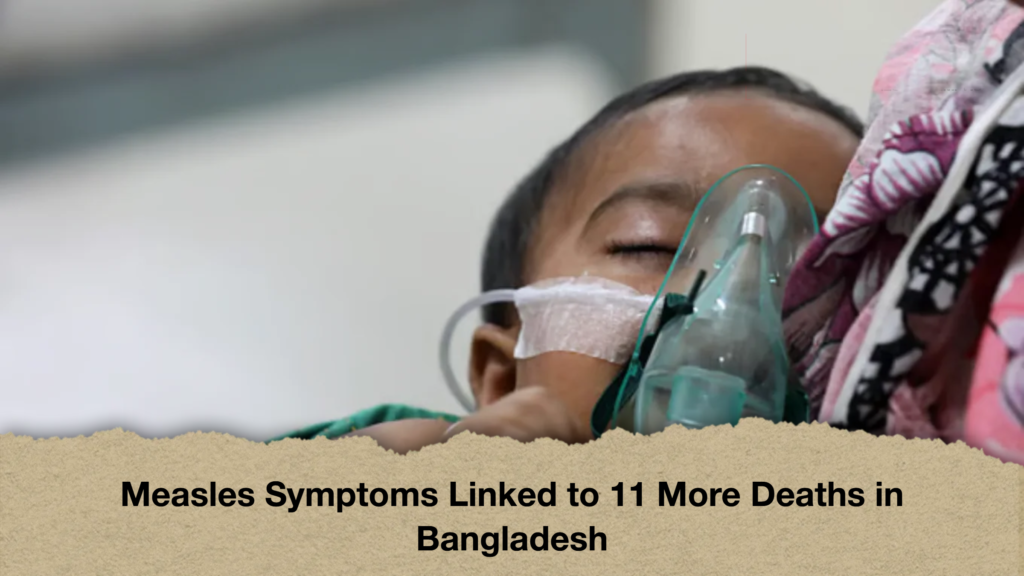
Eleven more people have died with measles symptoms in Bangladesh, taking the combined number of deaths from confirmed measles and suspected measles cases to 1,076 since 15 March. Four of the latest deaths occurred on 21 September but were included in the latest figures after the information reached health authorities late.
In the 24 hours from Tuesday morning to Wednesday morning, 1,157 people with measles symptoms were identified across the country, while 113 new cases were confirmed through testing. The latest figures underline the continuing pressure on the health system as the outbreak enters its seventh month.
According to data from the Health Emergency Operation Centre and Control Room, 183,449 people have been identified with measles symptoms since 15 March. Of these, 20,851 cases have been confirmed as measles.
The mortality figures also show a significant gap between suspected and laboratory-confirmed cases. Since 15 March, 975 people have died with suspected measles, while 101 deaths have been confirmed as measles-related. No new laboratory-confirmed measles death was reported during the latest 24-hour period.
Hospital admissions have remained high throughout the outbreak. A total of 162,048 patients with suspected measles have been admitted to hospitals since 15 March, with 155,612 subsequently discharged after treatment. The scale of admissions reflects the burden placed on hospitals, particularly as many affected patients are children and some require treatment for complications associated with the disease.
Dhaka recorded the highest number of new patients with measles symptoms during the latest reporting period. A total of 382 cases were reported in the division, while six deaths were recorded. Dhaka district alone accounted for five of those deaths.
Chattogram reported the second-highest number of people with measles symptoms, with 238 cases and two deaths. One death each was reported in Khulna, Rangpur and Sylhet.
The outbreak has affected large numbers of children and has exposed gaps in measles immunity across the country. Measles is highly contagious and can spread rapidly among communities where vaccination coverage is insufficient. Young children are particularly vulnerable to severe complications, including pneumonia, dehydration and inflammation of the brain.
International health agencies have previously warned that accumulated immunity gaps played a major role in the scale of the current outbreak. Emergency measles-rubella vaccination efforts were launched earlier this year, alongside measures to strengthen disease surveillance, case management and infection prevention in hospitals. A large-scale emergency campaign subsequently reached millions of children, including those who had missed routine vaccination.
Despite those efforts, health data show that transmission has continued. Health authorities have therefore faced the dual challenge of treating patients already affected by the outbreak while identifying children who remain unvaccinated or have missed routine doses.
The distinction between suspected and confirmed cases is also important when assessing the figures. Not every patient with measles-like symptoms undergoes laboratory testing, meaning the confirmed case count does not represent all infections. At the same time, deaths classified as suspected measles fatalities require separate consideration from laboratory-confirmed measles deaths.
The latest figures indicate that the outbreak remains a major public health concern. Sustained vaccination coverage, early detection, timely treatment and effective surveillance will be central to reducing transmission and preventing further deaths, particularly among children who remain vulnerable to severe disease.