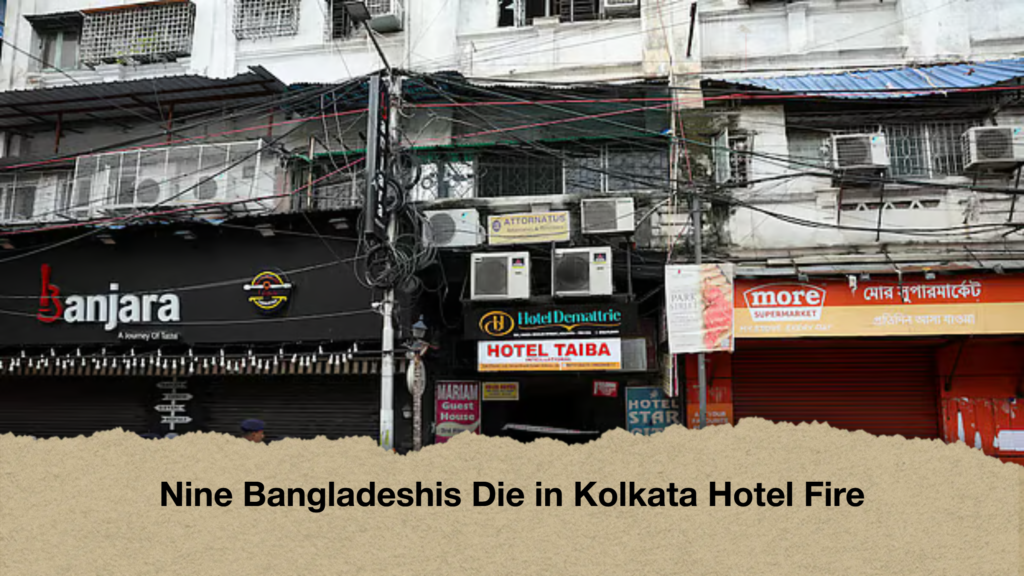
At around 2am, when most guests were asleep and the streets outside were quiet, smoke began spreading through a five-storey building near New Market in central Kolkata. Within a short time, what should have been a routine night turned into a deadly emergency.
The fire broke out at a hotel on Mirza Ghalib Street, an area known for its concentration of budget accommodation and its popularity among visitors from Bangladesh. Firefighters were called to the scene after the blaze took hold, but by the time they arrived, thick smoke had reportedly spread through the building, leaving several guests trapped inside.
Nine Bangladeshi nationals died in the incident and another six were injured. According to information reported by The Times of India, the victims included six men, two women and a four-year-old child. Around 60 people were reportedly rescued alive from the building.
The tragedy has raised serious questions about fire safety in hotels and other budget accommodation facilities in the New Market area. The central issue is not simply how the fire began, but why a relatively contained incident became so difficult for sleeping guests to escape.
Fire broke out while guests were asleep
The blaze reportedly started at about 2am, when many of the occupants were inside their rooms. Four fire service units were sent to the scene after the emergency call was received, and firefighters worked for several hours before bringing the flames under control.
The precise cause of the fire remains under investigation. Initial information suggested that an air-conditioning unit may have been involved, but subsequent indications pointed towards an electrical short circuit as a possible source. Investigators are expected to establish whether faulty wiring, electrical equipment or another factor triggered the blaze.
The cause, however, is only one part of the safety question. A fire can begin with something as ordinary as damaged electrical wiring, yet the scale of the resulting deaths often depends on the condition of the building, the availability of escape routes and the speed with which occupants are alerted.
In this case, concerns have been raised over inadequate ventilation and narrow emergency exits. Such conditions can allow smoke to accumulate rapidly and make evacuation considerably more difficult.
Smoke may be more dangerous than flames
For people trapped inside a burning building, the greatest immediate danger is not always the fire itself. Smoke can spread rapidly through corridors, staircases and enclosed spaces, reducing visibility and making breathing difficult.
A sleeping guest who wakes to find a corridor filled with smoke may have only moments to make a decision. In darkness and confusion, it can become difficult to identify the nearest staircase or determine whether a particular route is safe. Every delay increases exposure to smoke and toxic gases.
This is why functioning alarms, clearly marked escape routes, unobstructed stairways and adequate emergency exits are fundamental components of hotel fire safety. Fire doors and effective ventilation can also play a crucial role in slowing the movement of smoke and allowing occupants more time to escape.
The Kolkata incident has therefore prompted broader questions about whether older or densely occupied budget hotels in busy commercial neighbourhoods are adequately prepared for emergencies, particularly during the night when guests and staff may be asleep.
Why are so many Bangladeshis staying there?
The tragedy has also highlighted the importance of the New Market area to Bangladeshi visitors. Mirza Ghalib Street, Free School Street and Marquis Street have long been associated with relatively inexpensive hotels and guest accommodation in central Kolkata.
The area is particularly familiar to Bangladeshi travellers, including people who visit the Indian city for medical treatment. For many such visitors, affordability and convenient access to transport and medical facilities can influence their choice of accommodation.
That makes hotel safety an especially significant issue. A low-cost room may meet a traveller’s immediate financial needs, but basic fire protection cannot be treated as an optional facility.
The deaths of nine Bangladeshi nationals have turned attention towards a wider question: whether hotels serving large numbers of international visitors are being adequately monitored for fire safety and emergency preparedness.
Authorities will now have to determine the exact cause of the fire and examine the building’s safety arrangements, including electrical systems, ventilation, alarms, emergency exits and evacuation procedures.
For travellers, the incident is a stark reminder that the appearance or price of a hotel does not necessarily indicate how well it is prepared for an emergency. For hotel operators and regulators, the deaths underline the consequences that can follow when fire prevention and evacuation measures fail at the very moment they are needed most.