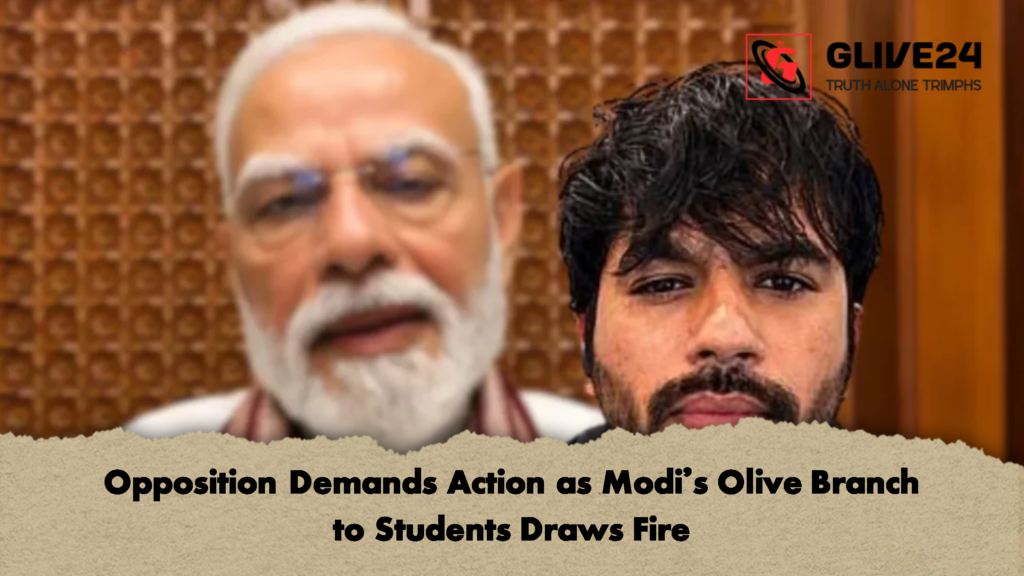
India’s political landscape has been thrown into fresh turmoil following a controversial video address by Prime Minister Narendra Modi targeting protesting students. Whilst the Prime Minister offered a gesture of personal reconciliation to the youth, his statements have met swift skepticism across the political spectrum. Abhijit Dipke, founder of the Cockroach Janata Party, spearheaded the sharp criticism, openly questioning whether the leader’s words represent genuine amnesty or merely symbolic rhetoric designed to defuse mounting public anger without dropping actual criminal charges.
On Friday, 31st July, Prime Minister Modi uploaded the fifth installment of his ongoing series of direct social media broadcasts. Addressing the nationwide student agitation, Modi acknowledged that several young protesters had used crude language against him during recent demonstrations, with some even making derogatory remarks about his late mother. Despite the personal nature of these attacks, the Prime Minister declared that he chose to forgive those involved, emphasizing that insults cannot resolve deep-rooted societal issues. He added that litigation, police harassment, and punitive legal measures are ineffective remedies, advocating instead for a compassionate approach to guide misguided youth toward constructive paths.
The broadcast ignited immediate debate across online platforms, drawing a swift response from Abhijit Dipke in the comment section. Dipke argued that public statements of forgiveness hold little substance unless backed by the formal withdrawal of legal charges filed against student activists. His comments rapidly gained traction online, reigniting fierce political debate regarding the administration’s heavy-handed tactics against public dissent.
The ongoing unrest stems from widespread student demonstrations centered at New Delhi’s historic Jantar Mantar. Protesters mobilized to demand accountability over persistent allegations of examination paper leaks and broader structural corruption within the education sector. Tensions escalated dramatically following the arrest of a teenager in Noida for allegedly posting objectionable comments about the Prime Minister during the protests. The legal action sparked intense outrage among student organizations and civil rights groups, transforming regional grievances into a major political confrontation.
As key opposition parties aligned themselves with the student movement, political pressure on the central government intensified, contributing to the resignation of Union Education Minister Dharmendra Pradhan. Despite the minister’s departure, the legal uncertainty surrounding charged and detained students remains unaddressed.
Political analysts view Modi’s digital outreach as a calculated effort to repair relations with the country’s youth demographic. However, opposition leadership maintains that emotional appeals cannot replace legal remedies. They contend that the administration’s commitment to tolerance will be judged solely by its willingness to quash pending court cases. With the government yet to outline an official policy on the criminal charges, the confrontation continues to expand from social media into broader political arenas.