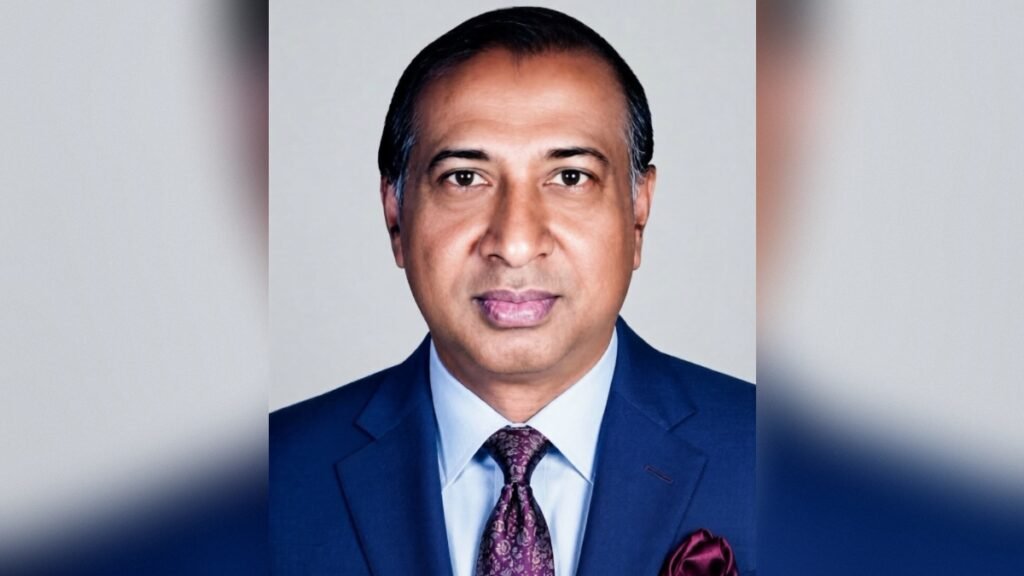
Journalist Humayun Kabir Balu remains remembered as one of Bangladesh’s courageous voices in journalism, a freedom fighter and a committed activist who stood firmly for truth, democratic values and the rights of ordinary people. His life was closely connected with the country’s independence struggle, the development of journalism in Khulna and some of the most turbulent chapters of Bangladesh’s political history.
Born on 4 October 1947 at Sardar Bari in Barofa village of Gopalganj, Balu became involved in political and democratic movements during his youth. During the Pakistan period, his participation in the struggle for independence led to his imprisonment. He later took an active part in the Liberation War of 1971, making the ideals of independence a defining part of his personal and professional life.
His name is also associated with the raising of the Bangladesh flag in Khulna during the turbulent days surrounding independence. For Balu, the spirit of the Liberation War was not merely a political slogan. It represented a set of values that he carried into his public life and journalism.
After independence, Balu chose journalism as both a profession and a means of serving society. He became editor of Dainik Janmabhumi, a newspaper published from Khulna. Under his editorial leadership, the paper developed into an important platform for reporting on the people, problems and aspirations of Khulna and the wider south-western region.
Balu also played a prominent role in professional journalism organisations. He served as president of the Khulna Press Club in 1984, 1998 and 2003. In 1990, he became vice-president of the Khulna Zonal Newspaper Editors’ Association. He also served as a member of the Mongla Port Authority in 1998.
His involvement in politics stretched back to the period before independence. In 1976, he was elected publicity secretary of the Khulna city unit of the Awami League. Yet journalism remained one of the central pillars of his public identity, particularly his commitment to reporting and speaking out on issues he believed affected society.
His contribution received several forms of recognition. In 1992, he received the President’s Award. The following year, he was awarded the gold medal of the Dr Ashraf Siddiqui Foundation. In 2009, five years after his death, the Government of Bangladesh conferred on him the Ekushey Padak posthumously for his outstanding contribution to journalism.
His career, however, ended in a violent attack that shocked the journalistic community.
On 27 June 2004, a bomb attack was carried out in front of his office-cum-residence at Shantidham intersection in Khulna. Balu was critically injured in the blast. He was taken to hospital, but died while undergoing surgery. He was only 56.
The circumstances of his death made the tragedy even more painful. That day, he had returned from his parental home after taking sweets for his mother to celebrate his daughter’s good result in the Secondary School Certificate examination. The family celebration had ended, and he was returning home when the bomb attack abruptly brought his life to an end.
Balu’s killing was therefore not only a devastating loss for his family. It was widely regarded as a grave attack on press freedom and the right of journalists to report without fear. His death prompted protests by journalists and various organisations, along with demands for the perpetrators to be brought to justice.
Five people were eventually sentenced to life imprisonment in a case related to the killing. Yet questions surrounding the full circumstances of the murder, including demands for the identification and prosecution of all those responsible, have continued to concern sections of the journalist community. At memorial programmes held in 2026, renewed calls were made for further investigation and for the perpetrators and those who may have supported the killing to face justice.
Two decades after his death, Balu’s legacy remains particularly significant in discussions about the responsibilities and risks of journalism. His career illustrates how journalism in Bangladesh has often been intertwined with wider struggles over democracy, political rights and social accountability. His life also serves as a reminder that press freedom depends not only on the ability to publish, but also on the safety of those who gather and report the news.
His birth anniversary on 4 October offers an opportunity to remember more than an individual journalist. It is also a moment to reflect on the values for which he stood: courage in the face of intimidation, commitment to truth and an enduring belief in the ideals of Bangladesh’s Liberation War.
Humayun Kabir Balu is no longer here to hold his pen or raise his voice. But the principles that shaped his journalism continue to give meaning to his legacy. His work, struggle and sacrifice remain part of the history of Bangladeshi journalism—and of the continuing demand for a free, responsible and courageous press.