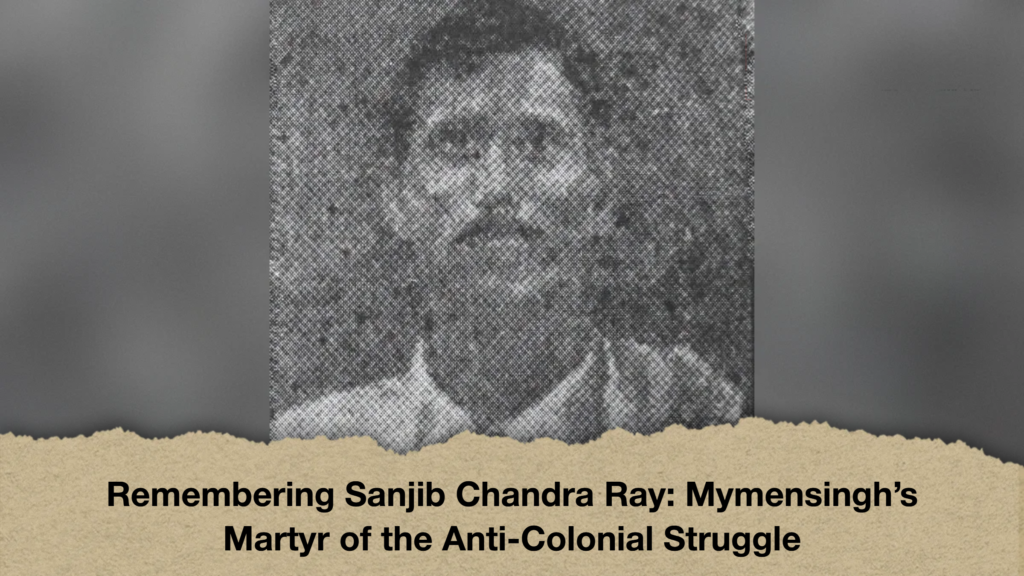
The anti-colonial movement across the Indian subcontinent remains framed by the memory of young revolutionaries who chose armed resistance over quiet submission. Among those who offered their youth to the cause of national liberation was Sanjib Chandra Ray, a key operative of the Mymensingh-based revolutionary outfit Sadhana Samiti. Born into a Kayastha family in Kishorganj on 16 September 1889, Ray grew up alongside the rapid rise of secret revolutionary societies across Bengal during the wake of the 1905 Partition. Driven by an uncompromising desire to break British colonial shackles, he abandoned personal comfort early in life to subvert imperial rule from the shadows.
By the second decade of the twentieth century, Bengal had become a hotbed of covert political activity, with organisations like Sadhana Samiti coordinating underground networks, acquiring arms, and mobilizing youth against imperial forces. Ray’s deep involvement in these clandestine operations soon drew the attention of the colonial intelligence apparatus.
In April 1916, colonial police raided his family home in an attempt to apprehend him. Finding him absent, law enforcement agencies launched a widespread manhunt, eventually tracking him down to a remote location far from the urban centre. Ray was captured in possession of a revolver and live ammunition—offences that carried severe legal penalties under the emergency wartime legislation of the era.
Following his arrest, Ray was put on trial for anti-state activities and sedition against the British Crown. On 13 July 1916, the court handed down a sentence of two years’ rigorous imprisonment. Transported to prison, the young insurgent was subjected to penal brutalisation, solitary confinement, and severe physical hardship. The unsanitary conditions and systematic mistreatment inflicted by prison authorities rapidly deteriorated his health.
Unable to survive the draconian conditions of his incarceration, Sanjib Chandra Ray died behind bars later that year at the age of twenty-seven. Though his life was cut short before he could witness the ultimate collapse of the British Raj, his martyrdom helped sustain the ideological momentum of the Indian independence movement, serving as an enduring symbol of resistance against imperial tyranny.