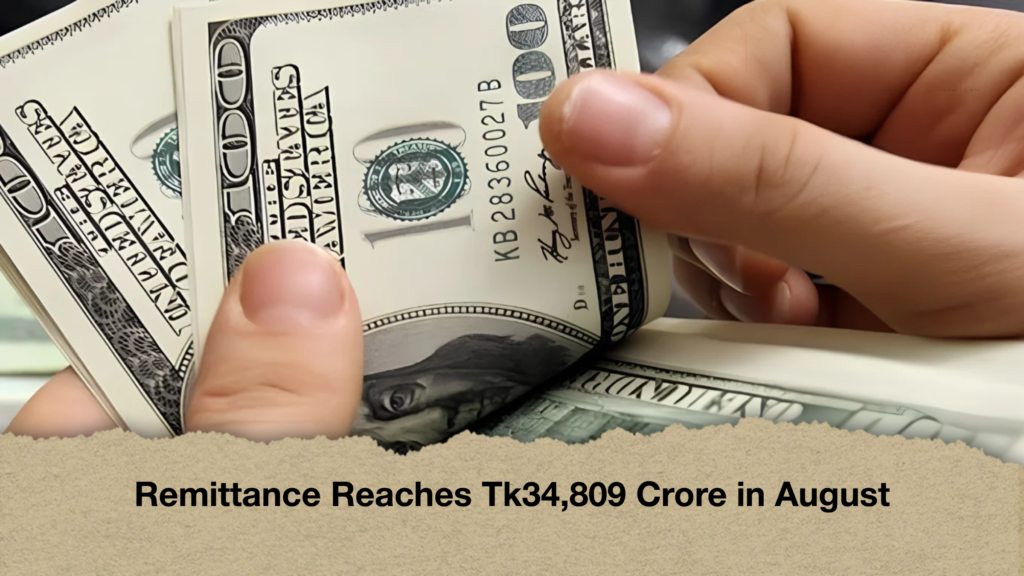
Bangladesh received US$2.83 billion in remittances during the first 30 days of August, equivalent to around Tk34,809 crore at an exchange rate of Tk123 per US dollar. The figure represents a 26.9 per cent increase compared with the same period a year earlier, highlighting a stronger flow of funds from Bangladeshis living and working abroad.
The Bangladesh Bank confirmed the figures on Monday (31 August). According to the central bank, remittance inflows have remained strong during the month, with a particularly substantial amount recorded towards the end of August.
On Sunday alone, expatriate Bangladeshis sent around Tk1,980.30 crore through the formal financial system. The daily inflow contributed to the overall increase recorded during the first 30 days of the month.
In August last year, Bangladesh received US$2.229 billion in remittances during the first 30 days. This year’s US$2.83 billion represents an increase of about US$601 million over the corresponding period. In percentage terms, the growth stands at 26.90 per cent.
The latest figures also show that the increase is not limited to August. Remittance earnings have maintained a strong pace since the beginning of the current financial year.
Between 1 July and 30 August, Bangladesh received a total of US$5.689 billion in remittances. During the corresponding period of the previous financial year, the country received US$4.707 billion. The difference stands at approximately US$982 million, representing growth of around 20.86 per cent.
The sustained rise in remittance inflows is significant for Bangladesh’s wider economy. Money sent home by expatriate workers provides direct financial support to millions of families and is commonly used for household expenses, education, healthcare, housing and other essential needs. At the national level, remittances also contribute to the supply of foreign currency within the formal banking system.
A stronger flow through official channels can also improve the transparency of foreign-exchange transactions, as remittance receipts are recorded within the country’s formal financial system. For an economy that relies heavily on overseas workers’ earnings, maintaining a steady inflow is therefore an important part of managing external financial pressures.
The latest data suggest that expatriate earnings have made a robust start to the current financial year. In just two months, the country has already received more than US$5.6 billion in remittances, substantially exceeding the amount recorded during the same period of the previous year.
The August figures will now provide an important benchmark for the months ahead. If the stronger inflow continues, remittances could remain a significant source of foreign currency for Bangladesh while supporting household incomes across the country.