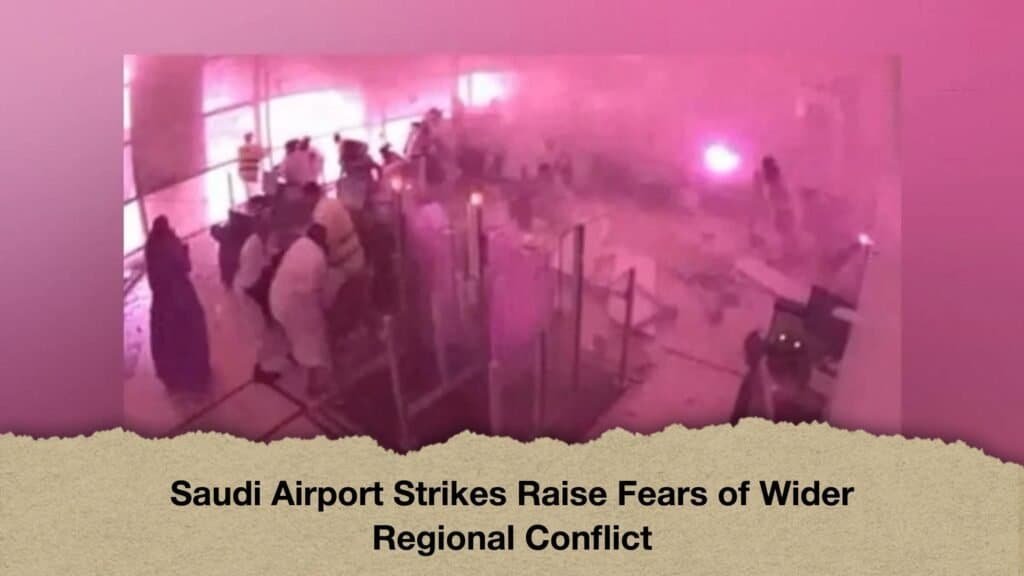
A fresh missile attack on King Khalid International Airport in Riyadh has killed one person and injured 11 others, heightening security concerns across Saudi Arabia following a series of attacks claimed by Yemen’s Iran-backed Houthi rebels.
The latest strike took place on Sunday, 11 October, targeting Terminal 4 at the airport, according to the Saudi-led military coalition involved in the conflict in Yemen. The attack reportedly sparked a fire in the terminal area, causing casualties and raising fresh concerns about the safety of one of the kingdom’s key transport facilities.
The incident came a day after another attack on Saturday, 10 October, reportedly killed 13 people and injured more than 300. The two days of violence have been described in reports as among the most serious attacks on Saudi Arabia in the past decade. The reported death toll from the incidents has risen to 18, although the available account does not provide a complete breakdown of all the casualties.
Saudi authorities have raised the level of alert and strengthened security measures in response to the attacks. With airports and strategically important installations reportedly among the targets, the incidents have raised concerns about civilian safety, aviation operations and the potential economic consequences of further disruption.
Missiles and Drone Intercepted
The Saudi-led coalition said its air defence systems had intercepted and destroyed several incoming threats. These included a cruise missile over Riyadh, a drone over the Eastern Province and a ballistic missile heading towards Khamis Mushait in south-western Saudi Arabia.
Authorities also issued a temporary emergency alert in Abha, another city in the south-west of the country, amid concerns about possible further attacks. The reported incidents suggest that the security threat extends beyond the capital, placing additional pressure on the kingdom’s air defence systems and emergency response arrangements.
Meanwhile, authorities confirmed reports of an attack on King Fahd International Airport in Dammam, another major aviation hub. The incident disrupted flight operations, with numerous services delayed or cancelled.
Such disruptions can have consequences beyond the immediate airport environment. Passengers may face missed connections and changes to their travel plans, while airlines must respond to changing security conditions and operational restrictions. If the threat persists, further adjustments to flight schedules could become necessary.
The reported attacks on multiple locations have also raised questions about the protection of critical infrastructure. Airports are essential to international travel, business activity and the movement of people, making their security particularly important during periods of heightened regional tension.
Houthis Claim Responsibility
Yahya Saree, the Houthi military spokesperson, claimed responsibility for the attacks carried out on Saturday and Sunday. He said the group had targeted the airports in Riyadh and Dammam, along with two facilities belonging to Saudi Aramco, the kingdom’s state-owned oil company.
The Houthis warned that attacks could become more severe if Saudi Arabia continued its air strikes in Yemen. The group also urged civilians not to use Saudi airports, signalling the possibility of further disruption if hostilities continued.
The latest incidents are part of a wider confrontation rooted in Yemen’s prolonged conflict. Saudi Arabia has played a central role in the war through its leadership of a military coalition, while the Houthis have repeatedly opposed Saudi involvement and threatened targets across the border.
Missile and drone attacks have been a significant feature of the wider regional security challenge. Strikes directed at civilian infrastructure can cause casualties, interrupt essential services and increase the risk of retaliation, potentially widening an already complex conflict.
However, statements issued by parties involved in an armed conflict require independent verification. The full extent of the damage at the airports and Saudi Aramco facilities, as well as the details of the reported attacks, has not been independently established in the information available.
Iran Offers to Mediate
The attacks have prompted international concern and renewed calls for diplomatic engagement. Iran’s foreign minister said Tehran was prepared to mediate between Saudi Arabia and Yemen, indicating a willingness to explore diplomatic avenues amid rising tensions.
Any such initiative would face considerable challenges. Efforts to reduce hostilities would need to address the security concerns of the parties involved, as well as the wider political and military issues surrounding Yemen’s conflict. The available report does not establish whether a formal mediation process has begun.
US President Donald Trump has also indicated that Washington was considering providing assistance to Saudi Arabia in response to the security situation. The nature and extent of any potential support were not specified.
The United States and the United Kingdom have advised their citizens to exercise particular caution when travelling to Saudi Arabia. The warnings reflect concerns about the evolving security environment, especially following reports of attacks on airports and other strategically important facilities.
Travellers may face sudden changes to flight schedules, additional security checks or temporary restrictions on access to affected areas. Passengers are therefore likely to need to follow official travel advice and check the latest information from airlines and airport authorities.
The international response also highlights the broader implications of the attacks. Saudi Arabia is an important regional power and a major oil producer, while Iran has longstanding influence in the region. Any escalation involving these countries and the Houthi movement could complicate diplomatic efforts and increase the risk of further instability.
Riyadh Schools Switch to Online Classes
Saudi authorities have decided to suspend in-person teaching at all educational institutions in Riyadh until Thursday, 15 October, with lessons moving online during the period.
The measure is intended to reduce potential risks to students and staff while the security situation remains uncertain. It also demonstrates how the attacks are affecting daily life beyond the locations directly targeted.
The temporary shift to remote learning provides a way for educational activities to continue while limiting the need for students and teachers to travel. Any extension of the arrangement would depend on subsequent decisions by the authorities and developments in the security situation.
Despite the heightened alert, an international energy conference scheduled in Riyadh is proceeding as planned. The decision comes as Saudi Arabia seeks to maintain essential economic and diplomatic activities while responding to the immediate security threat.
Saudi Arabia occupies a significant position in global energy markets, making the security of its oil infrastructure an issue of international concern. The Houthi claim that two Saudi Aramco facilities were targeted has therefore attracted particular attention. However, the extent of any damage to those installations has not been confirmed in the available account.
The latest attacks have placed aviation security, civilian protection and regional diplomacy under renewed pressure. With the Houthis warning of further strikes and international governments assessing their responses, preventing additional casualties and protecting critical infrastructure remain immediate priorities.
The situation will depend partly on whether further attacks occur, how Saudi Arabia and its partners respond, and whether diplomatic efforts can help contain the confrontation. For now, heightened security measures, travel warnings and the temporary suspension of in-person education reflect the seriousness of the challenges facing the kingdom.