
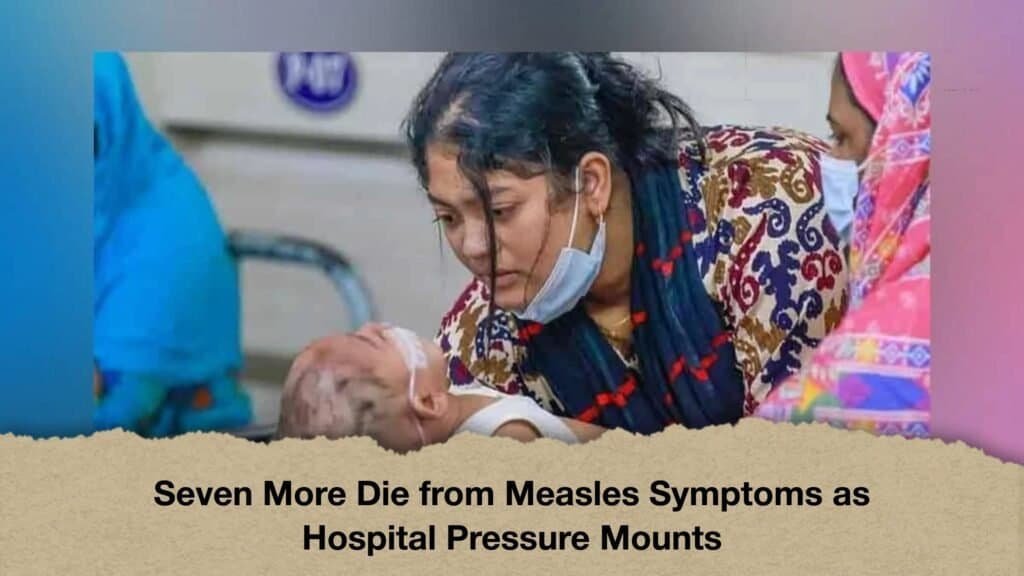
The figures were released by the Directorate General of Health Services (DGHS) in its regular health bulletin on Friday, 23 October.
According to the bulletin, three deaths involving patients with measles-like symptoms were reported in Sylhet Division during the 24 hours from 8am on Thursday. Over the same period, 1,135 patients with measles or suspected measles symptoms were admitted to hospitals across the country, highlighting the continuing demand for medical care.
Dhaka records the highest number of admissions
Dhaka Division accounted for the largest share of new hospital admissions, with 558 patients admitted in the latest 24-hour reporting period. Chattogram recorded 194 admissions, followed by Barishal with 115 and Sylhet with 94.
Mymensingh reported 65 new admissions, while Khulna recorded 60. Rangpur and Rajshahi reported 24 and 20 admissions respectively.
The figures show that new admissions were reported across all eight divisions, with Dhaka accounting for nearly half of the daily total. The arrival of more than 1,100 patients in a single day underlines the importance of maintaining adequate hospital beds, medical staff and essential supplies to ensure timely treatment.
Nearly 195,000 patients admitted since March
DGHS statistics show that 194,633 people with measles-like symptoms had been admitted to hospitals across Bangladesh between 15 March and 23 October. Of these, 186,798 recovered and were discharged after receiving treatment.
The number of suspected measles cases recorded over the same period reached 218,870. Laboratory testing confirmed measles in 23,273 cases, according to the health authorities.
These figures represent different stages of disease surveillance. Suspected cases include people whose symptoms suggest measles, while confirmed cases are those in which the infection has been established through testing or the applicable diagnostic criteria. Similarly, deaths among people displaying measles-like symptoms are recorded separately from deaths attributed to confirmed measles.
The continued flow of patients into hospitals highlights the scale of the public health challenge. Prompt identification of suspected cases, appropriate clinical assessment and access to treatment remain essential, particularly when healthcare facilities are managing large numbers of patients.
Vaccination remains key to protecting children
Measles is a highly contagious viral disease that commonly causes fever, coughing, a runny nose, red eyes and a characteristic skin rash. It spreads through infectious respiratory particles released when an infected person coughs or sneezes. People who have not received measles vaccination are particularly vulnerable.
Although many patients recover, the disease can cause serious complications, including pneumonia, severe dehydration and inflammation of the brain. Young children, particularly those who are malnourished or have weakened immune systems, face a greater risk of severe illness.
Vaccination remains the most effective way to prevent measles and reduce the risk of serious complications. Ensuring that children receive the recommended doses is therefore essential to limiting transmission and protecting vulnerable groups.
Anyone who develops a fever accompanied by a rash or other suspected measles symptoms should seek medical advice promptly. Following healthcare professionals’ instructions and taking precautions to limit contact with others while infection is suspected can also help reduce the risk of further transmission.
With the combined death toll from confirmed measles and suspected cases now standing at 1,214, the latest figures underline the continuing strain on Bangladesh’s public health system. Sustained vaccination efforts, early detection, appropriate treatment and effective infection-control measures will be important in containing the spread of the disease.