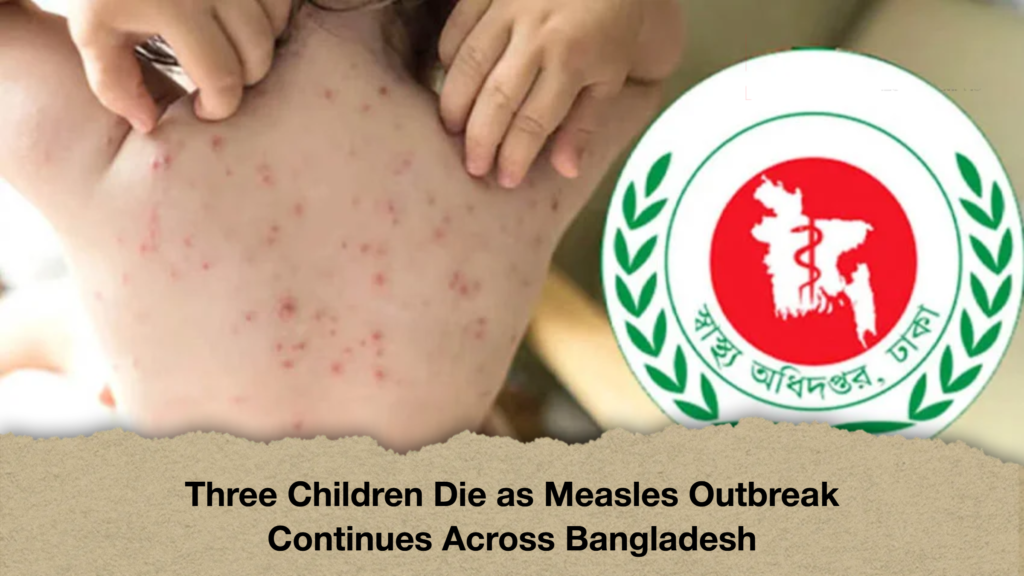
Three more children have died after exhibiting symptoms of measles in Bangladesh over the past 24 hours, keeping public health authorities on high alert as daily infection rates remain severe.
According to the latest daily bulletin released by the Directorate General of Health Services (DGHS) on Thursday, 3 September, two of the latest casualties were recorded in Dhaka Division, whilst the third child passed away in Sylhet Division. These recent fatalities push the overall nation-wide death toll from measles and related symptoms to 986 since monitoring commenced on 15 March. Official figures clarify that 99 of these deaths were clinically confirmed measles cases, whereas 887 patients died while manifesting severe symptoms associated with the disease.
The viral surge shows little sign of easing, with 1,044 individuals testing positive or presenting symptoms within a single 24-hour window. Laboratory tests confirmed 80 new cases, while an additional 964 patients exhibited classic clinical signs, including high fever, runny nose, red eyes, coughing, and characteristic skin eruptions. Cumulative tracking since mid-March shows that 19,527 individuals have been formally diagnosed with measles, while 161,148 people have suffered from suspected symptomatic infections.
Inpatient facilities across the country continue to bear a heavy operational burden. A total of 141,449 patients have required hospital admission for measles and associated complications since 15 March. Medical staff have successfully treated and discharged 136,405 patients during this period, but the constant influx of new admissions maintains severe pressure on pediatric wards and local healthcare infrastructure.
Measles is an exceptionally contagious airborne illness caused by a virus that rapidly spreads through coughing and sneezing. While it poses a threat to all age groups, unimmunised infants and young children face the highest risk of acute deterioration. Complications frequently include severe diarrhoea, middle ear infections, pneumonia, and encephalitis. Public health experts stress that timely clinical evaluation, effective symptom management, and robust routine immunization coverage remain critical to reducing transmission rates and preventing further childhood fatalities.