The United States military has executed fresh “defensive” air strikes inside Iran following the collapse of high-level diplomatic talks aimed at establishing a durable ceasefire in the Middle East. Alongside these air strikes, American forces claimed to have successfully intercepted several ballistic missiles and unmanned aerial vehicles (UAVs) launched by Iran towards international shipping lanes and Gulf cooperative states.
According to United States Central Command (CENTCOM), the latest American operation targeted Qeshm Island—Iran’s largest island, situated in the strategic Strait of Hormuz. The military action was characterized by Washington as a direct response to coordinated Iranian offensive attempts across the region.
In response, Tehran acknowledged launching retaliatory strikes, stating that its forces used precision missiles and drones to strike a US military installation and an operational helicopter located within an unspecified “regional country.”
Escalation Vectors and Reported Interceptions
| Origin / Actor | Intended Target Area | Weapon Type Used | Reported Outcome (per CENTCOM / IRGC) |
| United States | Qeshm Island, Iran | Air Strikes | Iranian ground control station targeted and disabled |
| Iran | Kuwait | 2 Ballistic Missiles | Intercepted or crashed mid-flight by US forces |
| Iran | Bahrain | 3 Ballistic Missiles | Intercepted or crashed mid-flight by US forces |
| Iran | Commercial Shipping Lanes | 3 Unmanned Aerial Vehicles | Shot down by United States naval assets |
| Iran | Unnamed Regional State | Missiles and Drones | Target US base and helicopter hit (Iranian claim) |
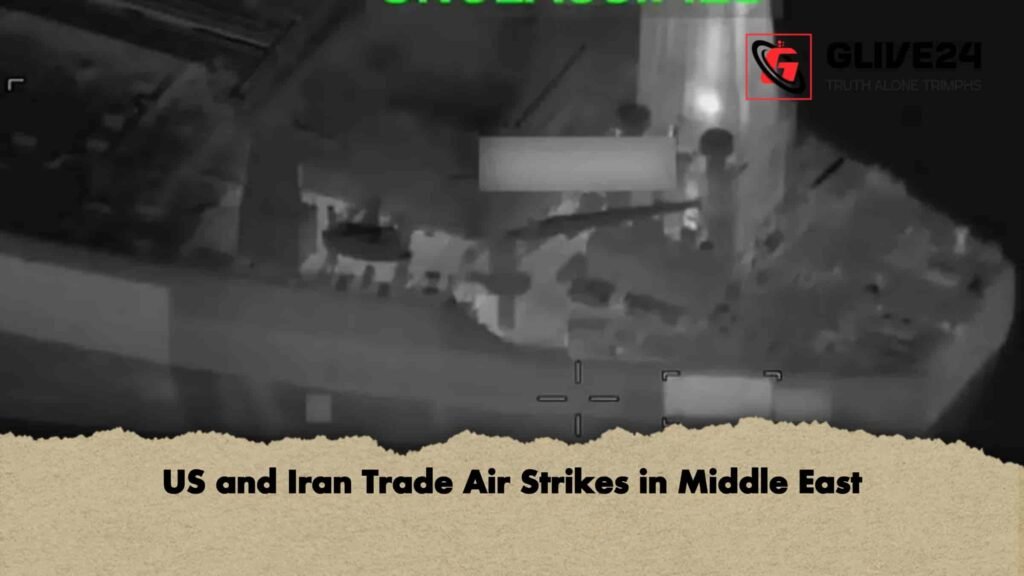
| United States | Strait of Hormuz | Naval Munitions | Empty Iran-bound oil tanker struck and disabled |
Operational Details and Broken Diplomatic Talks
The sudden surge in hostilities occurred immediately after weekend negotiations, designed to bring an end to months of regional warfare, concluded without yielding any meaningful diplomatic progress.
CENTCOM detailed that the specific objective of the Qeshm Island bombardment was an Iranian military ground control station. US officials further asserted that Iran had deployed three drones specifically targeting civilian mariners navigating legally through international waters, all of which were subsequently downed by American defensive systems.
Conversely, the Islamic Revolutionary Guard Corps (IRGC) issued a stern warning regarding western operations near its territorial waters. The elite military unit stated that the aggressive American forces would pay a heavy price if they continued to disrupt the security and sovereignty of the Strait of Hormuz.
Prior to this latest flashpoint, tensions had already intensified after CENTCOM verified that US forces had struck and disabled an empty oil tanker en route to Iran. Washington described that maritime interception as an enforcement action linked to its ongoing naval blockade in the Strait of Hormuz. Both Bahrain and Kuwait, which host major US military installations, remain on high alert following Iran’s repeated targeting of facilities within their borders.