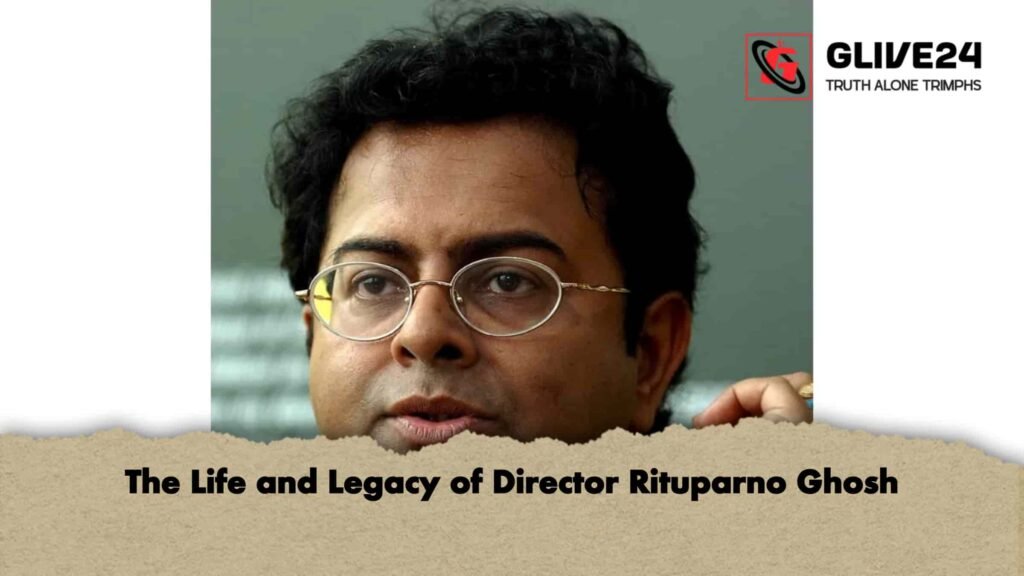
The modern history of Bengali cinema recognizes Rituparno Ghosh as an exceptionally creative intellect and a pivotal figure in its post-classical renaissance. Beyond his primary renown as a film director, Ghosh was a versatile cultural personality who left a permanent mark as a storyteller, screenwriter, lyricist, magazine editor, television host, and actor.
Born on 31 August 1963 in Kolkata, India, Ghosh grew up within a family deeply connected to the arts. His father, Sunil Ghosh, was a well-known documentary filmmaker, which provided an early foundation for Rituparno’s deep life-long affinity for literature, visual arts, and cultural expression.
Table of Contents
Directorial Influence and Critical Acclaim
Ghosh officially entered the film industry in 1992 with the children’s feature film Hirer Angti (The Diamond Ring). Over an active directorial career spanning just under two decades from 1994 to 2013, he directed 19 full-length feature films. His work introduced a distinct aesthetic language and emotional sensitivity to regional Indian cinema, focusing closely on the intricacies of human relationships, female psychology, familial tensions, isolation, and identity crises.
Out of his 19 feature films, 12 went on to win India’s prestigious National Film Awards, marking an extraordinary level of consistent critical success. His prominent directorial works include Unishe April, Dahan, Utsab, Bariwali, Chokher Bali, Shubho Mahurat, Raincoat (his Hindi-language debut), Dosar, Sob Chharitro Kalponik, Noukadubi, Sunglass, and Chitrangada: The Crowning Wish. Through his subtle and poetic storytelling, Ghosh successfully built upon the artistic foundations established in West Bengal by legendary cinematic predecessors such as Satyajit Ray, Ritwik Ghatak, and Mrinal Sen.
Contributions to Acting and Print Journalism
In addition to his work behind the camera, Ghosh established himself as a distinct on-screen actor. His performances in films such as Arekti Premer Golpo (Just Another Love Story), Memories in March, and his own directorial venture Chitrangada were highly praised by both mainstream audiences and film critics for their nuanced execution.
Ghosh also played an influential role in Bengali literature and media journalism. He served as the editor for two highly popular weekly Bengali periodicals, Anandalok and Robbar. Under his creative and editorial leadership, these publications gained widespread intellectual acclaim and expanded their readership through refined cultural commentaries.
Premature Demise and Unfinished Work
Rituparno Ghosh passed away unexpectedly on 30 May 2013 in Kolkata at the age of 49. Prior to his sudden death, he was working on a cinematic adaptation of Sharadindu Bandyopadhyay’s famous fictional Bengali sleuth Byomkesh Bakshi, a project that remained incomplete at the time of his passing.
His death left a significant, unfulfilled void in the subcontinent’s film industry. Nevertheless, his intellectual legacy, artistic vision, and extensive filmography continue to influence contemporary filmmakers and remain deeply embedded in the hearts of cinema lovers globally.
Strategic Summary: The Career of Rituparno Ghosh
| Professional Category | Key Details and Achievements |
| Date & Place of Birth | 31 August 1963, Kolkata, India |
| Date of Passing | 30 May 2013 (Age 49) |
| Directorial Debut | Hirer Angti (1992) |
| Total Feature Films | 19 (Between 1994 and 2013) |
| National Film Awards | 12 Awards won across his filmography |
| Notable Films Directed | Unishe April, Dahan, Chokher Bali, Raincoat, Dosar |
| Notable Acting Roles | Arekti Premer Golpo, Memories in March, Chitrangada |
| Journalistic Positions | Editor of Anandalok and Robbar magazines |
| Incomplete Project | Satyanweshi (Byomkesh Bakshi adaptation) |