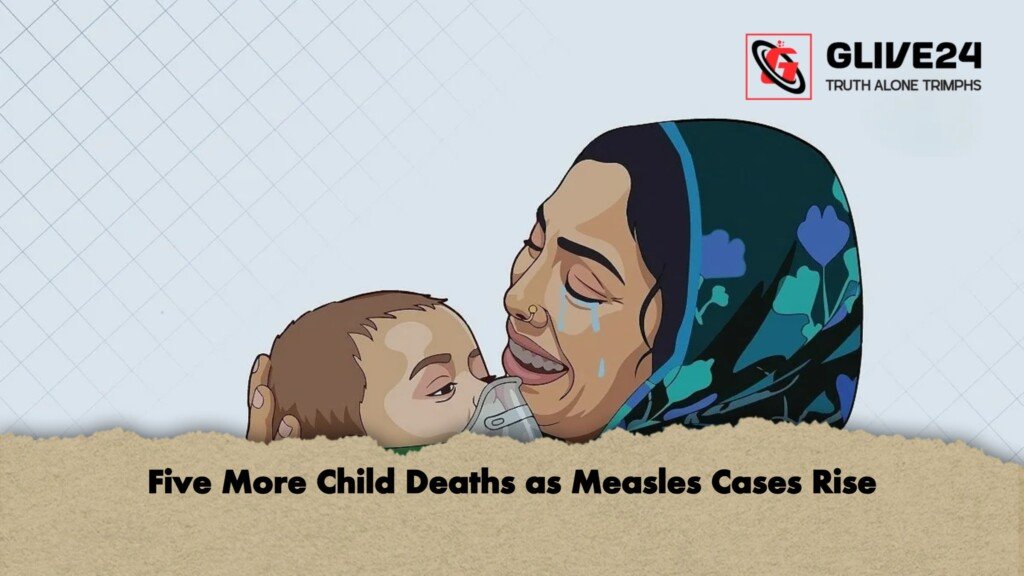
Bangladesh has reported five more child deaths linked to measles symptoms over the past 24 hours, as the country’s prolonged outbreak continues to place significant pressure on the healthcare system. With the latest fatalities, the total number of deaths associated with confirmed measles and suspected measles symptoms has reached 810 since 15 March.
According to a statement issued by the Directorate General of Health Services (DGHS) on Friday (24 July), the five children died between 8:00 a.m. on Thursday and 8:00 a.m. on Friday after developing symptoms consistent with measles. During the same 24-hour reporting period, another 1,137 people were identified as having either confirmed measles or symptoms suggestive of the disease.
The latest figures show that, since the outbreak began in mid-March, 95 people have died after laboratory-confirmed measles infections, while a further 715 deaths have been recorded among patients who displayed measles symptoms but were not confirmed through laboratory testing. This brings the combined death toll to 810.
Health authorities also reported that 15,194 measles infections have been confirmed through laboratory testing since 15 March. Beyond these confirmed cases, 122,150 people with measles-like symptoms have sought treatment at hospitals and healthcare facilities across the country.
Of those patients, 104,717 required hospital admission. Encouragingly, 101,056 have recovered following treatment and have since been discharged, indicating that while transmission remains widespread, a large proportion of patients are responding well to medical care.
The DGHS said the highest number of infections and deaths has been recorded in the Dhaka Division, which remains the epicentre of the outbreak. Measles has also spread across Sylhet, Rajshahi and Chattogram divisions, reflecting the continued geographical expansion of the disease.
Public health specialists believe several factors have contributed to the persistence of the outbreak. Among the most significant are gaps in childhood immunisation coverage and widespread malnutrition, both of which increase children’s vulnerability to severe complications from measles. Young children remain the group at greatest risk of developing life-threatening illness.
Measles is a highly contagious viral disease that spreads primarily through respiratory droplets released when an infected person coughs or sneezes. Typical symptoms include fever, cough, a runny nose, red eyes and a distinctive skin rash. While many patients recover with supportive treatment, severe cases can lead to pneumonia, encephalitis and other potentially fatal complications, particularly among undernourished or unvaccinated children.
In response to the continuing outbreak, the Directorate General of Health Services has urged parents and caregivers to ensure that children receive routine measles vaccinations on schedule. The health authority has also called for the strengthening of mass immunisation campaigns and advised families to seek immediate medical attention if children develop symptoms associated with measles, stressing that early treatment can significantly reduce the risk of serious complications and death.
| Indicator | Figure |
|---|---|
| Reporting period | 24 July (past 24 hours) |
| Child deaths in the past 24 hours | 5 |
| New infections/suspected cases in the past 24 hours | 1,137 |
| Total deaths since 15 March | 810 |
| Laboratory-confirmed measles deaths | 95 |
| Deaths with measles symptoms | 715 |
| Laboratory-confirmed measles cases | 15,194 |
| Patients presenting with measles symptoms | 122,150 |
| Hospital admissions | 104,717 |
| Patients discharged after recovery | 101,056 |