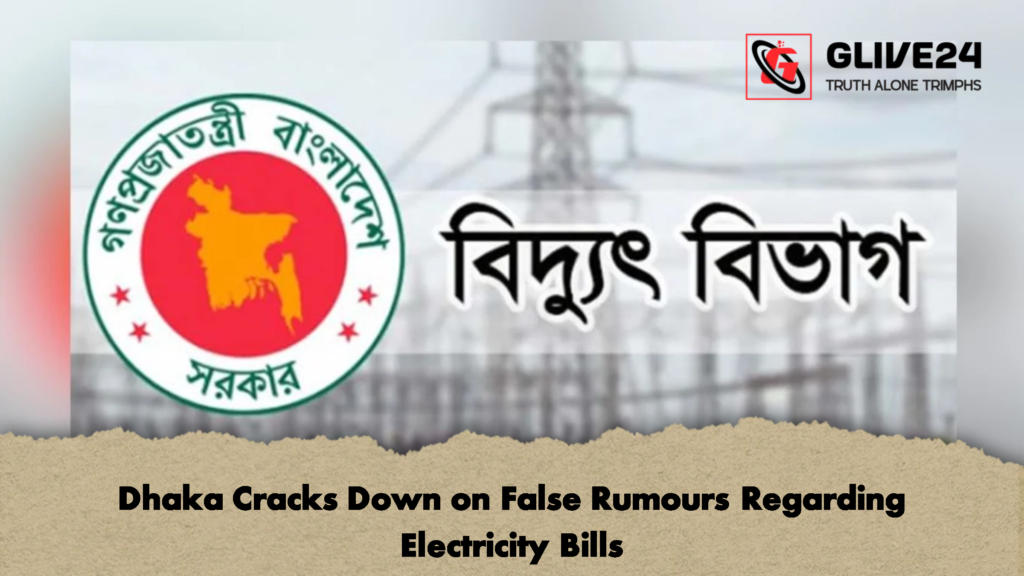
The Ministry of Power, Energy and Mineral Resources in Bangladesh has issued a stern warning against individuals and groups spreading deliberate misinformation regarding recent electricity statements. The clarification comes amidst growing public frustration during the summer months of June and July, when numerous domestic and commercial consumers raised concerns over unusually inflated charges. Reports surfaced across several districts of households receiving monthly bills that had doubled or tripled compared to previous cycles, despite residents claiming similar or reduced overall energy usage.
Addressing these widespread grievances, the Power Division released an official statement asserting that a substantial number of genuine complaints regarding excessive charges had already been thoroughly investigated and resolved in coordination with regional power distribution companies. Officials firmly rejected claims of systematic overcharging, describing the broader narrative surrounding the issue as a coordinated campaign of misinformation designed to cause unnecessary public distress and undermine state institutions.
Government authorities stressed that established institutional frameworks remain fully operational for any consumer who suspects a genuine error in their billing statement. Customers facing actual discrepancies are advised to lodge formal written applications accompanied by documentary proof—such as previous payment receipts, photographic evidence of meter displays, and account details—with their respective local electricity supply offices. Ministry representatives assured the public that all verified administrative or technical errors would be reassessed and rectified without delay.
However, the ministry has adopted an uncompromising stance against unverified claims circulated on digital platforms and social media. Authorities warned that any individual or organisation found intentionally disseminating false information without evidence, with the intent to mislead the public or disrupt civil order, will face severe legal consequences under existing statutory frameworks, including strict digital security legislation.
Providing necessary context to the recent spike in charges, energy experts note that seasonal surges in electricity consumption during intense summer heatwaves frequently trigger higher tariff slabs for residential users. Under Bangladesh’s progressive tariff structure, unit rates increase significantly once total monthly consumption crosses specific kilowatt-hour thresholds. When persistent high temperatures compel households to rely heavily on air conditioning, fans, and refrigeration units, energy usage quickly pushes families into higher price brackets, resulting in disproportionately higher total bills even with seemingly modest increases in daily appliance operation.
The government maintains that while legitimate administrative and metering errors will always be corrected through proper institutional channels, malicious attempts to exploit consumer anxiety for political or social leverage will not be tolerated. Power distribution utilities have opened dedicated customer care desks across urban centers, and consumers are urged to verify their billing details directly with designated service representatives rather than relying on unverified reports online.