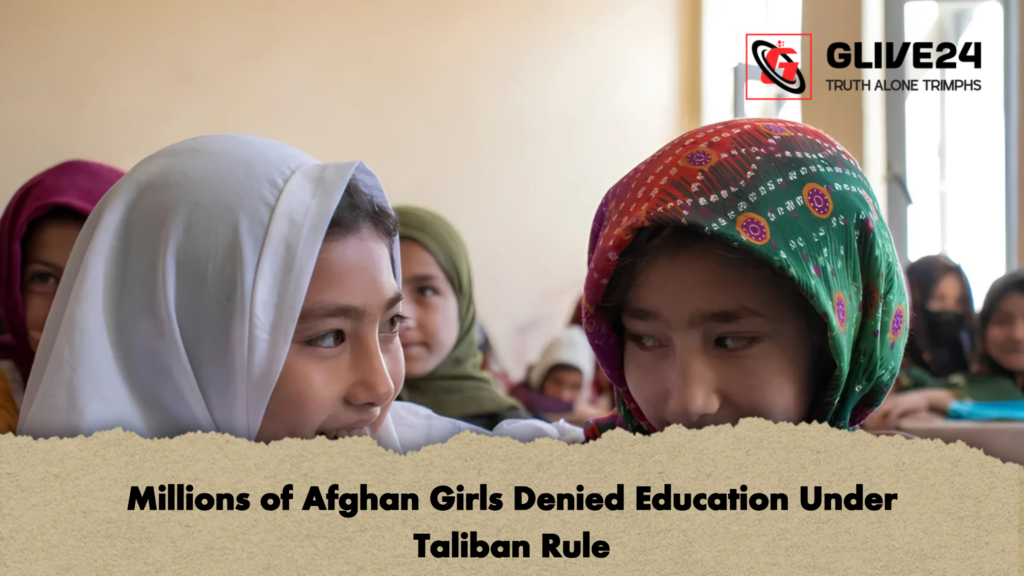
Nearly 2.4 million teenage girls have been barred from secondary education in Afghanistan since the Taliban regained control of the country, according to a recent alarming report by the United Nations Educational, Scientific and Cultural Organization (UNESCO). As the de facto administration prepares to mark five years since returning to power, several nations are steadily expanding diplomatic ties with the regime despite profound concerns raised by the UN and international human rights bodies.
UNESCO has explicitly highlighted that Afghanistan remains the only nation globally with an official, state-enforced ban on secondary and higher education for women and girls. This systematic exclusion threatens to rob generations of their potential, fuel extreme poverty, and inflict irreversible damage on the nation’s social fabric. According to the findings, the prolonged restrictions on female education will likely strip approximately 600,000 women from the national workforce by 2066, resulting in an estimated cumulative economic loss of around 9.6 billion US dollars. Furthermore, the sweeping bans have drastically heightened the societal risks associated with early and forced marriages.
The crisis stems from the political upheaval of 2021, when US-led allied forces withdrew from Afghanistan, and the Taliban initially assured the international community that female education would continue unhindered. However, those assurances were swiftly broken. In March 2022, secondary schools for girls were abruptly shut down, followed closely in December of the same year by a sweeping ban on women entering universities. Although the administration has repeatedly characterized these measures as temporary, the restrictions remain rigidly enforced. Beyond the classroom doors, harsh curbs have been imposed on women’s employment and freedom of movement, even as officials insist they are safeguarding women’s rights in accordance with Islamic law and Afghan culture.
The ban on higher education has simultaneously triggered a severe shortage of female educators, threatening to collapse primary education systems as well. Even outside the direct bans on female students, over two million primary school-aged children remain out of school due to broader systemic challenges. UNESCO projections indicate that the deficit of qualified female teachers in Afghanistan will surpass 11,000 by 2030. Emergency education programme coordinator Huda Jabrian noted that numerous qualified educators have fled the country, while those remaining face severe professional bans. Compounding the issue, female teachers are prohibited from instructing boys’ schools, leaving primary levels dependent on underqualified male teachers or forcing many classrooms to operate without any instruction at all.
The broader educational infrastructure is in a state of profound collapse. National literacy rates have plummeted to a mere 37 percent, with over 90 percent of ten-year-old children unable to read a simple sentence. The majority of schools suffer from a severe lack of basic infrastructure, with nearly half lacking safe drinking water, proper sanitation facilities, or adequate heating during harsh winters. Additional strain has been placed on the fragile education system by the return of roughly three million individuals to Afghanistan—either voluntarily or through forced deportations—throughout 2025. Compounding these man-made crises, recurring natural disasters such as major earthquakes and severe floods since 2021 have permanently destroyed or closed at least one thousand schools across the country.