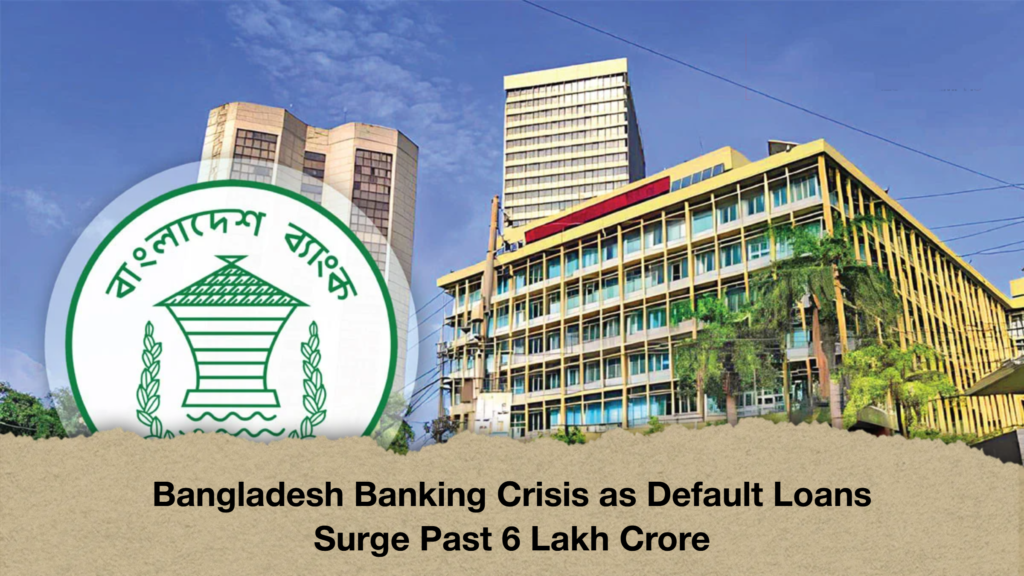
Bangladesh’s financial sector is grappling with a severe deterioration in balance sheet quality after non-performing loans (NPLs) surged by 17,851 crore taka in just three months. This sharp increase has propelled the banking industry’s total classified debt past the 6 lakh crore taka mark for the first time on record, underscoring systemic vulnerabilities that threaten the broader macroeconomy.
Central bank figures show that total classified loans rose from 5,88,704 crore taka at the end of March to 6,06,555 crore taka by June, translating to an average monthly accumulation of nearly 5,950 crore taka. Over the same quarter, the ratio of defaulted assets relative to overall outstanding credit climbed from 32.26 per cent to 32.78 per cent, reflecting a 0.52 percentage point deterioration.
Years of policy concessions—including frequent loan rescheduling, tenure extensions, and restructured repayment terms—have failed to deliver a sustainable resolution. While such measures temporarily mask the extent of distressed assets on paper, they often merely defer default. Many borrowers who benefited from relaxed rules have subsequently relapsed into default, compounding newly bad debts and deteriorating asset quality across both state-owned and private commercial institutions.
The operational strain on commercial lenders is immediate and direct. Banking regulations require financial institutions to maintain provisioning reserves against bad assets, drawing directly from operational revenue. Rising default rates erode profitability, deplete capital reserves, and squeeze overall market liquidity. Consequently, banks face reduced capacity to extend fresh credit to the private sector, posing significant risks to commercial investment, industrial expansion, and employment generation nationwide.
Resolving the escalation requires moving beyond surface-level debt restructuring toward rigorous structural reform. Financial analysts advocate for stringent asset quality reviews, clear separation between genuine distress and willful default, and decisive legal actions against persistent delinquents. Without transparent credit appraisal mechanisms, strict governance, and genuine recovery efforts, the continuous accumulation of default debt will remain a significant risk to national financial stability.