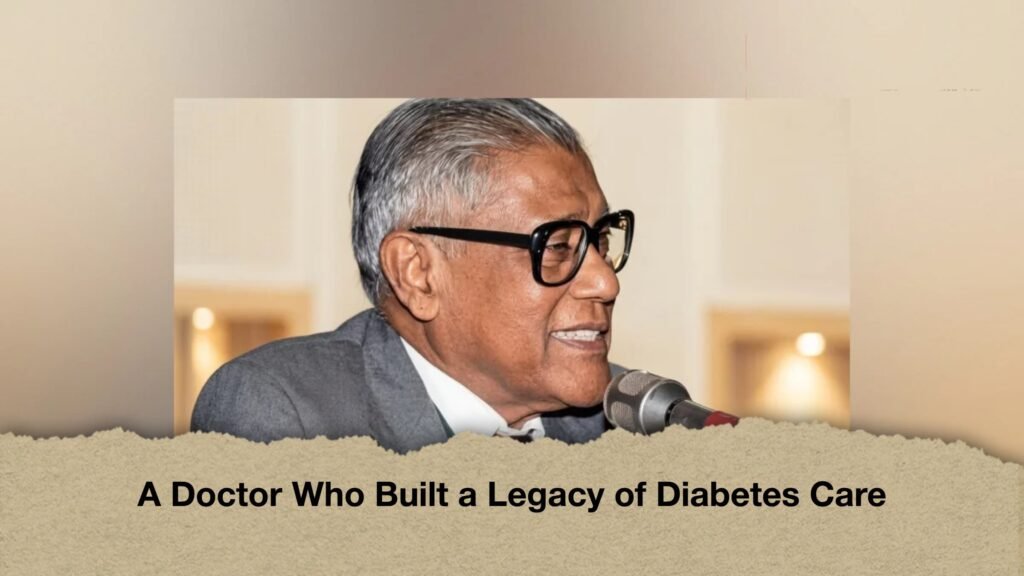
Dr Muhammad Ibrahim holds a distinguished place in the history of medicine and public health in Bangladesh. A pioneering physician, social reformer and humanitarian, he played a defining role in turning diabetes care, research and public awareness into organised areas of healthcare.
His contribution extended well beyond the treatment of individual patients. Dr Ibrahim recognised that diabetes, as a chronic condition, could not be effectively managed through medicines and occasional medical consultations alone. Patients needed a clear understanding of their illness, guidance on diet and lifestyle, regular monitoring and the discipline to manage their health over many years. That philosophy became the foundation of an institutional approach to diabetes care that went on to influence healthcare in Bangladesh.
His full name was Sheikh Abu Mohammad Ibrahim, although he became widely known as Dr Muhammad Ibrahim.
Early Life and Education
Dr Ibrahim was born on 31 December 1911 in Kharera village of Bharapur Union in Murshidabad district, then part of British India. His parents were Sheikh Maulvi Muhammad Kismatullah and Azim-un-Nisa Bibi.
The eldest among two brothers and two sisters, he began his education at a local middle Bengali school before attending Salar Edward English High School. He passed his matriculation examination in the first division.
He later completed his intermediate education at Islamia College in Calcutta and entered Calcutta Medical College. In 1938, he qualified in medicine, marking the beginning of a career that would eventually leave a lasting imprint on healthcare in the region.
The Beginning of His Medical Career
Dr Ibrahim began his professional career at Calcutta Medical College, where he worked as a house physician in the ward of the Professor of Medicine. He subsequently served as an emergency medical officer and senior demonstrator in the Department of Practical Pharmacy, remaining associated with the institution until 1945.
After the Partition of British India, he moved to what was then East Pakistan and joined the government health service in Chittagong as Civil Surgeon. His responsibilities extended beyond that post. He also served as superintendent of Chittagong General Hospital and taught medicine at Chittagong Medical College and Hospital.
Seeking to broaden his professional knowledge, Dr Ibrahim travelled to the United Kingdom and the United States for advanced education and training. He obtained MRCP in the United Kingdom in 1948 and became a Fellow of the American College of Chest Physicians the following year.
His Dhaka Medical College Years
In 1950, after returning to the country, Dr Ibrahim joined Dhaka Medical College as an additional physician. He later held senior academic positions, including Professor of Clinical Medicine and Professor of Medicine.
His years at Dhaka Medical College were significant not only for his academic career but also for the development of his ideas about chronic disease management. He increasingly viewed diabetes as a long-term public health challenge requiring close cooperation between doctors and patients.
For Dr Ibrahim, treatment had to be accompanied by education. Patients needed to understand the importance of dietary control, regular medical examinations and sustained engagement with their healthcare providers. This approach went beyond the conventional model of treating symptoms during individual consultations.
He consequently began working towards the establishment of a dedicated institution where people with diabetes could receive medical treatment alongside education and practical guidance on managing the condition.
Establishing Organised Diabetes Care
A major milestone came on 28 February 1956, when the Pakistan Diabetic Association was established at Segunbagicha in Dhaka with the support of several prominent physicians and social workers. Dr Muhammad Ibrahim was the central figure behind the initiative.
Under his leadership, the organisation gradually developed a structured approach to diabetes treatment and prevention. Its work eventually laid the foundations for a broader institution combining treatment, education, research and public awareness.
In 1965, a diabetic hospital was established, which later became widely known as BIRDEM. The institution reflected Dr Ibrahim’s central belief that healthcare should be guided primarily by patients’ needs rather than their financial circumstances.
This principle was closely connected to his wider understanding of medicine as a form of social responsibility. He believed that medical institutions had a duty to serve people who required care and to help patients better understand how to manage chronic illness.
Medicine Beyond the Consulting Room
Dr Ibrahim did not regard a physician’s responsibility as ending once a patient’s immediate symptoms had been addressed. He believed doctors also had a role in helping people understand disease and adopt healthier ways of living.
He viewed diabetes as more than an individual medical condition. Its consequences could affect families and wider society, particularly when long-term treatment and lifestyle changes were required. His work therefore placed considerable emphasis on bringing patients into regular care, improving public understanding of diabetes and expanding health education.
The institutional framework he helped create eventually linked medical treatment with research, professional education and public awareness. That integrated model became an important feature of organised diabetes care in Bangladesh.
Professional Responsibilities and Recognition
Dr Ibrahim’s expertise brought him a wide range of professional responsibilities. In 1958, he served as governor of the Pakistan chapter of the American College of Chest Physicians.
In 1962, he obtained FCPS from the College of Physicians and Surgeons of Pakistan. From that year until 1964, he served as Professor of Medicine and Principal of Sir Salimullah Medical College and Hospital.
His career later expanded into public administration and health policy. He served as an adviser to the President on health, family planning and social welfare with ministerial rank. He was also associated with the Senate of the University of Dhaka and served on advisory and professional bodies linked to regional work of the World Health Organisation and international diabetes management.
These roles reflected the breadth of his professional interests. His career encompassed clinical medicine, medical education, public health and international professional cooperation.
Awards and Honours
Dr Ibrahim received numerous distinctions in recognition of his contributions to medicine and public service.
In 1963, the Government of Pakistan awarded him the Sitara-i-Khidmat for his service.
After the independence of Bangladesh, he received the Independence Award in 1978 for his outstanding contribution to medical science. In 1984, he was appointed National Professor, becoming the first person to hold that distinction in the field of medicine in Bangladesh.
In 1985, he was elected a Fellow of the Bangla Academy and received the Mahbub Ali Khan Award for his contributions to medicine and social service.
The following year brought further recognition. In 1986, he was selected as a founding fellow of the Islamic Academy of Sciences in Jordan in recognition of his contribution to its establishment. That same year, he received the gold medal of the Comilla Foundation for his contribution to medical science and social welfare.
A Legacy Built Around Patients
Dr Ibrahim’s most enduring achievement cannot be measured solely through his academic qualifications, professional positions or awards. His lasting contribution lies in the healthcare philosophy he helped establish.
He demonstrated that medical expertise could be transformed into a broader movement for human welfare. His approach placed patients at the centre of diabetes care and treated education and self-management as essential parts of long-term treatment.
The institutions and programmes that developed from his work helped foster greater awareness of diabetes in Bangladesh. They also created opportunities for patients to receive organised care and for medical professionals and healthcare workers to receive education and training.
His approach reinforced another important principle of chronic disease management: continuity matters. Diabetes generally requires sustained attention to treatment, diet, physical activity, monitoring and medical advice rather than reliance on a single consultation or short-term intervention.
That principle remains a central feature of modern diabetes care.
The End of a Remarkable Life
Dr Muhammad Ibrahim died on 6 September 1989, bringing to an end a life devoted to medicine, public service and humanitarian work.
His influence, however, extended beyond his lifetime. The institutions associated with his vision continued to develop, while the model of combining treatment with patient education, research and public awareness remained an important part of Bangladesh’s healthcare landscape.
His life demonstrated how medical expertise could be combined with social responsibility. He saw patients not simply as people requiring treatment, but as individuals who needed knowledge, dignity and sustained support.
Dr Muhammad Ibrahim’s legacy therefore reaches beyond diabetes medicine. It reflects a broader vision of healthcare in which scientific knowledge, institutional responsibility and concern for patients work together.
For his pioneering contribution to diabetes care, medical education and public health, he remains an enduring figure in Bangladesh’s medical history. His work continues to be remembered by generations of physicians, healthcare professionals and patients who benefited from the system he helped build.