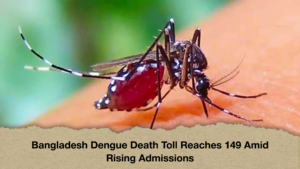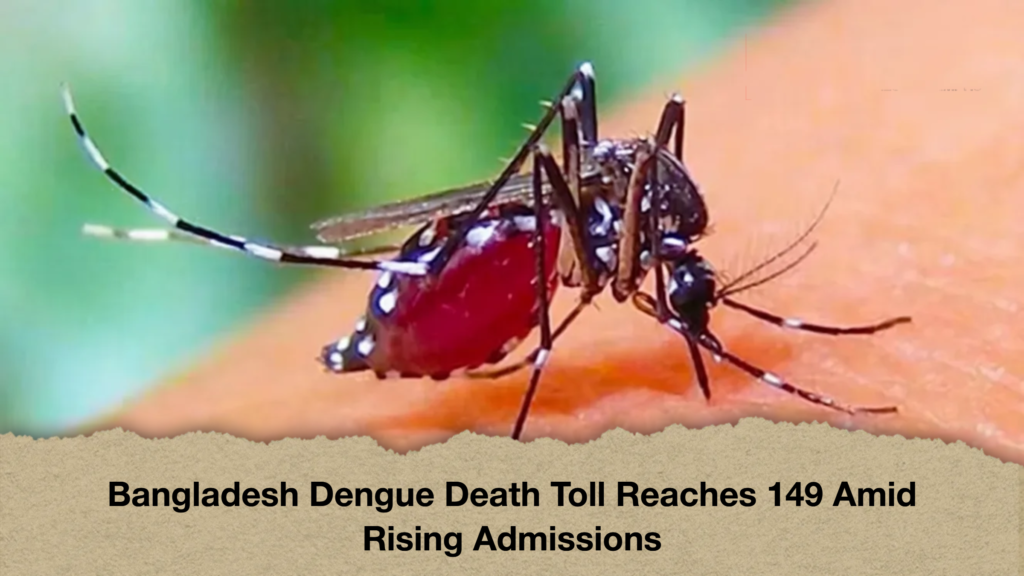
Six more patients have succumbed to dengue fever in Bangladesh over the past 24 hours, bringing the nationwide death toll from the vector-borne disease to 149 this year.
Data released by the Directorate General of Health Services (DGHS) on Sunday (13 September) indicates that 1,561 new patients were admitted to hospitals across the country during the same period. The continuous surge in cases has pushed the cumulative total of dengue hospitalisations in Bangladesh to 51,837 for the current year, severely taxing the national healthcare infrastructure.
Regional casualty records show that the Chittagong and Khulna divisions experienced the highest mortality over the last day, reporting two fatalities each. Meanwhile, the Dhaka and Mymensingh divisions logged one death apiece. This geographic distribution underlines how dengue has spread beyond the capital city of Dhaka, emerging as a major public health hazard in multiple administrative divisions nationwide.
The rapid spread of the virus coincides with the peak seasonal activity of Aedes aegypti mosquitoes, which breed primarily in clean, stagnant water gathered during rainy periods. Medical professionals warn that the infection can deteriorate rapidly if left unmanaged. While fever remains the primary symptom, patients often exhibit severe joint body aches, nausea, and internal bleeding signs. Health authorities strongly advise against delaying medical evaluations, urging individuals to seek clinical advice at the first onset of high temperatures.
Managing the ongoing outbreak presents dual challenges: providing adequate clinical care for hospitalised patients and enforcing effective vector management at private and municipal levels. Hospitals across urban centres face growing strain on general wards and intensive care facilities due to the daily influx of severe cases. Public health experts emphasise that hospital care alone cannot break the cycle of infection. Controlling the outbreak requires sustained operations to eliminate standing water in residential compounds, conduct targeted insecticide spraying, and encourage local communities to implement basic protective measures such as using bed nets. Without intensified preventive strategies alongside clinical treatment, curbing both transmission rates and preventable mortality remains an uphill task for health officials.