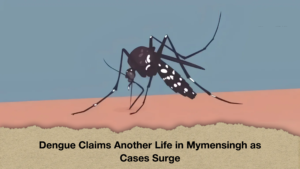
Mymensingh Medical College Hospital has recorded another dengue casualty after a 40-year-old woman succumbed to the viral infection on Saturday afternoon. The deceased, Tahmina Akter, was the wife of Saidur Rahman from Mohanganj upazila in Netrokona district.
Hospital authorities confirmed that Ms Akter was admitted to the medical facility on 10 September displaying severe dengue fever symptoms. Her health deteriorated whilst undergoing medical care, making her the 16th dengue patient to lose their life at the hospital this year.
Dr Mostafa Faisal, a attending physician at the hospital’s specialised dengue ward, stated that 53 new patients were admitted with dengue symptoms within the last 24 hours. During the same period, 67 individuals recovered sufficiently to be discharged. At present, 136 patients remain hospitalised in the dengue unit. Official hospital records reveal that a cumulative total of 2,123 patients have sought treatment for dengue fever at the institution since January.
The steady influx of patients points to a broader regional trend of rising mosquito-borne illnesses across the Mymensingh division. As the premier tertiary referral centre for surrounding districts such as Netrokona, Jamalpur, and Sherpur, the hospital frequently receives complex cases from outlying areas. Epidemiologists note that intermittent monsoon precipitation and warm temperatures have accelerated the breeding cycles of Aedes aegypti mosquitoes, leading to heightened transmission rates across both urban and rural communities.
Healthcare practitioners express concern over late hospital presentations, which significantly elevate the risk of fatal complications like severe plasma leakage and fluid accumulation. Medical personnel continue to advise the public to seek immediate clinical testing upon the onset of high fever, body aches, or severe fatigue, rather than relying on unverified home remedies.
Local administrative bodies are coming under increasing pressure to ramp up vector control drives across residential wards and upazilas. Effective intervention relies heavily on routine larviciding, public awareness drives regarding stagnant water removal, and early hospital intervention to prevent further casualties as the peak transmission season continues.